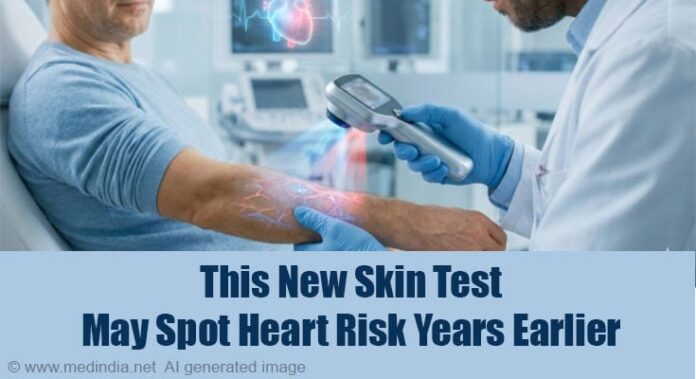
Fast-RSOM skin imaging reveals microvascular endothelial dysfunction below the skin, an early marker of cardiovascular disease, offering new non-invasive detection possibilities.
- Fast-RSOM reveals skin microvascular changes tied to early heart risk
- Technology produces high-resolution functional biomarkers of tiny blood vessel changes
- Non-invasive scan may enable earlier personalized prevention strategies
Cardiovascular disease (CVD) remains a leading cause of death worldwide because early functional changes in blood vessels are often missed until significant damage has already occurred (1✔ ✔Trusted Source
Single-capillary endothelial dysfunction resolved by optoacoustic mesoscopy.
Go to source
).
One of the earliest biological markers of CVD is microvascular endothelial dysfunction (MiVED), where tiny blood vessels lose their ability to properly expand and contract. Until now, clinicians lacked a precise, non-invasive method to visualize these early changes in humans.
TOP INSIGHT

Did You Know?
#HiddenHeartRisk can now be detected early with a #SkinScan that reveals tiny blood vessel dysfunction long before #chestpain or major symptoms show up, helping save lives with #EarlyDetection!
#cardiology #healthtechnology #healthyheart #fastrsom
What Is Fast-RSOM Skin Imaging and How Does It Detect Early Heart Risk?
Researchers have developed a new technology called <b>fast Raster Scan Optoacoustic Mesoscopy (fast-RSOM) that can non-invasively capture detailed three-dimensional images of microvascular structures beneath the skin. This imaging method uses pulses of light to generate ultrasound signals, enabling visualization of the smallest blood vessels with unprecedented clarity.
The study published in Light: Science & Applications demonstrated that fast-RSOM can measure dynamic biomarkers of MiVED at single-capillary resolution. By quantifying how tiny vessels function rather than relying only on structural imaging, the scan revealed early abnormalities associated with common cardiovascular risk factors such as hypertension, smoking, and obesity, often before symptoms or major arterial disease become evident.
Controlled comparisons between healthy volunteers and individuals with cardiovascular risk factors showed that fast-RSOM consistently detected impaired microvascular responses even when conventional imaging appeared normal.
These findings indicate that functional microvascular damage may precede structural vessel disease, positioning skin-based imaging as a promising tool for earlier risk stratification.
Why Is Early Microvascular Detection Important for Heart Health?
Standard cardiovascular risk assessment depends heavily on age, cholesterol levels, blood pressure, and family history. Although valuable, these measures do not directly reflect how blood vessels are functioning at the microscopic level. fast-RSOM fills this gap by providing quantitative functional readouts of the microcirculation, offering clinicians a more immediate view of vascular health.
Because microvascular dysfunction often appears years before overt symptoms, identifying MiVED early could allow physicians to recommend lifestyle changes, intensify monitoring, or adjust medications long before irreversible damage develops. This preventive approach could substantially reduce progression to major cardiac events.
What Are the Future Clinical Prospects for Fast-RSOM Technology?
While results are promising, investigators emphasize the need for larger population studies to confirm predictive accuracy across diverse age groups and risk profiles. Ongoing work focuses on integrating fast-RSOM biomarkers into routine cardiovascular screening protocols and evaluating whether repeated scans can track disease progression or therapeutic response.
Its non-invasive design, short scanning time, and portability suggest that this technology could eventually be used in outpatient clinics or health check-up programs, expanding access to advanced cardiovascular risk assessment (2✔ ✔Trusted Source
New imaging technology detects early signs of heart disease through the skin.
Go to source).
Fast-RSOM skin imaging marks a major advance in cardiovascular diagnostics by enabling functional early detection of vascular disease, shifting heart care toward prevention rather than late-stage intervention.
Frequently Asked Questions
Q: What is microvascular endothelial dysfunction?
A: It is impaired function of the smallest blood vessels, often preceding large artery disease and serving as an early warning sign of cardiovascular risk.
Q: How does fast-RSOM differ from traditional heart tests?
A: Traditional tests estimate risk or image major arteries, while fast-RSOM directly visualizes microvascular function beneath the skin.
Q: Can a skin scan replace angiography or cholesterol testing?
A: No. It is expected to complement existing methods rather than replace them until further clinical validation is complete.
Q: Who may benefit most from early heart risk skin scans?
A: People with hypertension, diabetes, obesity, smoking history, or family history of heart disease could gain from earlier functional screening.
Q: Which specialist should be consulted for early cardiovascular evaluation?
A: A cardiologist is best suited to assess heart disease risk and advise on advanced diagnostic approaches as they become available.
References:
- Single-capillary endothelial dysfunction resolved by optoacoustic mesoscopy. – (https://www.nature.com/articles/s41377-025-02103-6)
- New imaging technology detects early signs of heart disease through the skin. EurekAlert. – (https://www.eurekalert.org/news-releases/1113586)
Source-Medindia