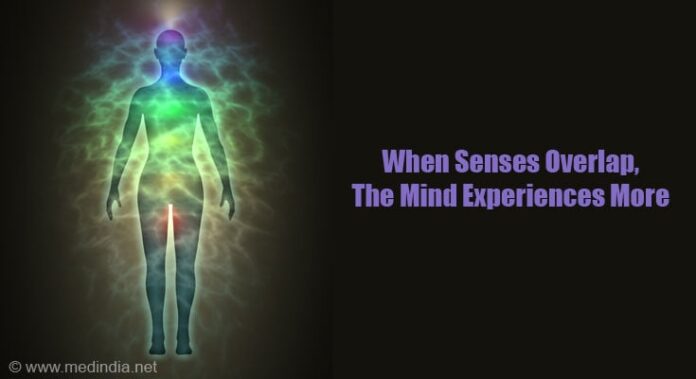
Synaesthesia is a sensory phenomenon in which sound, taste, and color merge, changing how memory, creativity, and empathy are experienced.
- Synaesthesia can turn everyday sensations into multisensory experiences
- Many people with synaesthesia develop stronger memory skills
- Sensory overlap may enhance creativity and emotional empathy
For some people, the world appears layered, textured and unexpectedly colorful. Sounds have shades. Words have weight. Tastes bloom into shapes. This phenomenon is called synaesthesia, and it is far more than a quirky sensory trick (1✔ ✔Trusted Source
Synesthesia
Go to source
).
Lived experiences shared by identical twins Helen Besgrove and Kirsty Neal show how deeply this trait can shape memory, creativity and even professional life. Medical insights help explain why this blending of senses happens and why it is not an illness at all.
How Synaesthesia Blends Senses In Everyday Life
Synaesthesia occurs when the brain processes one stimulus through more than one sense at the same time. A sound might trigger color. A name might feel textured. For Helen and Kirsty, multi-sensory perception is constant, automatic and vivid.
A glass of wine does not just taste fruity or dry. It can appear custardy, spiky or fuzzy in the mind’s eye. Personalities show up as colored auras. Even ordinary words carry shades and textures. These experiences are not imagined metaphors. They are consistent internal responses that feel as real as sight or sound.
Identical Twins with Different Sensory Worlds
One of the most fascinating aspects of synaesthesia is how personal it is. Helen and Kirsty are identical twins, yet their colors rarely match. The same word or flavor can look completely different to each of them. This highlights an important truth: synaesthetic experiences are unique, even when genetics are shared.
As children, they assumed everyone perceived the world this way. It took years to realize their sensory overlap had a name and a scientific explanation. That moment of recognition brought relief and curiosity rather than concern.
When Synaesthesia Becomes a Cognitive Advantage
Synaesthesia often comes with unexpected benefits. Both twins were exceptional spellers and learners from a young age. Words appeared visually in their minds. Notes stayed anchored in color and space. Exams became easier because memory had extra hooks.
Helen later discovered this advantage in the world of taste. During a blind coffee tasting competition, she effortlessly distinguished blends while others trained intensely. Her enhanced sensory memory allowed nuances to stand out instantly, turning an unconscious skill into a professional edge.
Mirror Touch Synaesthesia and Empathy In Healthcare
For Kirsty, now a general practitioner, synaesthesia plays out differently. She experiences mirror touch synaesthesia, where seeing another person in pain triggers a physical sensation in her own body. Seeing a broken bone can cause tingling. Descriptions of burning pain ignite vivid images of her own nerves.
This deep sensory empathy strengthens patient care but also demands balance. Feeling another person’s discomfort so directly can be emotionally taxing. Still, it enhances connection and attentiveness, making medicine feel intensely human rather than purely clinical.
What Science Says About Synaesthesia
According to clinical experts, synaesthesia is not a disease. It is a neurological variation in how the brain connects sensory pathways. Research suggests many people may have mild forms without realizing it.
There are dozens of recognized types, from grapheme color synaesthesia where letters appear colored, to time space synaesthesia where calendars are visualized as shapes. Most forms begin early in life and remain stable. Some people even develop synaesthesia after brain injury or through certain substances, though these forms are less consistent.
Is Synaesthesia Ever A Problem
For most, synaesthesia is neutral or beneficial. It only becomes challenging when sensory overlap interferes with daily function. Confusion can arise when similar words share the same color or when abstract concepts clash with verbal cues. Left and right directions are a classic struggle for some synaesthetes.
Even then, coping strategies usually suffice. Importantly, synaesthesia does not indicate mental illness and rarely requires treatment.
Why Synaesthesia Matters Beyond Curiosity
Stories like Helen’s and Kirsty’s remind us that brains are not one size fits all. Sensory diversity enriches creativity, learning and empathy. What feels unusual may actually be a quiet strength hiding in plain sight.
Understanding synaesthesia helps normalize neurodiversity and encourages people to see their minds not as flawed, but as differently tuned instruments capable of remarkable nuance.
Pay attention to how you experience the world. If your senses overlap in subtle ways, that awareness might unlock a new appreciation for how uniquely your brain works. And if you care for someone who perceives differently, curiosity and compassion can make all the difference.
Frequently Asked Questions
Q: What Is Synaesthesia In Simple Terms?
A: Synaesthesia is a neurological phenomenon where one sense automatically triggers another, such as hearing sounds as colors or tasting words.
Q: Is Synaesthesia A Medical Condition?
A: Synaesthesia is not a disease or mental illness. It is considered a variation in brain processing and usually does not require treatment.
Q: Can Synaesthesia Improve Memory And Learning?
A: Yes, research shows many people with synaesthesia have stronger memory and recall, especially related to their specific sensory associations.
Q: What Is Mirror Touch Synaesthesia?
A: Mirror touch synaesthesia causes a person to physically feel sensations they see happening to others, including touch or pain.
Q: How Common Is Synaesthesia Worldwide?
A: Experts estimate at least four percent of people experience synaesthesia, though the number may be higher due to underreporting.
Reference:
- Synesthesia – (https://my.clevelandclinic.org/health/symptoms/24995-synesthesia)
Source-Medindia