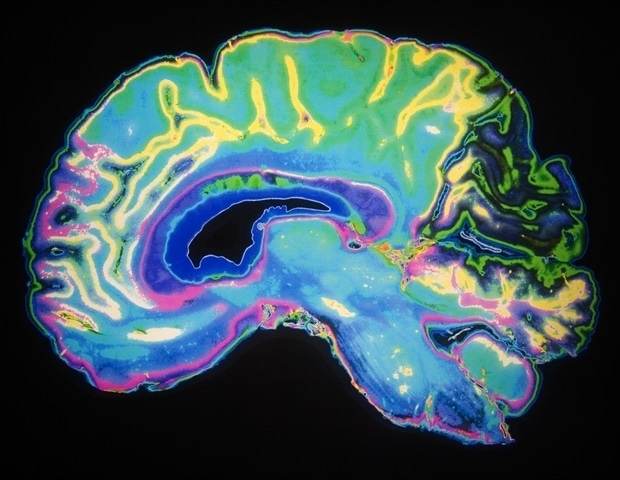
Capturing a complete picture of what causes brain diseases from schizophrenia and Parkinson’s disease to addiction has long remained a challenge to scientists. But a growing body of evidence indicates that all seem related to the basal ganglia-a group of structures found in the center of the brain that control the body’s movements, decision-making processes, and habit formation.
Today, a large group of scientists from more than 50 institutions released the first-ever comprehensive, multi-species atlas of the basal ganglia cell types from humans, macaques, marmosets, and mice. The atlas could help elucidate the key roles different cells play in determining the pathways that give rise to various brain diseases. The journal Cell and other Cell Press journals published a package of 28 papers funded by the National Institute of Health’s Brain Initiative Cell Atlas Network (BICAN), known informally as the BRAIN Initiative.
By building its research tool known as the NeMO Archive (Neuroscience Multi-Omic Archive), IGS researchers made the NeMO Archive user-friendly for scientists around the world to discover, analyze, and integrate data across multiples studies and technologies. Including this new research, NeMO Archive houses data on genomic, transcriptomic, epigenomic, and spatial transcriptomic data from more than 50 million brain cells.
I’ve spent much of my career working to make scientific data openly accessible, because the real value of these large research efforts comes when scientists everywhere can build upon them. NeMO brings together an extraordinary diversity of brain data and makes it possible for researchers to explore and connect findings across studies, technologies, and institutions. That’s the promise of building a truly open scientific data ecosystem.”
Owen White, PhD, Contributing Principal Investigator, Associate Director of Research Collaboration and Development at IGS and Professor of Epidemiology and Public Health at UMSOM
Among the key findings from the group of studies include that University of California, San Francisco researchers found key genetic changes in specific cell types of the basal ganglia that might play a role in autism and ultimately could lead to new treatments. Researchers from the Allen Institute discovered a new type of brain cell linked to schizophrenia and bipolar disorder.
“These studies highlight how advances in single-cell molecular analysis-supported by a growing ecosystem of openly accessible research data in our NeMO Archive- are enabling scientists to make discoveries that extend well beyond the scope of individual studies,” Dr. White said.
Source:
University of Maryland School of Medicine
Journal reference:
Garcia, A., et al. (2026). Toward an integrated framework for a human and mammalian brain cell atlas. Cell. DOI: 10.1016/j.cell.2026.10.031. https://cell.com/cell/retrieve/pii/S009286742601281X