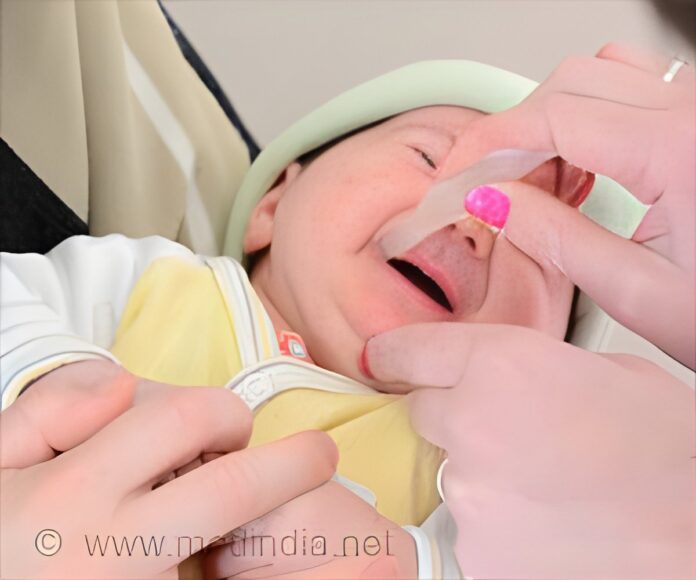
A safer generation of oral polio vaccines brings renewed hope for eradicating polio around the world.
- The novel oral polio vaccines nOPV1 and nOPV3 triggered strong immunity and had mostly mild side effects in adults
- New vaccines are more genetically stable than older versions, lowering the risk of vaccine-related outbreaks
- Phase 2 trials are moving forward, bringing us closer to ending polio for good
Polio, a crippling and sometimes deadly disease, has been nearly eliminated worldwide thanks to decades of widespread vaccination (1). But the job isn’t done. As health agencies push toward full eradication, new vaccines are being developed to keep the virus from making a comeback, especially in countries where polio still threatens children’s lives.
One such breakthrough involves the novel live attenuated oral polio vaccines (nOPV1 and nOPV3), designed to be even safer and more effective. A recent phase 1 clinical trial, detailed in The Lancet Infectious Diseases, brings good news about these innovative vaccines (2).
Advertisement
What Are nOPV1 and nOPV3?
The traditional oral polio vaccine (OPV) uses live, weakened poliovirus to trigger immune protection. While this has been the cornerstone of global efforts, the classic OPV can rarely mutate and spark new outbreaks, known as vaccine-derived poliovirus (VDPV). To tackle this risk, scientists have created the new nOPV1 and nOPV3 vaccines. These are still live vaccines, but they are genetically engineered for greater stability, making them less likely to cause VDPV.
Advertisement
Phase 1 Clinical Trial of the Novel Live Attenuated Oral Polio Vaccines
From May 2021 to February 2023, researchers in the United States enrolled 205 healthy adults at four different centers. These volunteers had different vaccination histories: some had only previously received the injected, inactivated polio vaccine (IPV), while others had gotten the oral vaccine as children.
Participants were randomly assigned to receive at least one dose of either the traditional monovalent OPV (mOPV) or the new nOPV, focusing on type 1 or type 3 poliovirus strains. Those who had never received the oral vaccine before were given two doses, spaced 28 days apart. The researchers monitored all participants closely for both immune response and any side effects.
Side Effects of Novel Live Attenuated Oral Polio Vaccines
The safety profile of the new nOPV1 and nOPV3 vaccines was a major focus of the study. Good news: most side effects were mild, such as slight fever or digestive upset. Severe reactions were rare. Only three severe, unplanned health events were noted- one in the classic mOPV1 group, and two in the nOPV1 group- but none were widespread or concerning enough to halt the study.
This excellent safety profile mirrors what scientists hoped for. The results support moving to larger studies in children and infants, as well as to regions where polio still poses a risk.
How Well Did the Novel Live Attenuated Oral Polio Vaccines Work?
The primary goal is always to trigger strong immunity. The study found:
- 100% of participants had “homotypic” seroprotection (immunity to the same type of virus matched by their vaccine dose) 28 days after the first dose.
- Both nOPV and the classic mOPV reached very high protection rates (between 86% and 100%).
- Both types of vaccine produced similar rates of temporary viral shedding (in stool)- a sign that they can help stop the virus from spreading.
This data means nOPV1 and nOPV3 are as effective at jump-starting immunity as the classic vaccines, and could be especially important in stopping polio in its last remaining strongholds.
Significance of the Novel Live Attenuated Oral Polio Vaccines
Current efforts to end polio face a unique threat: in rare cases, the weakened virus in the old oral polio vaccines can mutate, escape into communities, and cause new polio outbreaks called “circulating vaccine-derived polioviruses” (cVDPVs). The new nOPV vaccines are specifically designed to be more stable, meaning they are much less likely to start cVDPVs.
With the success of nOPV2 (now being deployed to halt type 2 VDPV outbreaks), the promising early results with nOPV1 and nOPV3 provide an ever-stronger arsenal for the global polio eradication initiative.
What’s Next for nOPV Vaccines?
Because of their promising performance, phase 2 clinical trials are already underway. These larger studies will include children, infants, and even newborns who have never been vaccinated, and they will take place in the regions where polio remains a persistent danger.
If these newer vaccines perform as well as expected, we may soon be one big step closer to a world free of polio.
References:
- Poliomyelitis
(Wolbert JG, Rajnik M, Swinkels HM, et al. Poliomyelitis. [Updated 2024 Oct 6]. In: StatPearls [Internet]. Treasure Island (FL): StatPearls Publishing; 2025 Jan-. Available from: https://www.ncbi.nlm.nih.gov/books/NBK558944/) - Safety and immunogenicity of novel live attenuated type 1 and type 3 oral poliomyelitis vaccines in healthy adults in the USA: a first-in-human, observer-masked, multicentre, phase 1 randomised controlled trial
(Safety and immunogenicity of novel live attenuated type 1 and type 3 oral poliomyelitis vaccines in healthy adults in the USA: a first-in-human, observer-masked, multicentre, phase 1 randomised controlled trial
Mercer, Laina D et al.
The Lancet Infectious Diseases, Volume 0, Issue 0)
Source-Medindia