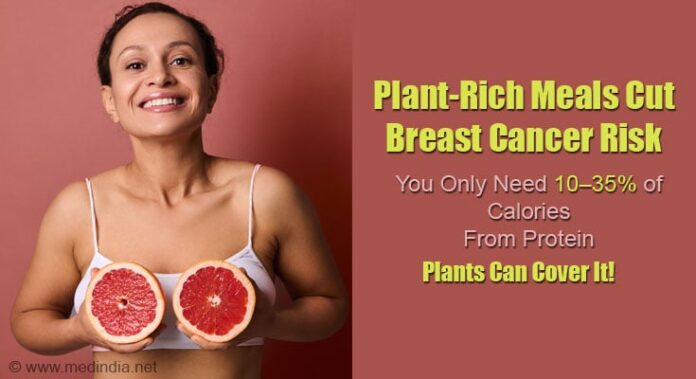
Plant-based eating and targeted micronutrients may support breast cancer prevention and survival.
- Higher plant-based diet adherence was linked to lower breast cancer risk
- Breast cancer patients with healthier diets showed improved survival
- Higher sodium intake was associated with increased mortality risk
A new analysis published in Frontiers in Nutrition suggests that eating more plant-based foods and key micronutrients may support breast health and longevity in women.( 1✔ ✔Trusted Source
Plant-based dietary patterns, micronutrient status and breast cancer outcomes: a joint analysis of UK Biobank and Chinese longitudinal healthy longevity survey
Go to source
)
In this study, women who closely followed a healthful plant-based diet had a lower chance of developing breast cancer. Among women already diagnosed with the disease, those with healthier diets lived longer. Higher intakes of vitamins and minerals like vitamin B2, vitamin C, calcium and magnesium were linked with better outcomes, while higher sodium intake was associated with a greater risk of dying.
Benefits Of Healthful Plant-Based Eating
Researchers looked at large groups of people from both the United Kingdom and China to understand how diet relates to breast cancer risk and patient survival. They focused on a score called the Healthful Plant-Based Diet Index, which rewards people for eating fruits, vegetables, whole grains and legumes and penalizes diets high in animal foods and refined items. Women with the highest diet scores tended to eat more plant-forward meals and fewer animal products.
Scientists found that women with the healthiest plant-based diets were less likely to be diagnosed with breast cancer.
Among women already living with breast cancer, those who followed a diet rich in plants were more likely to survive longer than those with lower adherence to such eating patterns.
Why Micronutrients Matter For Breast Health
The study did more than look at foods alone. It explored how micronutrients contribute to breast health and survival outcomes. Vitamins and minerals that act as antioxidants or support cellular health stood out in their effects.
Higher intakes of vitamin B2 and vitamin C were linked with more favorable outcomes. Calcium and magnesium intake were also tied to improved survival and lower risk.
In contrast, higher sodium intake was associated with poorer outcomes in women already diagnosed with breast cancer.
Combining Diet And Nutrition For Better Predictions
To better understand how diet influences long-term outcomes, researchers used advanced models to compare plant-based diet scores with micronutrient intake. They found that diet scores alone helped inform future risks, but incorporating micronutrients provided a more complete picture. Diet quality combined with nutrient intake offers a promising route to understanding lifestyle factors related to breast health.
Your body only needs 10 to 35% of daily calories from protein, and you can easily get that from beans, lentils, nuts, and whole grains.
Meanwhile, the World Health Organisation, classifies processed meat as a Group 1 carcinogen, meaning there’s strong evidence linking it to cancer. (2✔ ✔Trusted Source
A Look at Plant-Based Diets
Go to source)
Makes you rethink where your protein should come from, doesn’t it?
Making small changes to food choices can have lasting benefits. Talk with a healthcare professional about dietary habits that work for you and your family.
Frequently Asked Questions
Q: Can a plant-based diet help reduce breast cancer risk?
A: Yes, diets rich in plant foods were linked with lower breast cancer risk in this large analysis.
Q: What micronutrients are associated with better breast cancer outcomes?
A: Vitamin B2, vitamin C, calcium and magnesium were all linked with more favorable outcomes.
Q: Does sodium intake affect breast cancer survival?
A: Higher sodium intake was associated with increased risk of death among breast cancer patients.
Q: Is following a healthful plant-based diet useful for people already diagnosed with breast cancer?
A: Yes, women with higher plant-based diet scores in this study lived longer after diagnosis.
Q: Should diet be part of breast cancer prevention strategies?
A: Yes, diet is a modifiable lifestyle factor that may help in preventing breast cancer and supporting long-term health.
Reference:
- Plant-based dietary patterns, micronutrient status and breast cancer outcomes: a joint analysis of UK Biobank and Chinese longitudinal healthy longevity survey – (https://www.frontiersin.org/journals/nutrition/articles/10.3389/fnut.2025.1748611/full)
- A Look at Plant-Based Diets – (https://pmc.ncbi.nlm.nih.gov/articles/PMC8210981/)
Source-Medindia