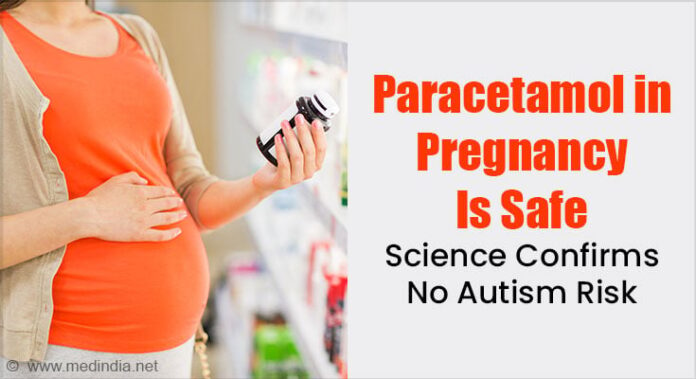
Population level evidence confirms prenatal paracetamol use does not raise autism risk, supporting its continued use for pain and fever in pregnancy.
- No causal autism risk seen after family-based analysis
- Genetic and maternal factors explain earlier associations
- Paracetamol remains recommended in pregnancy when needed
Paracetamol is widely used during pregnancy to treat pain and fever and is considered a first line option in clinical care. However, concerns suggesting a link between prenatal paracetamol exposure and ASD (Autism Spectrum Disorder) have caused confusion and anxiety among expectant mothers (1✔ ✔Trusted Source
Prenatal paracetamol exposure and child neurodevelopment: a systematic review and meta-analysis
Go to source
).
A new population-based study published in The Lancet Global Health provides strong evidence that paracetamol use during pregnancy does not increase the risk of autism, directly countering these claims.
TOP INSIGHT

Did You Know?
When #genetic and family related factors are fully adjusted, prenatal #paracetamol exposure shows no causal link to #autism in children. #autismrisk #paracetamolsafety #pregnancyfacts #autismawareness #medindia
Paracetamol Use During Pregnancy and Autism Risk
The researchers analyzed national health registry data covering hundreds of thousands of mother child pairs. Children were followed from birth into later childhood to identify clinically diagnosed autism.
Information on paracetamol exposure was collected from pregnancy records, allowing researchers to examine frequency and duration of use. Importantly, the study did not rely on a single comparison group but used multiple analytical approaches to strengthen validity.
Sibling Comparison Study Explains Earlier Concerns
To control for shared genetics and family environment, the researchers conducted sibling comparison analyses. This method compares siblings from the same family where one child was exposed to paracetamol during pregnancy and another was not.
In initial unadjusted analyses, a small association between paracetamol exposure and autism was observed. However, once sibling comparisons were applied, the association was no longer present.
This indicates that earlier reported risks were driven by genetic susceptibility or maternal health conditions rather than the medication itself.
Why Maternal Illness Matters in Autism Research
Paracetamol is commonly taken during infections, inflammation, and pain episodes. These underlying conditions can themselves influence fetal development. Without proper adjustment, observational studies may incorrectly attribute risk to medication use.
The current study demonstrated that when maternal illness and familial factors were accounted for, paracetamol showed no independent effect on autism risk (2✔ ✔Trusted Source
Paracetamol is safe in pregnancy, says study refuting Trump autism claims
Go to source).
Clinical Guidance for Expectant Mothers
Untreated fever and severe pain during pregnancy can pose risks to both mother and fetus. Paracetamol remains the recommended first choice for managing these symptoms when medication is required.
The findings support existing clinical guidance and emphasize the importance of evidence based decision making rather than fear driven avoidance of treatment.
Final Takeaway
Comprehensive population data confirms that paracetamol use during pregnancy does not cause autism. When used appropriately, it remains a safe and effective option for pain and fever relief in expectant mothers.
Frequently Asked Questions
Q: Is paracetamol safe to use during pregnancy?
A: Yes. Large population studies confirm its safety when used as advised.
Q: Does paracetamol increase autism risk in babies?
A: No. After adjusting for genetic and family factors, no causal link is found.
Q: Why did earlier studies suggest a possible risk?
A: They did not fully account for maternal illness and genetic influences.
Q: What painkiller is recommended during pregnancy?
A: Paracetamol is the preferred option for pain and fever relief.
Q: Should pregnant women stop paracetamol due to autism fears?
A: No. Avoiding necessary treatment may pose greater health risks.
References:
- Prenatal paracetamol exposure and child neurodevelopment: a systematic review and meta-analysis – (https://www.thelancet.com/journals/lanogw/article/PIIS3050-5038(25)00211-0/fulltext)
- Paracetamol is safe in pregnancy, says study refuting Trump autism claims – (https://www.bbc.com/news/articles/c74vdgkw1kzo)
Source-Medindia