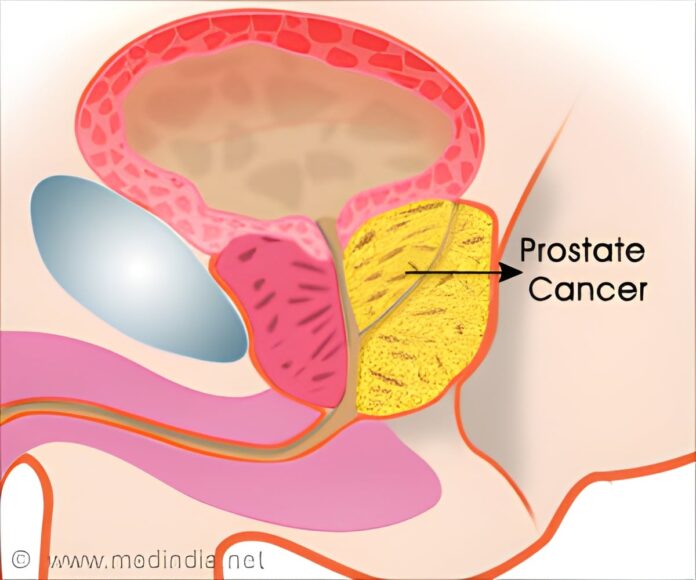
A simple blood test using circulating tumor DNA (ctDNA) may help doctors monitor prostate cancer more precisely.
- ctDNA testing offers a non-invasive way to monitor prostate cancer through blood samples
- It helps guide personalized treatment decisions and track disease progression
- While promising, ctDNA testing is still evolving and may not replace traditional methods completely
Advances in cancer research are improving how doctors diagnose and monitor diseases. One emerging tool is circulating tumor DNA, often called ctDNA, which is gaining attention in prostate cancer care. ctDNA refers to small fragments of genetic material released by cancer cells into the bloodstream. These fragments can be detected through blood tests known as liquid biopsies (1). This approach highlights the growing importance of non-invasive cancer testing in modern medicine.
Traditional cancer monitoring methods often rely on imaging scans or tissue biopsies. While effective, these methods can be invasive or less sensitive in detecting early changes. ctDNA testing offers a new way to track cancer activity using a simple blood sample. Research supports its potential in cancer management. Understanding ctDNA testing can help patients and caregivers make informed decisions.
What Is ctDNA?
Circulating tumor DNA consists of genetic fragments shed by tumor cells into the bloodstream. These fragments carry information about mutations present in cancer cells. By analyzing ctDNA, doctors can gain insights into the genetic profile of a tumor (2). This helps identify changes that may influence treatment decisions. The concept of liquid biopsy has transformed cancer diagnostics.
Unlike traditional biopsies, ctDNA testing does not require surgical procedures. A simple blood draw can provide valuable information about the disease. This makes it easier to repeat tests over time for monitoring. Frequent testing allows doctors to track how cancer evolves during treatment. This approach supports real-time cancer monitoring.
Role of ctDNA in Prostate Cancer Management
In prostate cancer, ctDNA testing is being explored for several important applications. It can help detect genetic changes that drive cancer growth. This information may guide the selection of targeted therapies. ctDNA may also provide insights into disease progression and response to treatment. These benefits highlight its role in personalized cancer care.
Experts suggest that ctDNA testing may be particularly useful in advanced stages of prostate cancer. At this stage, tumors may develop resistance to certain treatments. Monitoring ctDNA can help identify these changes early. This allows doctors to adjust treatment strategies accordingly (3). The use of precision medicine continues to expand in oncology.
When Should ctDNA Testing Be Used?
Clinical discussions suggest that ctDNA testing may be most useful in specific situations. These include advanced or metastatic prostate cancer, where disease monitoring is crucial. It may also be used when tissue biopsies are difficult or risky. In such cases, ctDNA offers a less invasive alternative. Understanding the timing of ctDNA use helps maximize its benefits.
Doctors may also use ctDNA testing to evaluate treatment response over time. Changes in ctDNA levels can indicate whether therapy is effective. Rising levels may suggest disease progression, while decreasing levels may indicate improvement. These insights help guide clinical decisions. This supports treatment monitoring in a more dynamic way.
Benefits Of Liquid Biopsy In Cancer Care
Liquid biopsy offers several advantages compared to traditional diagnostic methods. It is less invasive, making it more comfortable for patients. The procedure also carries fewer risks and can be repeated easily. This allows for continuous monitoring without significant discomfort. These benefits highlight the value of minimally invasive testing (4).
Another advantage is the ability to capture genetic changes from different parts of the tumor. Traditional biopsies may sample only one area, missing other mutations. ctDNA testing provides a broader picture of the disease. This can improve the accuracy of treatment decisions. The approach supports comprehensive cancer analysis.
Limitations And Future Of ctDNA Research
Despite its promise, ctDNA testing is still evolving and has certain limitations. In early-stage cancers, ctDNA levels may be too low to detect accurately. This can reduce the sensitivity of the test in some cases (5). Researchers are working to improve detection methods and reliability. Understanding these limitations is important for clinical decision-making.
Ongoing research aims to expand the use of ctDNA in different cancer types and stages. Scientists are exploring how it can improve early diagnosis and treatment planning. Collaboration between researchers and clinicians will drive further progress. As evidence grows, ctDNA may become a standard tool in oncology. The future of cancer diagnostics continues to evolve with innovation.
Frequently Asked Questions
Which doctor can guide or prescribe ctDNA testing for prostate cancer?
A medical oncologist or urologist can evaluate your condition and guide whether ctDNA testing is appropriate based on your stage and treatment plan.
What is ctDNA in prostate cancer?
ctDNA refers to genetic material from tumor cells found in the bloodstream and used for monitoring cancer.
How is ctDNA testing performed?
ctDNA testing is done through a blood sample analyzed for tumour-related genetic changes.
Is ctDNA testing better than a biopsy?
ctDNA testing is less invasive but may complement rather than replace traditional biopsies.
When is ctDNA testing used in prostate cancer?
It is often used in advanced stages to monitor disease progression and treatment response.
What are the benefits of liquid biopsy?
Liquid biopsy offers a minimally invasive way to monitor cancer and detect genetic changes.
References:
- A Review of Circulating Tumor DNA (ctDNA) and the Liquid Biopsy in Cancer Diagnosis, Screening, and Monitoring Treatment Response
(Parums DV. A Review of Circulating Tumor DNA (ctDNA) and the Liquid Biopsy in Cancer Diagnosis, Screening, and Monitoring Treatment Response. Med Sci Monit. 2025 Apr 22;31:e949300. doi: 10.12659/MSM.949300. PMID: 40259565; PMCID: PMC12032849.) - Circulating Tumor DNA as a Cancer Biomarker: An Overview of Biological Features and Factors That may Impact on ctDNA Analysis
(Sánchez-Herrero E, Serna-Blasco R, Robado de Lope L, González-Rumayor V, Romero A, Provencio M. Circulating Tumor DNA as a Cancer Biomarker: An Overview of Biological Features and Factors That may Impact on ctDNA Analysis. Front Oncol. 2022 Jul 20;12:943253. doi: 10.3389/fonc.2022.943253. PMID: 35936733; PMCID: PMC9350013.) - Circulating Tumor DNA in Prostate Cancer: A Dual Perspective on Early Detection and Advanced Disease Management
(Kopytov SA, Sagitova GR, Guschin DY, Egorova VS, Zvyagin AV, Rzhevskiy AS. Circulating Tumor DNA in Prostate Cancer: A Dual Perspective on Early Detection and Advanced Disease Management. Cancers (Basel). 2025 Aug 6;17(15):2589. doi: 10.3390/cancers17152589. PMID: 40805284; PMCID: PMC12346699.) - Liquid biopsy in cancer management: Integrating diagnostics and clinical applications
(Pandey S, Yadav P. Liquid biopsy in cancer management: Integrating diagnostics and clinical applications. Pract Lab Med. 2024 Dec 24;43:e00446. doi: 10.1016/j.plabm.2024.e00446. PMID: 39839814; PMCID: PMC11743551.) - Exploring Circulating Tumor DNA (CtDNA) and Its Role in Early Detection of Cancer: A Systematic Review
(Bittla P, Kaur S, Sojitra V, Zahra A, Hutchinson J, Folawemi O, Khan S. Exploring Circulating Tumor DNA (CtDNA) and Its Role in Early Detection of Cancer: A Systematic Review. Cureus. 2023 Sep 22;15(9):e45784. doi: 10.7759/cureus.45784. PMID: 37745752; PMCID: PMC10516512.)
Source-Medindia