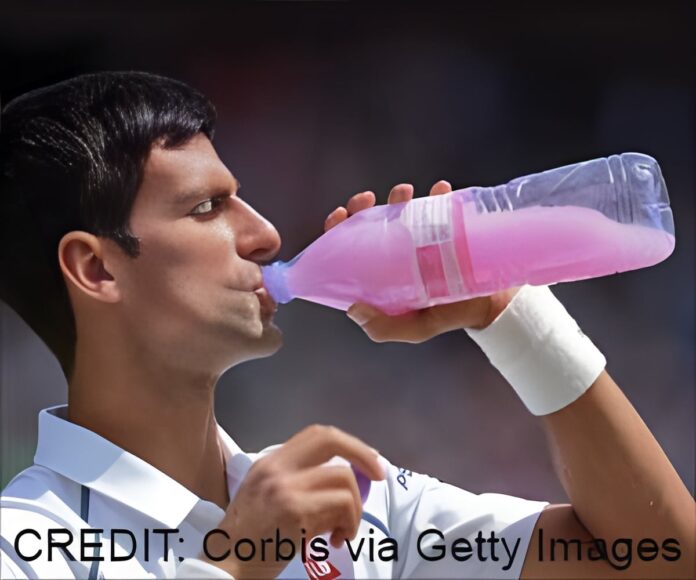
Novak Djokovic collapsed, vomited, and struggled to breathe on court in Cincinnati — and this time, he says it wasn’t just the heat. Here’s what he revealed, and what heat intolerance can actually mean medically.
Novak Djokovic has revealed he’s been quietly dealing with a long-term health issue that explains why extreme heat affects him far more severely than it does other players — a revelation that comes just two weeks before the US Open, and after a genuinely alarming collapse on court in Cincinnati. (1✔ ✔Trusted Source
Novak Djokovic admits Cincinnati return looks unlikely after early exit
Go to source
)
What Happened to Djokovic in Cincinnati?
The 24-time Grand Slam champion lost 2-6, 6-4, 6-4 to Argentina’s Thiago Agustín Tirante in the second round, but the scoreline barely tells the story. After comfortably winning the first set, Djokovic’s body seemed to give out: he was seen vomiting mid-match, crouching on the court struggling to recover, and visibly fighting to breathe properly through the humid Ohio heat.
What Did Djokovic Actually Say About His Health?
Speaking to Sportklub after the match, Djokovic was direct about the cause: “The conditions are not the problem. It’s due to a health issue that I have. I have been suffering from it for many years. It causes me many problems, especially when there is a lot of humidity and heat.”
He was careful to note it wasn’t solely physical: “I knew that these conditions would affect me, but there are also other things: nerves and everything that comes with a match like this. All of that worsens the situation, and that is what happened.”
He hasn’t specified the exact diagnosis publicly. On whether he’d return to Cincinnati in future years, he sounded doubtful: “I hope to be able to do so, but unfortunately right now it seems more likely that I won’t.”
Why Would Someone Struggle with Heat More Than Others?
While Djokovic hasn’t named his condition, medically, disproportionate difficulty coping with heat compared to people around you have a real name: heat intolerance.
What is Heat Intolerance ?
Heat intolerance is the feeling of being uncomfortably overheated when temperatures rise — often paired with heavy sweating. It can develop gradually and linger for a long time or come on suddenly as a sign of something more serious. (2✔ ✔Trusted Source
Heat intolerance
Go to source
)
What Causes Heat Intolerance?
Certain medicines can reduce the body’s tolerance to heat, including antihistamines, stimulants (including appetite suppressants), antibiotics, antidepressants, antipsychotics, blood pressure and cholesterol medications, decongestants, diabetes drugs, overactive bladder medicines, NSAID pain relievers, and Parkinson’s disease treatments.
Underlying health conditions can also play a role
All mentioned conditions are linked to reduced heat tolerance, sometimes because of the condition itself and sometimes because of the medication used to manage it.
Conditions with further raises the risk are:
- Alcohol use
- Infections
- Prior heat exhaustion
- Heat stroke
- Illegal drug use
- Poor physical fitness
- Menopause
- Pregnancy
Age matters too — both young children and older adults struggle more to regulate body temperature, and older adults are more likely to be on medications that compound the problem.
Unlike ordinary heat exhaustion, which happens to almost anyone under extreme enough conditions, heat intolerance is typically a symptom of an underlying issue rather than simply a fitness or hydration problem.
Common underlying causes that aggravate the heat intolerance include Thyroid disorders like Hyperthyroidism, certain autoimmune and neurological conditions, and Dysautonomia — a broad term for problems with the body’s automatic temperature and heart-rate regulation. This is distinct from heat exhaustion or heat stroke, which are acute emergencies caused by prolonged heat exposure alone.
Heat intolerance, by contrast, tends to be a recurring pattern for the same person, worsening specifically in hot, humid conditions even when others around them are coping fine — which matches almost exactly what Djokovic described.
Managing and Preventing Heat Intolerance
Simple precautions can help: staying well-hydrated, keeping indoor spaces at a comfortable temperature, and limiting time spent outdoors during hot, humid weather.
When to See a Doctor
Unexplained heat intolerance is worth discussing with a healthcare provider. A visit typically includes a physical exam and questions about when symptoms occur, whether exercise worsens them, and whether there’s dizziness, fainting, numbness, weakness, or a rapid heartbeat involved. Blood tests — including a complete blood count, metabolic panel, and thyroid function tests — may be used to rule out underlying causes like thyroid disease.
Why This Matters Ahead of the US Open
Djokovic has faced similar heat-related struggles in multiple matches this year, and pundit Greg Rusedski has publicly criticized tournament scheduling, arguing organizers should have better protected the Serbian from playing in peak daytime heat. With the US Open just two weeks away, played in similarly hot and humid New York conditions and contested as best-of-five sets, the concern among fans and commentators is whether this pattern will repeat on an even bigger stage.
The Bottom Line
Djokovic’s honesty about a long-term health issue reframes what might otherwise look like a simple fitness decline as something more specific and medical. Whatever the exact diagnosis, his own words suggest this isn’t new — just increasingly hard to hide as conditions get hotter, and matches get longer.
References:
- Novak Djokovic admits Cincinnati return looks unlikely after early exit – (https://www.tennisworldusa.org/tennis/news/Novak_Djokovic/168823/novak-djokovic-admits-cincinnati-return-looks-unlikely-after-early-exit/)
- Heat intolerance- (https://medlineplus.gov/ency/article/003094.htm)
Source- Tennis World, Medline Plus