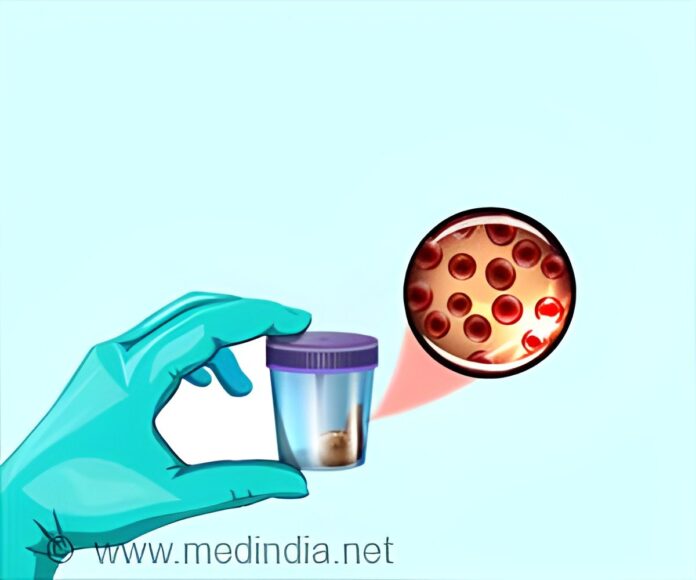
A cutting-edge blood test using cell-free DNA (cfDNA) can detect bladder, prostate, and kidney cancers early without invasive procedures.
Urological cancers like bladder, prostate, and kidney cancer often go unnoticed until they become advanced. Traditional screening tools, such as PSA tests, biopsies, and imaging, can be invasive and therefore unreliable. This new multicentre study introduces a safer, simpler alternative: detecting cancer through tiny DNA fragments circulating in the blood, known as cell-free DNA (cfDNA) (1✔ ✔Trusted Source
Early detection of urological tumors based on genomic characteristics of cell-free DNA fragments: a multi-center study
Go to source
).
TOP INSIGHT

Did You Know?
A simple blood test can now detect urological cancers with up to 99% accuracy.
#earlydetection #medindia
How Cancer Leaves Clues in the Blood
Cells release tiny pieces of DNA into the bloodstream when they die. Cancer cells release these pieces differently. In the research, 10,113 DNA fragment features of 758 participants (cancer patients, healthy individuals and those with benign prostate conditions) were analysed.
Low-coverage Whole-genome sequencing revealed separate patterns of fragment variation between cancer and non-cancer cells. These are called the end motifs (EDMs) and breakpoint motifs (BPMs).
Machine Learning Models Spots Cancer
The following machine learning models were trained to detect these DNA patterns. They delivered impressive accuracy:
- Bladder cancer (BLCA): AUC up to 0.96 (Almost perfect)
- Kidney cancer (ccRCC): AUC up to 0.99 (Extremely accurate)
- Prostate cancer (PRAD): AUC up to 0.92 (Very accurate)
- Pan-cancer (all combined): AUC up to 0.89 (Strong and dependable)
The AUC score tells us how good the test is at correctly telling who has cancer and who doesn’t.
A score of:
- 1.0 = Perfect test
- 0.5 = No better than guessing
So, the closer the number is to 1.0, the more accurate the test.
These results show that at an early stage, cancers can be identified successfully without any invasive procedures by a simple blood test, which is then translated with advanced AI.
Two-Step Screening That Saves Time and Cost In Urological Cancer Detection
- Step 1: A pan-cancer blood test checks if someone may have any of the urological cancers, catching 95% of cases at a threshold of 0.93.
- Step 2: If the first step flags a risk, specific tests for bladder, prostate, or kidney cancer are performed, each with a sensitivity of 95% in detecting real cases.
This two-step method avoids unnecessary testing while keeping accuracy high.
Cell-Free DNA Patterns: The Future of Cancer Diagnostics
In-depth examination showed certain 6-base DNA patterns were the strongest predictors of risk of cancer. These molecular signatures can be used to both determine that cancer is present and which type, pointing to the biological distinctions of any tumour.
This study demonstrates that the combination of machine learning and cfDNA fragmentomics (the study of DNA patterns) provides a non-invasive, safe, and accurate method of early urological cancer detection. This straightforward blood test has the potential to be a potent early diagnostic tool that improves survival rates by identifying cancers before symptoms manifest.
Reference:
- Early detection of urological tumors based on genomic characteristics of cell-free DNA fragments: a multi-center study – (https://www.nature.com/articles/s41698-025-01130-1/)
Source-Nature