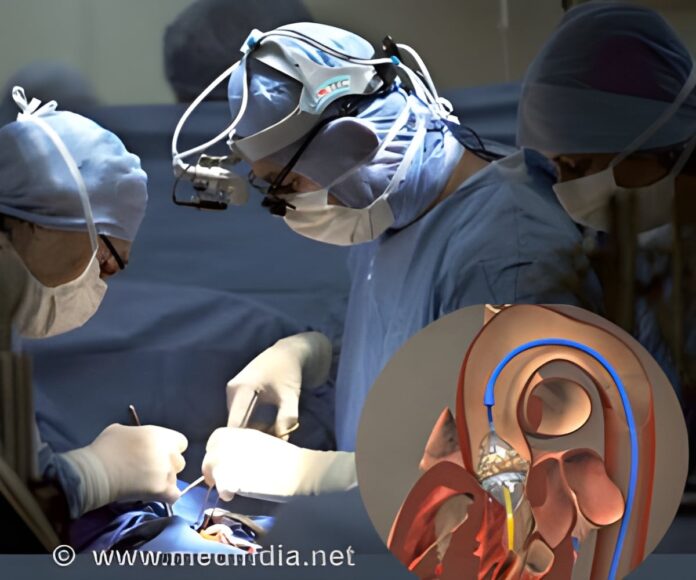
Many adults with congenital heart disease face surgery risks; researchers aim to deliver clearer, personalized risk guidance for patients.
Heart specialists from Mayo Clinic presented new research at the 2026 Society of Thoracic Surgeons Annual Meeting showing that repeat (redo) cardiac surgery in adults with congenital heart disease (CHD) continues to carry significant risk. ()
The findings underscore the need for a clinically practical, nationally validated risk assessment model to better guide patients and care teams as they weigh surgical options and make informed decisions about complex procedures.
TOP INSIGHT

Nearly 1 in 6 adults with #congenital_heart_disease face high risk during redo #heart_surgery. What drives these dangers—and how can care teams better predict them?
#Heartdiseases #CHD #bicuspidaorticvalve
Why Adult Congenital Heart Disease Patients Face Higher Surgical Risks
Adults with CHD represent a growing and medically complex population, despite surgical advances. Most were born with structural heart defects and underwent surgery early in life; many now require additional procedures as adults. Their prior operations, changing physiology, and long-term health challenges make it difficult for surgeons and patients to estimate operative risk using current tools designed for the broader adult cardiac population.
The study, led by Elaine Griffeth, MD, a resident in the combined general and thoracic surgery program at Mayo Clinic, analyzes cases in the STS Adult Cardiac Surgery Database (ACSD) covering July 2017 through December 2023. Researchers used their previous work on clinical data from Mayo Clinic with machine-learning analysis and logistic regression to help determine surgical risk on a national level.
Researchers found that 16.7% of adults nationwide with CHD were considered high-risk for operative mortality and serious postoperative complications after redo cardiac surgery, including the need for mechanical circulatory support, dialysis, and risks for stroke, neurologic injury, or cardiac arrest.
“Many patients with congenital heart disease will need surgery as adults. Our work shows that the overall risk of post-surgical complications is prevalent, but patients need to know their individual risk based on their individual medical circumstances. We are setting the stage to create a reliable resource for this emerging patient population,” Dr. Griffeth said.
Machine-Learning Model Improves Postoperative Risk Prediction in Adult CHD
The research identified 15 factors as the most influential in predicting postoperative risk, and a predictive model generated using those factors showed good discrimination. The results of this study demonstrate that it is feasible to generate clinically applicable risk models in adult CHD care, and integrating machine-learning with traditional statistical methods offers a practical path forward.
Patients with isolated bicuspid aortic valve diagnoses, undergoing their first cardiac operation, or undergoing heart transplantation or isolated coronary artery bypass grafting (CABG) were excluded from the study to focus the analysis on conditions more typical of adult CHD surgical care.
“This is a work in progress,” she added. “We want to have high reliability in the surgeries we are offering, and we are trying to tailor this model with data from past patients. The more informed patients are about their risks for surgery, the better.”
One challenge of CHD care, Dr. Griffeth added, is that some adults have one ventricle—making single-ventricle status an important marker for long-term risk. However, single-ventricle status is not frequently captured in the ACSD. Therefore, researchers utilized similar analytical techniques tailored to the ACSD to develop a risk model that represents the national cohort of adults with CHD.
ACSD Data Helps Build More Reliable Surgical Risk Models
Dr. Griffeth noted that patient outcomes depend on the entire surgical team and that, “risk factors identified at one institution do not always translate well across all institutions. The ACSD data allows us to identify important risk factors for surgical outcomes across all hospitals to develop this model.”
Thanks to innovative cardiac surgical advances, almost all children born with CHD now live into adulthood, underscoring the need for a risk prediction tool for this growing population. CHDs are the most common birth defect, and an estimated 1.4 million adults in the U.S. have heart defects that were first treated in childhood.
References:
- Study Examines Prediction of Surgical Risk in Growing Population of Adults with Congenital Heart Disease – (https://www.sts.org/press-releases/study-examines-prediction-surgical-risk-growing-population-adults-congenital-heart-disease)
Source-Eurekalert