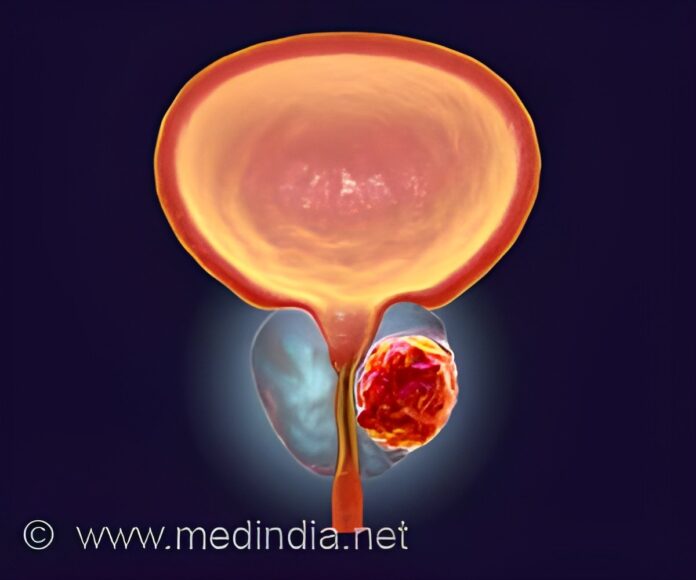
Direct injection of an immune-activating compound into prostate tumors may safely stimulate the body’s immune response to target cancer cells.
Delivering an immune-activating compound straight into prostate tumors before surgery has shown promise in safely stimulating the body’s defense system to recognize and destroy cancer cells (1✔ ✔Trusted Source
Early Clinical Trial Tests Immune-Boosting Therapy Before Prostate Cancer Surgery
Go to source
).
Published in the October 30 online issue of Med, a Cell Press journal, this phase I clinical trial evaluated a viral-mimicking drug known as poly-ICLC in 12 men diagnosed with intermediate- to high-risk prostate cancer.
The presurgery (neoadjuvant) therapy was administered in two doses, the first injected into the tumor to initiate an immune response, and the second delivered into a muscle to strengthen it. The approach aimed to prepare the immune system to recognize and attack cancer cells before tumor removal. Poly-ICLC is polyinosinic-polycytidylic acid stabilized with poly-L-lysine and carboxymethylcellulose.
Immune System Activation Through Targeted Injection
Using advanced imaging to guide the injections, scientists introduced the compound directly into prostate tumors and monitored both tissue and blood for biological changes. The therapy was well tolerated and appeared to activate immune function, drawing immune cells to the tumor site, altering gene expression, and creating new pockets of immune activity within the tumor where none had existed earlier.
“Our findings provide an important proof of concept that the immune system in prostate cancer can be reawakened,” stated physician-scientist Ash Tewari, M.D., MBBS, MCh, who led the phase I trial and served as senior and corresponding author.
Dr. Tewari, the Kyung Hyun Kim, M.D. Professor and System Chair of the Milton and Carroll Petrie Department of Urology at the Icahn School of Medicine, added, “By delivering poly-ICLC directly into the tumor under MRI–ultrasound fusion guidance, we were able to engage local immunity before surgery. This same technique could potentially allow other immune-based agents or combinations to be injected directly, offering new possibilities for precision prostate cancer treatment. If larger studies validate our results, this tumor-focused ‘autovaccination’ could become a novel method to improve immunotherapy effectiveness in aggressive prostate cancer.”
Transforming Cold Tumors into Immune-Responsive Ones
Alongside visible immune activation, several participants also showed encouraging early tissue improvements following treatment. Although the trial’s small scale limits definitive conclusions about long-term effects, the data suggest that this approach could convert “cold” tumors, those resistant to immune recognition into “immune-active” ones.
“High-risk prostate cancer often recurs after treatment and tends to resist immunotherapy because such tumors do not naturally provoke strong immune reactions,” explained lead and corresponding author Sujit S. Nair, Ph.D., Assistant Professor and Director of Genitourinary Immunotherapy Research in the Department of Urology at the Icahn School of Medicine.
“Our goal was to determine whether these tumors could be safely stimulated to activate immune responses before surgery, and the early outcomes are promising. To our knowledge, this represents the first prostate cancer trial involving intratumoral immunotherapy. The approach does not depend on a single tumor target, it teaches the immune system to recognize the entire tumor,” he said.
New Direction for Future Cancer Therapies
The findings offer a foundation for exploring how this method might integrate with existing or novel immunotherapy approaches in future trials. “The concept of turning a tumor into its own vaccine by locally triggering immune recognition marks one of the most exciting developments in cancer science,” said corresponding author Nina Bhardwaj, M.D., Ph.D., Ward-Coleman Chair in Cancer Research and Director of the Vaccine and Cell Therapy Laboratory at the Icahn School of Medicine. “This work illustrates that even tumors once considered invisible to the immune system could potentially be rendered responsive.”
The next step for the investigators involves progressing to larger, controlled phase II trials to evaluate clinical outcomes and explore combinations with hormone-based or other immunotherapies. They also plan to study how this tumor-focused method reshapes interactions between cancer and the immune system over time and determine which patients may benefit most.
The paper is titled “Prostate cancer in situ autovaccination with the intratumoral viral mimic poly-ICLC: Modulating the cold tumor microenvironment.”
Reference:
- Early Clinical Trial Tests Immune-Boosting Therapy Before Prostate Cancer Surgery – (https://www.mountsinai.org/about/newsroom/2025/early-clinical-trial-tests-immune-boosting-therapy-before-prostate-cancer-surgery)
Source-Eurekalert