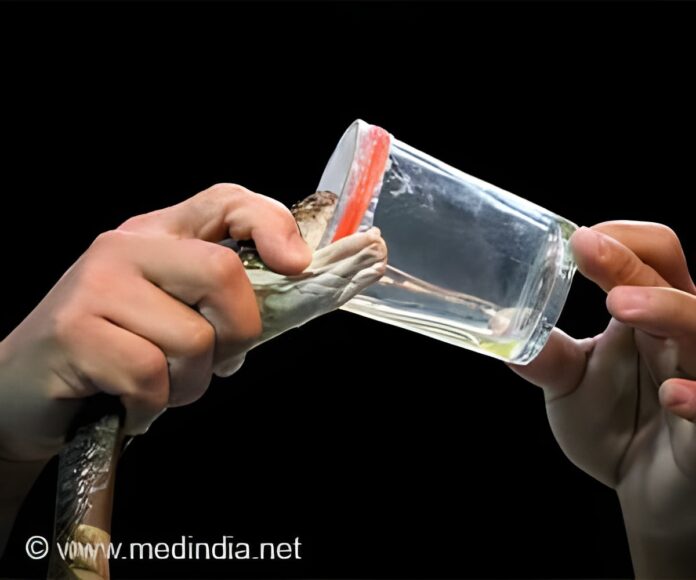
A new preclinical study shows that mRNA delivered through lipid nanoparticles can trigger local antibody production in muscle and help reduce venom-induced damage after snakebites.
- Researchers tested mRNA lipid nanoparticles that help muscles produce toxin targeting antibodies
- The approach showed protective effects against venom induced muscle damage in early models
- Findings suggest a future treatment possibility for local injury that current antivenom cannot fully address
A new preclinical study has opened the door to a surprising therapeutic possibility. Scientists have demonstrated that an mRNA based antibody approach might one day help prevent the severe muscle damage caused by venomous snakebites. While the findings are early, they offer a glimpse of what future antivenom treatment could look like for rural communities (1✔ ✔Trusted Source
Intramuscular delivery of mRNA-encoded single-chain variable fragments prevents myotoxin II-induced skeletal muscle damage in a preclinical model
Go to source
).
TOP INSIGHT

Did You Know?
This experimental mRNA approach protected muscle fibres from venom in early tests #Snakebite #mRNATherapy #Medindia
How mRNA Nanoparticles Reduced Venom Related Muscle Damage
Researchers tested mRNA lipid nanoparticles carrying instructions to produce single chain antibody fragments in both human muscle cells and mice. Human myotubes expressed these antibodies within 24 hours, while mice showed antibody expression within 48 hours after a single intramuscular injection. In cell studies, antibody producing cells retained over twice the muscle fibre coverage after exposure to venom when compared with untreated cells. In mice, markers of muscle injury such as creatine kinase and lactate dehydrogenase were significantly lower when mRNA nanoparticles were administered before venom exposure.
How mRNA Antibody Technology Works
Unlike traditional antivenom, which circulates in the bloodstream, this approach uses mRNA lipid nanoparticles to deliver genetic instructions directly into muscle tissue. Once inside the cells, the mRNA tells the body to produce toxin neutralising antibodies locally where damage is most likely to occur. This allows the antibodies to act at the site of injury, which is something conventional antivenom often struggles to achieve.
Potential Impact on Snakebite Treatment
Snakebites remain a major global health burden, especially in rural regions where immediate medical care is difficult to obtain. The study shows that locally produced antibodies could reduce myonecrosis and protect vital structures such as the basement membrane of muscle fibres. It also suggests that the approach could reduce bleeding inside the muscle and preserve healthy blood vessel patterns.
Challenges That Must Be Overcome
The technology is promising but still far from clinical use. One challenge is the time delay required for cells to begin producing antibodies. Protection against venom became noticeable only after twelve to twenty four hours in cell models and after forty eight hours in mice. Storage conditions, production cost, and ensuring safe, practical delivery in real world emergencies remain major hurdles.
Emerging Therapeutic Approaches for Snakebite Treatment
The study offers a rare glimpse of a future where antivenom may be supported by next generation tools that work directly within affected tissues. It is early science, but it adds hope to an area of medicine that has seen slow progress for decades.
When danger strikes without warning, your strength begins with knowledge and swift action, so stay prepared and choose safety for yourself and the people you love.
Reference:
- Intramuscular delivery of mRNA-encoded single-chain variable fragments prevents myotoxin II-induced skeletal muscle damage in a preclinical model
– (https://www.cell.com/trends/biotechnology/fulltext/S0167-7799(25)00445-7?_return)
Source-Medindia