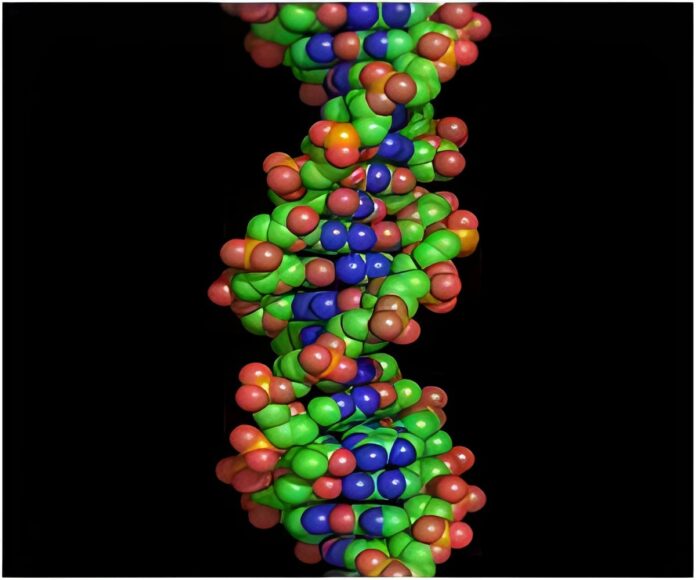
New high-throughput assays track single-molecule DNA-protein interactions in real-time to study genetic disease dynamics.
Latest research highlights advances in single-molecule biophysics. It focuses on how scientists observe DNA-protein interactions in real time using Single-Molecule Imaging. One key method involves combining TIRF (Total Internal Reflection Fluorescence) Microscopy with DNA stretching.(1✔ ✔Trusted Source
Single-molecule DNA flow-stretch assays for high-throughput DNA-protein interaction studies
Go to source
)
Beyond standard microscopy, TIRF is a specialized optical technique used by biophysicists to observe single molecules like the DNA and proteins.
By combining the biological findings from Vilnius University with the technical protocol developed by Ganguli et al. (2026), we can understand the mechanical basis of genetic stability and disease.(2✔ ✔Trusted Source
New Method Enables Study of Individual DNA-Interacting Proteins
Go to source)
What are DNA-Protein Interactions and Why Must We Observe Them?
DNA functions as the primary genetic blueprint, while proteins serve as the functional molecules responsible for its regulation and maintenance. The communication between DNA and protein compounds is called as ‘DNA-protein interaction.’ These interactions are essential for all biological processes, ranging from cellular development to tissue repair.
Observing these interactions at the single-molecule level is critical because the failure of a single protein to identify and correct a genetic damage can lead to permanent mutations. Over time, these unresolved errors in the DNA sequence can result in various hereditary disorders.
Scientists at Vilnius University have created a new way to watch individual proteins interact with DNA in real-time using advanced microscopes. Usually, lab tests only show the average behavior of millions of molecules, which hides important details.
This new method lets researchers see the exact moments when genes are turned on or off and how DNA damage is repaired. Since these tiny interactions are the foundation of all life, seeing them clearly helps us understand how the body stays healthy or how diseases begin. It is a major step forward for medical research.
How Does Single-Molecule Imaging Reveal the Secrets of DNA Repair?
In traditional molecular biology, researchers often rely on ‘ensemble averaging.’ This method measures the collective signals from millions of molecules simultaneously and calculates a mean value.
However, ensemble averaging masks the stochastic (random) behaviors and intermediate steps of individual molecules. To observe these specific details, scientists use single-molecule (SM) assays.
Research from Vilnius University describes how proteins locate specific target sites on a DNA strand. Using fluorescence microscopy, scientists have identified that proteins utilize a combination of 1D sliding, hopping, and 3D diffusion to interact with DNA.
This searching efficiency is vital for DNA repair and replication. When a repair protein fails to locate a lesion (damage) on the DNA strand, it can lead to permanent mutations. These mutations may be the primary cause of various hereditary genetic disorders.
Flow-Stretch Assay – A Faster Way to Study DNA and Proteins
While understanding protein behavior is important, the study by Ganguli et al. mainly focuses on improving the experimental method itself. Single-molecule research has traditionally been low-throughput, meaning it is slow and produces limited data. To overcome this, the researchers optimized the Flow-Stretch Assay to enable faster, high-volume data collection.(3✔ ✔Trusted Source
Single-molecule DNA-flow stretching assay as a versatile hybrid tool for investigating DNA-protein interactions
Go to source
)
In this method, one end of a lambda DNA molecule is attached to a glass surface, and a controlled liquid flow is passed through a microfluidic chamber. The moving liquid stretches the DNA nearly to its full length, keeping it straight along the surface for observation.(2✔ ✔Trusted Source
New Method Enables Study of Individual DNA-Interacting Proteins
Go to source)
Is the Future of Personalized Medicine in the Era of Single-Molecule Imaging?
The integration of high-speed imaging with standardized protocols has direct applications for the broader medical community:
- High-throughput flow-stretch assays allow pharmaceutical labs to test how different chemical compounds alter protein dwell time or translocation speed on DNA, opening new avenues for drug discovery.
- These assays help map the exact locations where transcription factors bind, providing a clearer picture of gene expression.
By moving from average measurements to the observation of hundreds of single molecules simultaneously, scientists are gaining a more precise understanding of the molecular origins of disease.
This technical shift is essential for the development of targeted therapies and personalized medicine.
References:
- Single-molecule DNA flow-stretch assays for high-throughput DNA–protein interaction studies – (https://febs.onlinelibrary.wiley.com/doi/10.1002/2211-5463.70211)
- New Method Enables Study of Individual DNA-Interacting Proteins – (https://www.gmc.vu.lt/en/about/news/5670-a-new-method-enables-the-study-of-individual-dna-interacting-proteins)
- Single-molecule DNA-flow stretching assay as a versatile hybrid tool for investigating DNA-protein interactions – (https://pubmed.ncbi.nlm.nih.gov/39701027/)
Source-Medindia