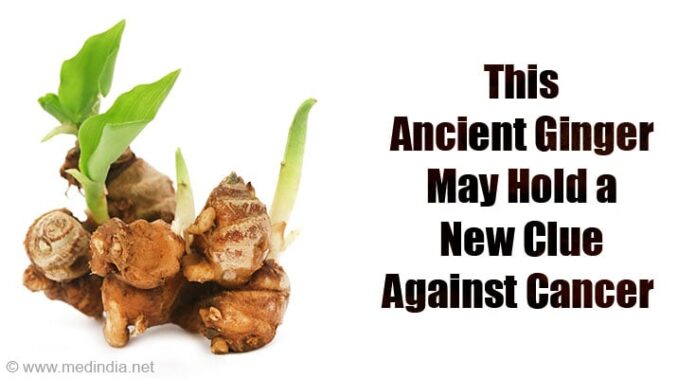
Ethyl p-methoxycinnamate from Kencur ginger suppresses cancer cell growth by disrupting fatty acid synthesis, lowering ATP and slowing tumor proliferation.
- Ginger-derived compound shuts down fatty acid production in cancer cells
- ATP levels plunge even when glucose use rises
- Adding fatty acids reverses growth suppression
Cancer cells survive and multiply by rewiring their internal energy systems. Instead of relying only on normal cellular metabolism, tumors activate alternative biochemical pathways that generate large amounts of fuel and structural building blocks (1✔ ✔Trusted Source
Ethyl p-methoxycinnamate inhibits tumor growth by suppressing of fatty acid synthesis and depleting ATP
Go to source
).
A new laboratory study published in Scientific Reports has identified a plant-derived compound from Kencur ginger (Kaempferia galanga) that disrupts one of these vital pathways, sharply reducing cancer cell growth.
TOP INSIGHT

Did You Know?
#KencurGinger’s natural compound can starve #cancer cells by cutting their #energy (ATP) supply through blocking #FattyAcidSynthesis, slowing tumor growth.
#cancermetabolism #atp #oncology #naturaltherapy #medindia
How Do Cancer Cells Generate Energy for Rapid Growth?
Many tumors display the Warburg effect, meaning they depend heavily on glycolysis to produce ATP, the molecule that powers cellular functions. However, cancer cells also rely on de novo fatty acid synthesis, a process that manufactures fats inside the cell to build membranes and store energy.
In this study, researchers examined Ehrlich ascites tumor cells (EATCs), a widely used experimental cancer model. Cells were exposed to ethyl p-methoxycinnamate (EMC), the principal bioactive molecule found in Kencur ginger, to determine how lipid and energy metabolism were affected.
When treated with 100 micromolar ethyl p-methoxycinnamate (EMC), tumor cells showed a marked decline in intracellular ATP (adenosine triphosphate).
Surprisingly, glucose uptake and lactate production increased, indicating that glycolysis was actually stimulated. Despite this compensation attempt, total cellular energy fell sharply, pointing toward another metabolic target.
What Did the Study Reveal About Fatty Acid Synthesis?
Detailed molecular analysis showed that EMC significantly suppressed genes central to fatty acid production, including Acly (ATP citrate lyase), Acc1 (acetyl-CoA carboxylase alpha), and Fasn (fatty acid synthase). These enzymes normally convert citrate into fatty acids that tumors use for membrane formation and energy reserves.
As enzyme activity dropped, intracellular triglyceride levels also declined, confirming that lipid production had been disrupted. To test whether this pathway truly explained the energy collapse, scientists supplemented the cells with palmitic acid, a major fatty acid. ATP levels partially recovered, and tumor cell proliferation improved, demonstrating that blocking lipid synthesis was the main driver of EMC’s anticancer effect.
Does Energy Depletion Slow Cancer Cell Division?
The research further revealed that EMC-induced ATP depletion interfered with the G1 to S phase transition of the cell cycle, a crucial checkpoint required for DNA replication and cell division. With insufficient energy available, tumor cells were unable to progress efficiently through this stage, leading to slowed proliferation rather than immediate cell death.
The investigators also observed reduced activity of metabolic regulators such as SREBP1 and altered phosphorylation of c-Myc, proteins known to control lipid metabolism and tumor growth. These molecular changes reinforced the conclusion that fatty acid synthesis represents a vulnerable metabolic node in cancer cells.
This carefully controlled laboratory study demonstrates that ethyl p-methoxycinnamate from Kencur ginger disrupts fatty acid synthesis, drains cellular ATP, and halts tumor cell proliferation.
Although the findings are limited to cell models and not yet tested in humans, they highlight cancer metabolism as a promising therapeutic target and position plant-derived molecules as potential starting points for future anticancer drug development.
Frequently Asked Questions
Q: What is Kencur ginger and why is it being studied in cancer?
A: Kencur ginger is a Southeast Asian medicinal plant whose bioactive compound EMC has shown the ability to disrupt cancer cell energy pathways in laboratory studies.
Q: How does natural bioactive compound EMC slow tumor growth?
A: It blocks fatty acid synthesis, reduces ATP production, and prevents cancer cells from progressing through the cell cycle.
Q: Was this research done in humans?
A: No. The experiments were conducted in cultured tumor cells, so clinical studies are needed before any medical use.
Q: Can eating ginger provide the same anticancer effect?
A: Dietary ginger contains many compounds, but the concentrations of EMC used in the study are far higher than those obtained from food.
Q: Which doctor would handle metabolic-based cancer therapies?
A: A medical oncologist would be the appropriate specialist for emerging cancer treatment strategies.
Reference:
- Ethyl p-methoxycinnamate inhibits tumor growth by suppressing of fatty acid synthesis and depleting ATP – (https://pubmed.ncbi.nlm.nih.gov/40312456/)
Source-Medindia