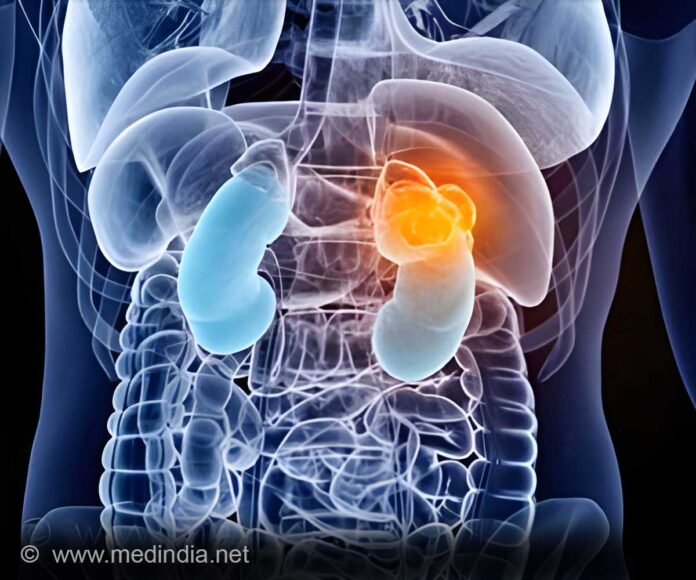
A San Diego biotech launches its first human trial of a molecular glue designed to destroy cancer cells by targeting harmful proteins in kidney cancer.
A molecular glue designed to make cancer cells self-destruct has now entered human testing for kidney cancer. ().
A San Diego biotechnology company claims its molecular glue can prompt cancer cells to eliminate themselves, and that claim is now being tested in patients.
After drawing worldwide attention from scientists and securing billions of dollars from major pharmaceutical companies, Neomorph announced on Tuesday that it has launched its first clinical trial. The molecular glue is intended to treat a specific type of kidney cancer.
The initial trial will administer the molecular glue NEO-811 to a single patient diagnosed with clear cell renal cell carcinoma, the most prevalent form of kidney cancer. In San Diego County, about 500 people receive a kidney cancer diagnosis every year, which averages to more than one new case daily, according to the California Cancer Registry.
Among individuals aged 65 and older, the rate is more than four times higher than the general population, with roughly 2,000 San Diego residents in this age group diagnosed with some form of kidney cancer each year.
Molecular Glue Targeting Harmful Proteins
Unlike many cancer treatments, including chemotherapy, that can harm both healthy and cancerous cells, Neomorph’s molecular glue works by guiding the body to remove damaging proteins. It does this by tagging those proteins as “trash,” allowing enzymes to recognize and discard them.
“It’s the dream of every discovery scientist to have a molecule that progresses into the clinic,” said Dr. Phil Chamberlain, chief executive officer and founder of Neomorph. Chamberlain is well known in the scientific community for his role in advancing molecular glue degraders.
Protein Interactions and Solid Tumor Strategy
Inside the human body, proteins function as essential workers responsible for tasks such as transporting oxygen, repairing DNA, and controlling cell division or breakdown. At any given moment, hundreds of thousands of proteins interact, sometimes binding together and sometimes passing without effect. Neomorph’s method seeks to influence these interactions as a way to treat solid tumors using molecular glue.
“The incredible thing about glues is they have no respect for normal limits,” Chamberlain said, explaining that molecular glue can bind to different proteins and potentially draw in enzymes that initiate a destructive biological process.
“The issue is that nobody knows exactly where they will and won’t work,” he added. That uncertainty is now being explored through Neomorph’s first clinical investigation.
Clear Cell Renal Cell Carcinoma Focus
Chamberlain selected clear cell renal cell carcinoma as the initial target because it highlights the promise of the molecular glue approach. “There are lots of cases of it in the U.S., and most of the patients have a particular mutation. So it’s a large population, but it’s also a precision medicine,” he said.
Neomorph is also aiming to broaden its molecular glue degrader efforts to include other solid tumors, although Chamberlain did not specify which cancers may be addressed next.
Pharmaceutical Partnerships and Major Investments
Large pharmaceutical companies showed confidence in Neomorph even before clinical testing began.
Since its establishment in 2020, Neomorph has secured close to $5 billion in agreements with pharmaceutical partners. Last year, the company entered into a $1.6 billion agreement with AbbVie, granting the option to license its molecular glue.
In 2024, Novo Nordisk signed a $1.46 billion deal with Neomorph, followed by a $1.45 billion agreement with Biogen later that same year.
Neomorph’s business approach centers on collaborating with pharmaceutical companies to advance different disease areas while simultaneously developing its wholly owned pipeline, funded by its sole investor, Deerfield Management Co.
Industry Response and Competitive Landscape
“Protein degraders represent a groundbreaking advancement in the field of drug discovery, and at AbbVie, we are committed to advancing this technology forward,” said Steven Elmore, vice president of small molecule therapeutics and platform technologies at AbbVie.
Other pharmaceutical companies that have not partnered with Neomorph are investing in their own molecular glue programs. Toward the end of last year, Pfizer supported Boston-based Triana Biomedicines with a $120 million Series B funding round to move its molecular glue into clinical testing.
Chamberlain said results from the first clinical trial are expected within the next year. In the meantime, he is concentrating on expanding the company’s workforce, which currently includes 80 employees.
“We’ll be expanding our team within the San Diego area,” Chamberlain said. “It’s a world-famous biotech hub, and so it’s really the chance to work in a beautiful location but also not compromise your career.” He added that Neomorph plans to hire for roles in development and discovery.
“There’s wonderful talent in San Diego, and it’s usually not difficult to persuade people to move to San Diego, especially this time of year,” Chamberlain said.
In conclusion, Neomorph’s entry into human testing marks a significant step for molecular glue technology, offering a targeted way to eliminate cancer-driving proteins while expanding innovation and growth within the biotech sector.
Reference:
- ‘Molecular glue’ from this San Diego startup makes cancer self-destruct; Big Pharma bets billions ( https://www.sandiegouniontribune.com/2026/02/03/molecular-glue-from-this-san-diego-startup-makes-cancer-self-destruct-big-pharma-bets-billions/ )
Source-Medindia