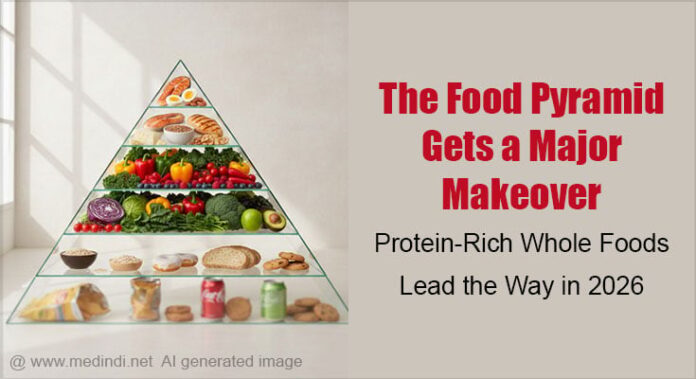
New US dietary guidelines prioritize protein and vegetables over refined grains, signaling a major nutrition shift to tackle obesity and metabolic disease.
- Protein rich foods and vegetables are placed at the top of the new pyramid
- Refined grains and sugars are shifted to the lowest tier
- Guidelines reflect growing focus on metabolic and obesity prevention
For decades, the traditional food pyramid advised Americans to consume large amounts of grains while limiting fat and animal-based foods. Despite widespread adoption, population health outcomes worsened. Obesity, type 2 diabetes, and metabolic disorders increased steadily, raising questions about whether carbohydrate heavy dietary guidance aligned with human physiology (1✔ ✔Trusted Source
Kennedy, Rollins Unveil Historic Reset of U.S. Nutrition Policy, Put Real Food Back at Center of Health
Go to source
).
The newly proposed 2026 food pyramid introduces a major shift by placing meat, eggs, cheese, and non-starchy vegetables at the top. Refined grains, sugars, and ultra processed foods are positioned at the bottom, signaling reduced intake.
TOP INSIGHT

Did You Know?
The US followed a grain heavy #FoodPyramid for over 30 years, yet adult #obesity rates rose from about 23 percent to over 42 percent, prompting a major dietary rethink.
#foodpyramid #proteindiet #nutritionscience #metabolichealth #medindia
Why the US Food Pyramid Is Being Revised
The original low-fat pyramid was introduced in the early 1990s to reduce cardiovascular risk. However, national surveillance data show that adult obesity prevalence increased from approximately 23 percent in 1990 to over 42 percent in recent years.
Research now links excessive refined carbohydrate intake to insulin resistance, fat accumulation, and chronic low-grade inflammation. These metabolic changes increase the risk of obesity, diabetes, and cardiovascular disease.
Scientific Evidence Supporting Protein Rich Diets
A controlled metabolic study published by Hall and colleagues demonstrated that participants consuming ultra processed, carbohydrate rich diets ate an average of 500 extra calories per day compared to those on minimally processed diets, leading to rapid weight gain.
In contrast, higher protein diets improve satiety and energy regulation. A systematic review in the American Journal of Clinical Nutrition reported that protein enriched diets resulted in greater fat loss, better preservation of lean muscle, and improved blood glucose control.
Role of Vegetables and Whole Foods in Metabolic Health
- Vegetables remain central in the updated pyramid due to their fiber, micronutrients, and phytochemicals.
- Dietary fiber slows glucose absorption, improves gut microbiota diversity, and reduces systemic inflammation.
- Whole food-based eating patterns consistently show lower risks of obesity and metabolic syndrome compared to diets dominated by ultra processed foods.
Why Refined Grains and Sugars Are Demoted
Refined grains and added sugars contribute nearly 60 percent of daily calories in the average American diet. Studies associate high intake with increased body weight, fatty liver disease, and cardiovascular mortality.
By lowering their prominence, the revised pyramid aims to reduce calorie overconsumption and improve long term metabolic outcomes.
Final Takeaway
The redesigned food pyramid reflects modern nutrition science rather than calorie focused dogma. Emphasizing protein rich whole foods and vegetables while limiting refined carbohydrates may help address obesity and metabolic disease at a population level.
Frequently Asked Questions
Q: Why did the US change the food pyramid?
A: Rising obesity and diabetes rates despite decades of low-fat advice triggered a reevaluation of dietary science.
Q: Is eating more protein safe for adults?
A: Yes, evidence shows balanced protein intake improves satiety, muscle health, and metabolic control in healthy adults.
Q: Are grains completely removed from the new food pyramid?
A: No, whole grains may still be included, but refined grains are recommended in limited amounts.
Q: Does the new food pyramid support weight loss?
A: Higher protein and vegetable intake helps reduce hunger and may prevent overeating.
Q: Is this diet suitable for long term health?
A: When based on whole foods, protein rich dietary patterns are linked to improved metabolic and cardiovascular outcomes.
Reference:
- Kennedy, Rollins Unveil Historic Reset of U.S. Nutrition Policy, Put Real Food Back at Center of Health – (https://www.usda.gov/about-usda/news/press-releases/2026/01/07/kennedy-rollins-unveil-historic-reset-us-nutrition-policy-put-real-food-back-center-health)
Source-Medindia