It started, as these things often do, with a sense of unease.
In acute assessment areas, where the pace is high-pressure and decisions are made in minutes, older adults were presenting with sudden changes. Some were unusually drowsy, others restless or disoriented. Staff sensed something was wrong, but weren’t always sure what.
Too often mistaken for tiredness, low mood, or just the “expected” confusion of older age, delirium is, in fact, a medical emergency.
An audit of practice across key frontline areas revealed something many had suspected but couldn’t quite quantify: recognition of delirium wasn’t consistent. The nationally recommended 4AT tool wasn’t always being used, and hypoactive presentations, those quieter, easy-to-miss cases, were particularly likely to slip under the radar.
But here’s where things changed.
The response wasn’t defensive. It was honest.
Staff didn’t say, “That’s just how it is.”
They asked: “How can we do better?”
Learning in Practice
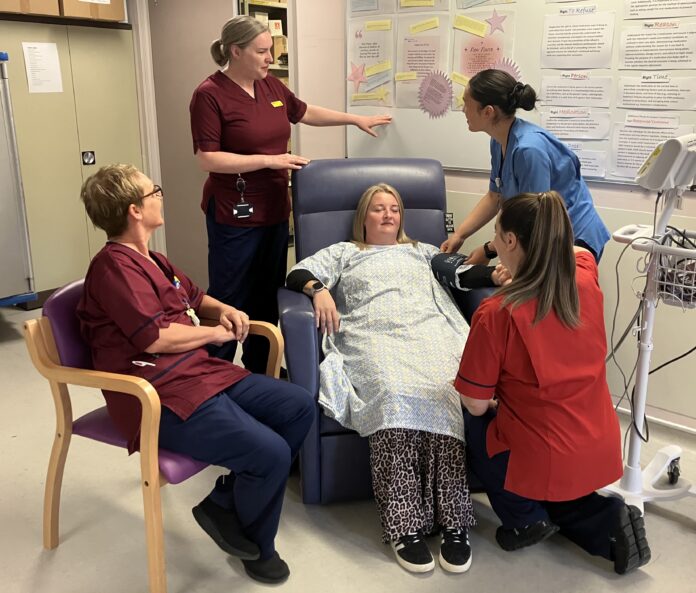
To support staff on shift, on the ward, in the thick of it, delirium simulation sessions were introduced right in the clinical areas. Real scenarios. Real questions. Real patient stories behind the learning.
Over 60 NMAHP staff members took part, many newly qualified or early in their careers. These sessions weren’t about ticking a training box, they were about slowing down just long enough to truly connect with what delirium is and what it means.
And that’s when it happened: the light bulb moments.
“I didn’t realise it was this serious.”
“I used to think delirium was just a bit of confusion.”
“I can make a difference.”
Those reflections kept coming. Staff began to understand that delirium isn’t just distressing, it can be life-threatening. It increases the risk of falls, functional decline, longer stays, and even death. But crucially, it’s often preventable and treatable when caught early.
From Awareness to Action
The sessions explored how to use the 4AT tool effectively and introduced the TIME bundle a simple yet powerful approach to identify Triggers, conduct Investigations, provide responsive Management, and Engage families and carers.
And practice began to shift.
Staff shared how they were using the tool more consistently. They reported feeling more confident not just in recognising delirium, but in knowing what to do next. Communication improved, documentation strengthened, and families were being involved earlier.
Most importantly, 4AT compliance rose dramatically from just 20% to between 80% and 100% across key areas. It became part of daily thinking, not an afterthought.
Simple changes like checking that hearing aids were in and working, ensuring hydration, reducing noise suddenly had greater meaning. They weren’t “nice to haves.” They were core and fundamental to preventing harm.
“I used to watch and wait. Now I act sooner.”
“Knowing how much this can affect someone’s outcome has changed the way I think.”
What’s next?
Staff also told us they wanted more. More time. More support. More space to reflect and ask questions.
This is just the beginning of a wider commitment to embedding delirium awareness into everyday care not as a one-off initiative, but as a shift in culture.
Because once you see delirium clearly, you can’t unsee it.
Once you understand its impact, you can’t ignore it.
And once you empower staff with knowledge, tools, and time they can change lives.
Final Thoughts
Delirium might be common, but it should never be considered “normal.”
With the right support, we can recognise it sooner, respond faster, and help more people return home safely.
Because at the heart of all of this is one simple truth:
When we understand delirium, we change its story.
And in doing so, we change the outcomes for patients, for families, and for the staff who deliver care.
Contributor
Yvonne Cairns
Nurse Consultant Dementia & Delirium, NHS Forthvalley
Catherine Swan
Clinical Nurse Educator & with special thanks to Julie Mardon
Health Improvement Scotland delirium website for support for those with delirium and their carers can be found here