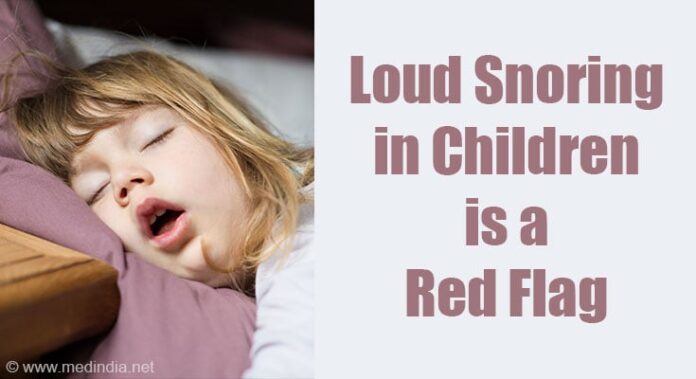
The article explains how habitual snoring in children may signal obstructive sleep apnoea and outlines risks and treatment pathways.
- Habitual snoring affects 3 to 12% of children and may indicate obstructive sleep apnoea
- The BEARS sleep screening tool helps primary care doctors detect early sleep problems
- Enlarged tonsils, obesity and allergic rhinitis are the most common risk factors
Snoring in children is often dismissed as harmless, but guidance published in the Singapore Medical Journal urges parents and primary care doctors to take a closer look. What may sound like ordinary nighttime noise can sometimes signal obstructive sleep apnoea (OSA), a condition that affects breathing during sleep and may interfere with a child’s growth, behaviour and learning (1✔ ✔Trusted Source
Approach to the snoring child
Go to source
).
Up to 28% of healthy children snore occasionally, while 3% to 12% experience habitual snoring, defined as snoring three or more nights a week. OSA affects a smaller proportion of children overall, but its consequences can be significant. One study found OSA in 18% of six year olds performing in the lowest 10% of their academic cohort, with improvement after treatment. After surgery for enlarged tonsils or adenoids, residual OSA may still persist in 34% to 87% of children, particularly in those who are obese.
Why Habitual Snoring in Children Should Not Be Ignored
Snoring happens when airflow is partially blocked and soft tissues in the throat vibrate during sleep. While occasional snoring during a cold is common, habitual snoring can be a sign of sleep disordered breathing. In more severe cases, repeated airway obstruction leads to disrupted sleep and low oxygen levels.
Untreated OSA has been linked to daytime sleepiness, hyperactivity, behavioural concerns and poor school performance. Some children may not appear sleepy at all. Instead, they may seem restless, inattentive or unusually irritable. Over time, the strain of disturbed breathing can also affect cardiovascular and metabolic health (2✔ ✔Trusted Source
Use of the ‘BEARS’ sleep screening tool in a pediatric residents’ continuity clinic: a pilot study
Go to source).
Common Risk Factors for Obstructive Sleep Apnoea in Children
Doctors are advised to watch for three major risk factors: enlarged tonsils or adenoids, obesity, and allergic rhinitis. OSA is most often seen between ages two and eight, when tonsils and adenoids are relatively large. A second wave appears in older children, often linked to rising childhood obesity.
Children who breathe through their mouth, snore loudly every night or struggle with nasal congestion may need closer evaluation. Recognising these warning signs early can prevent longer term complications.
How the BEARS Sleep Screening Tool Helps Detect Sleep Problems
Primary care providers are encouraged to use the BEARS sleep screening tool, a simple questionnaire covering Bedtime problems, Excessive daytime sleepiness, Awakenings, Regularity of sleep, and Sleep disordered breathing. The questions are tailored for preschoolers, school aged children and adolescents, making it easier for families to discuss concerns.
If screening suggests possible OSA, further assessment and, when needed, an overnight sleep study can confirm the diagnosis. Mild cases may improve with medical therapy such as intranasal treatments, while enlarged tonsils or adenoids may require surgery.
The most important message is simple. Persistent snoring is not just noise. It may be your child’s body signalling that sleep is not as restful as it should be.
If your child snores most nights or struggles during the day, do not brush it aside. A simple conversation with your doctor could protect your child’s sleep, learning and long term health.
Frequently Asked Questions
Q: What is habitual snoring in children?
A: Habitual snoring in children means snoring three or more nights per week and may signal sleep disordered breathing.
Q: What are common symptoms of obstructive sleep apnoea in children?
A: Common symptoms of obstructive sleep apnoea in children include loud nightly snoring, mouth breathing, restless sleep, daytime sleepiness, hyperactivity and learning difficulties.
Q: What are the main risk factors for paediatric obstructive sleep apnoea?
A: The main risk factors for paediatric obstructive sleep apnoea are enlarged tonsils or adenoids, obesity, and allergic rhinitis or chronic nasal congestion.
Q: How does the BEARS sleep screening tool work?
A: The BEARS sleep screening tool uses five domains covering bedtime problems, daytime sleepiness, night awakenings, sleep schedule, and sleep disordered breathing to identify possible sleep issues.
Q: Can adenotonsillectomy cure obstructive sleep apnoea in children?
A: Adenotonsillectomy is a common treatment for obstructive sleep apnoea in children with enlarged tonsils or adenoids, but some children may continue to have residual symptoms and require follow up.
References:
- Approach to the snoring child – (https://pmc.ncbi.nlm.nih.gov/articles/PMC7905134/#ref-list1)
- Use of the ‘BEARS’ sleep screening tool in a pediatric residents’ continuity clinic: a pilot study – (https://www.sciencedirect.com/science/article/abs/pii/S1389945704001686?via%3Dihub)
Source-Medindia