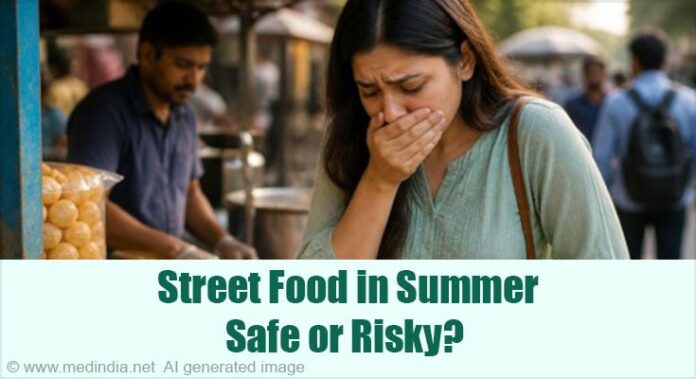
Street food in summer increases food poisoning risk due to heat-driven bacterial growth, poor hygiene, and unsafe storage.
- Summer heat speeds up bacterial growth, increasing food poisoning risk
- Common pathogens include E. coli, Salmonella, and Staphylococcus
- Symptoms range from diarrhea and vomiting to severe dehydration
Street food is hard to resist, especially on hot summer evenings when cravings peak. From spicy snacks to chilled drinks, these quick bites feel refreshing in the moment. But the same foods can quietly increase the risk of illness when exposed to high temperatures. Heat allows bacteria to grow rapidly in food that is not stored or handled safely, raising the risk of food poisoning (1✔ ✔Trusted Source
Microbiology of street food: understanding risks to improve safety
Go to source
).
Eating street food in summer is associated with a higher chance of food poisoning and gastroenteritis, mainly because bacteria multiply faster in warm conditions. Evidence from food microbiology studies shows that harmful microbes can increase quickly when food is kept without proper refrigeration or hygiene, sometimes within just a few hours.
Food poisoning occurs when contaminated food is consumed, leading to symptoms such as diarrhea, vomiting, abdominal cramps, and fever. While many cases are mild and resolve on their own, some individuals may develop severe dehydration and require medical attention.
Street food continues to be widely popular due to its affordability and taste. However, many vendors operate with limited temperature control and sanitation. This creates conditions where bacteria such as E. coli, Salmonella, and Staphylococcus can contaminate food.
Why Street Food Is Riskier in Summer
High temperatures speed up food spoilage. When food is left at room temperature in hot weather, bacteria multiply quickly. Microbiological evidence shows that warm conditions can sharply increase bacterial growth in a short time.
Street food is often exposed to open air, dust, and repeated handling. In some cases, leftover food may be reused without refrigeration, further increasing the risk of contamination (2✔ ✔Trusted Source
Street Food: Assessing Its Impact On Public Health, Economy, And Society In Light Of Nutritional Benefits And Microbial Risks – A Narrative Review
Go to source).
How Food Poisoning and Gastroenteritis Develop
Gastroenteritis is an infection of the stomach and intestines, usually caused by contaminated food or water.
Common symptoms include diarrhea, vomiting, stomach cramps, fever, and dehydration. Most people recover within a few days, but severe cases, especially in vulnerable individuals, may require medical care.
Common High-Risk Street Foods in Summer
- Cut fruits and raw vegetables exposed to the environment
- Chutneys and sauces stored without cooling
- Dairy-based foods that spoil quickly in heat
- Contaminated water or ice used in beverages and pani puri
These foods are more likely to harbor bacteria when hygiene and temperature control are inadequate.
Who Is Most at Risk of Severe Illness?
Children, older adults, and individuals with weakened immunity are more vulnerable to complications such as dehydration. People with existing digestive conditions may also experience more severe symptoms (3✔ ✔Trusted Source
Street Food in Summer: How Your Cravings Could Lead To Food Poisoning, Gut Infections
Go to source
).
How to Eat Street Food Safely in Summer
The increased risk of food poisoning in summer highlights the importance of making safer food choices. Choosing freshly cooked, hot food is generally safer than eating items that have been stored or exposed for long periods. Avoiding raw or pre-cut foods and ensuring safe drinking water can further reduce risk.
Current evidence is based mainly on observational findings and microbiological studies, which show strong associations but do not establish direct causation. However, maintaining hygiene and proper food handling remains essential to prevent avoidable infections.
Frequently Asked Questions
Q: What is food poisoning?
A: Food poisoning is an illness caused by consuming contaminated food, leading to symptoms like diarrhea, vomiting, and fever.
Q: Why is street food riskier in summer?
A: High temperatures allow bacteria to grow quickly, especially when food is not stored properly.
Q: What is gastroenteritis?
A: It is an infection of the stomach and intestines that causes diarrhea, vomiting, and abdominal discomfort.
Q: Who should be more careful?
A: Children, older adults, and people with weak immunity are at higher risk of complications.
Q: How can I prevent food poisoning?
A: Eat freshly cooked food, avoid raw items from open vendors, ensure clean water, and choose hygienic food sources.
References:
- Microbiology of street food: understanding risks to improve safety – (https://pubmed.ncbi.nlm.nih.gov/37516449/)
- Street Food: Assessing Its Impact On Public Health, Economy, And Society In Light Of Nutritional Benefits And Microbial Risks – A Narrative Review – (https://seer.uftm.edu.br/revistaeletronica/index.php/acbioabras/article/view/8047)
- Street Food in Summer: How Your Cravings Could Lead To Food Poisoning, Gut Infections – (https://www.healthandme.com/nutrition/street-food-in-summer-how-your-cravings-could-lead-to-food-poisoning-gut-infections-article-154167099)
Source-Medindia