The trendy 8-hour eating window might look good on social media, but recent data show it could be risky for your heart.
- Eating all your meals within an 8-hour window was associated with a 91% higher risk of cardiovascular death in a large study
- Short-term metabolic improvements from time-restricted eating do not guarantee long-term heart health benefits
- Quality of food, consistent patterns and individual health status matter more than simply shrinking your eating window
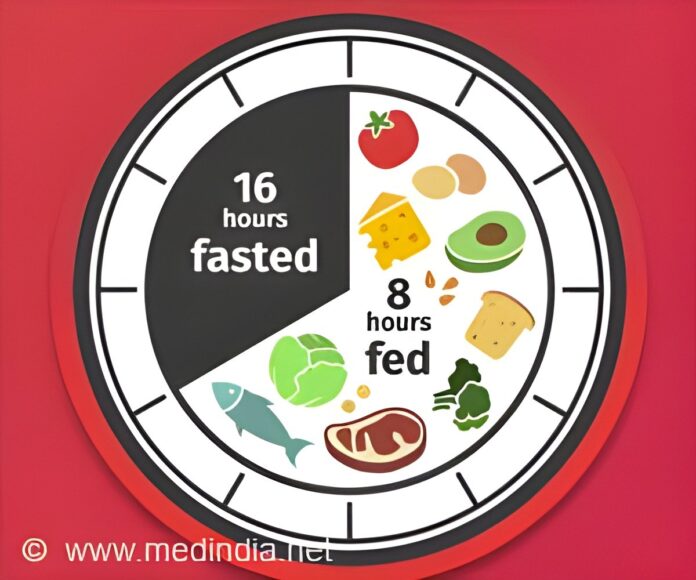
In recent years, diets where people eat only during certain hours each day have grown in popularity. This eating pattern is often called time-restricted eating (TRE) or a form of intermittent fasting (IF). The idea is simple: you limit your eating window, say to 8 hours per day, and fast for the remaining hours. Some early studies suggested possible benefits for weight loss, blood sugar and other metabolic markers (1).
But new research has raised a caution flag: when it comes to long-term heart health, things may not be as straightforward as previously thought (2).
Link Between 8-Hour Eating Window and Heart Risk
A large observational study found that people who consumed all their dietary intake within less than eight hours per day had a 91% higher risk of death from cardiovascular disease compared to those who spread their meals across 12-16 hours (3). The data came from U.S. adults monitored for several years and linked to the National Death Index.
Among individuals with existing heart disease or cancer, an eating window of eight to less than ten hours was associated with a 66% higher risk of cardiovascular death. Importantly, many experts stress that this research shows an association, not proof that the eating pattern causes the increased risk (4).
Short-Term Benefits of Intermittent Fasting Versus Long-Term Risks
Smaller trials and meta-analyses have found that TRE or IF may help improve some risk factors- body weight, blood sugar control, blood pressure and lipids (5), but when it comes to how you live decades later, the evidence is far less clear. A review from Keck Medicine of USC notes that while weight loss is unquestionably beneficial for heart health, the long-term effects of intermittent fasting remain uncertain (6).
In other words, you may see early benefits, but whether this eating style supports healthy hearts in the long run is still an open question.
Why Does a Short Eating Window Increase Cardiovascular Risk?
Researchers are exploring several possible explanations for how a short eating window might carry risk. One idea is that eating within just eight hours may disrupt natural metabolic and circadian rhythms, affecting things like lipid metabolism and inflammation (7). Another factor: people who adopt very short eating windows may also have other health risks or behaviours (e.g., undereating, missing nutrients, irregular sleep) that contribute to cardiovascular harm. In short, it’s not certain that the eating window itself is the culprit, but it may be a marker of other risks (4).
Is Time Restricted Eating Good for Your Heart Health?
If you are considering an eating window of eight hours or less, especially if you have a heart condition, it’s wise to proceed with caution. The research suggests that widely-promoted eating windows may not suit everyone, particularly those with cardiovascular disease. Rather than focusing solely on the clock, emphasis should remain on quality of diet, regular eating patterns, adequate nutrition, and individual health status. If you have existing heart issues or metabolic conditions, talk with your healthcare provider about whether TRE is appropriate for you.
Balanced Approach to Meal Timing and Heart Wellness
Here are practical suggestions to align eating patterns with heart health:
- Aim for a moderate eating window (for example, 10-12 hours per day) unless advised otherwise by a doctor.
- Focus on nutrient-rich foods, not just the timing of meals.
- Avoid skipping meals regularly or eating very late into the night, as this may impair metabolism and disrupt sleep.
- Combine eating pattern changes with physical activity, stress management and known heart-healthy lifestyle choices.
- If you are already engaging with shorter eating windows, monitor your heart health with your doctor, and look out for new evidence as research evolves.
Time-restricted eating has intrigued both the public and scientists for good reason. It offers a simple framework and promising short-term benefits. But recent large-scale data raise serious questions about long-term safety for cardiovascular health, particularly when the eating window is very narrow. Until more definitive research is completed, we should treat TRE as one of many tools- not a one-size-fits-all solution. Prioritizing overall diet quality, stable routines, and medical guidance remains the most robust path toward a healthy heart.
Frequently Asked Questions
Does an eight-hour eating window cause heart disease?
The research shows an association, not proof of causation, but suggests caution.
If I’m healthy, is intermittent fasting safe for me?
Possibly, but long-term evidence is limited and individual factors matter.
What should people with heart disease know before trying TRE?
They should consult their doctor because very narrow windows may increase cardiovascular risk.
References:
- Beneficial effects of time-restricted fasting on cardiovascular disease risk factors: a meta-analysis
(Qiu Z, Huang EYZ, Li Y, Xiao Y, Fu Y, Du J, Kan J. Beneficial effects of time-restricted fasting on cardiovascular disease risk factors: a meta-analysis. BMC Cardiovasc Disord. 2024 Apr 16;24(1):210. doi: 10.1186/s12872-024-03863-6. PMID: 38627656; PMCID: PMC11020908.) - 8-hour time-restricted eating linked to a 91% higher risk of cardiovascular death
(https://newsroom.heart.org/news/8-hour-time-restricted-eating-linked-to-a-91-higher-risk-of-cardiovascular-death) - Time-restricted eating may raise cardiovascular death risk in the long term
(https://www.heart.org/en/news/2024/03/18/time-restricted-eating-may-raise-cardiovascular-death-risk-in-the-long-term) - expert reaction to conference abstract about time-restricted eating and cardiovascular death
(https://www.sciencemediacentre.org/expert-reaction-to-conference-abstract-about-time-restricted-eating-and-cardiovascular-death/) - Beneficial effects of time-restricted fasting on cardiovascular disease risk factors: a meta-analysis
(Qiu Z, Huang EYZ, Li Y, Xiao Y, Fu Y, Du J, Kan J. Beneficial effects of time-restricted fasting on cardiovascular disease risk factors: a meta-analysis. BMC Cardiovasc Disord. 2024 Apr 16;24(1):210. doi: 10.1186/s12872-024-03863-6. PMID: 38627656; PMCID: PMC11020908) - Intermittent Fasting and Heart Health
(https://www.keckmedicine.org/blog/intermittent-fasting-and-heart-health/?utm_source=chatgpt.com) - A National Study Exploring the Association between Fasting Duration and Mortality among the Elderly
(Zhang Z, Zhao H, Tao Z, Jiang M, Pu J. A National Study Exploring the Association between Fasting Duration and Mortality among the Elderly. Nutrients. 2024 Jun 26;16(13):2018. doi: 10.3390/nu16132018. PMID: 38999767; PMCID: PMC11242983.)
Source-Medindia