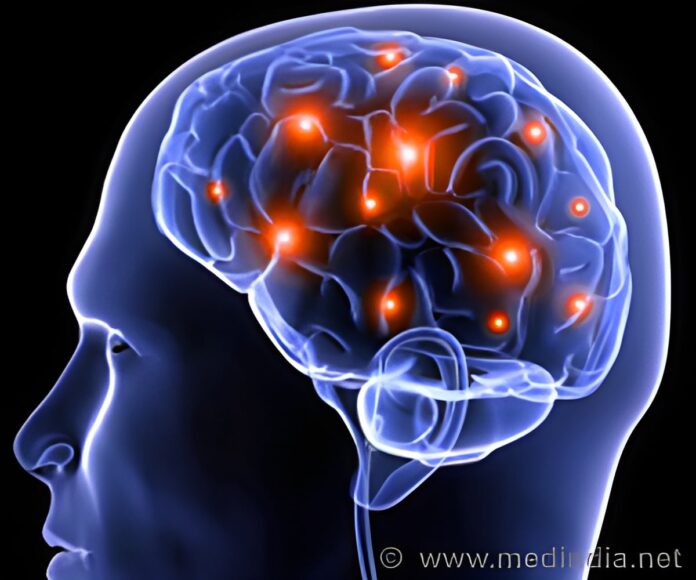
Understanding the brain’s internal representation of consciousness and its role in social attention.
Consciousness is the representation of the present that emerges from the same neural networks as memory (stored information in the brain) and forecasting the future.
There are delays in the processing of neural pathways. These delays are compensated by brain simulation. The brain simulates reality by integrating perception and memory in the frontoparietal region, creating our awareness of the world over time.(1✔ ✔Trusted Source
Perception, Memory, Simulation, and Consciousness: A Convergence of Theories
Go to source
)
The revelation made by researchers from the Boston University School of Medicine, published in the Journal of Cognitive Neuroscience. Michael S. A. Graziano, views this consciousness in the brain as ‘Attention Schema’ and presents his refined perspective on ‘Attention Schema Theory’ (AST).
The new view proposes that consciousness is a data representation or a simplified model of attention in the brain.
TOP INSIGHT

Did You Know?
#Consciousness is an explicit #memory and awareness is a model of past data. By fusing #perception to memory, Attention Schema Theory (AST) maps how we experience the world over time. #memory #psychology #mentalhealth #mentalmodels #neuroscience #AST
The Role of Cognitive Behavioral Neurology in Redefining the Sensory Experience of Time
“The same simulation processes are used whether we are consciously remembering the past, experiencing the present or imagining the future. Perceptual mechanisms represent an ongoing, editable, ‘best estimate’ of our past, present, and future.”
“There is no hard boundary between conscious perception and memory at milliseconds to seconds timescales,” explains corresponding author Andrew Budson, MD, professor of neurology at Boston University Chobanian & Avedisian School of Medicine.
Budson, who also is chief of cognitive behavioral neurology and director of the Center for Translational Cognitive Neuroscience at the Veterans Affairs (VA) Boston Healthcare System.
According to Memory Theory, the Brain Uses Past Data to Construct the Present
Previously, Budson published an opinion paper describing the Memory Theory of Consciousness (in the journal Cognitive and Behavioral Neurology), which suggests that our conscious perceptions, decisions, and actions are actually memories of prior unconscious sensations, decisions and actions.
Hogendoorn, an expert on the timing of conscious perception, argues that at milliseconds to seconds timescales, “there is no hard natural boundary between perception and memory.”
Addis, who studies memory using functional magnetic resonance imaging, suggests that memory, imagination and even our experience of the present are all simulations created by our brain.
Scientists Find Explicit Memory Shapes the Anatomy of the Conscious Brain
The synthesis of their combined theories can explain many mysteries of consciousness including its purpose, anatomy and physiology. “If our synthesis is correct, then we now know the purpose of consciousness, which is the purpose of explicit memory—to use prior information to understand the present moment, imagine possible futures, and plan accordingly,” adds Budson.
The theory also suggests that the anatomy and physiology of consciousness is the anatomy and physiology of explicit memory, which Budson argues is the entire cerebral cortex.
According to the researchers, the new synthesis also complements other theories of consciousness, including global neuronal workspace and predictive processing theories. Budson notes that, “this novel synthesis suggests that many major theories of consciousness may be describing its various parts.”
Reference:
- Perception, Memory, Simulation, and Consciousness: A Convergence of Theories – (https://direct.mit.edu/jocn/article/doi/10.1162/JOCN.a.2429/134847/Perception-Memory-Simulation-and-Consciousness-A)
Source-Eurekalert