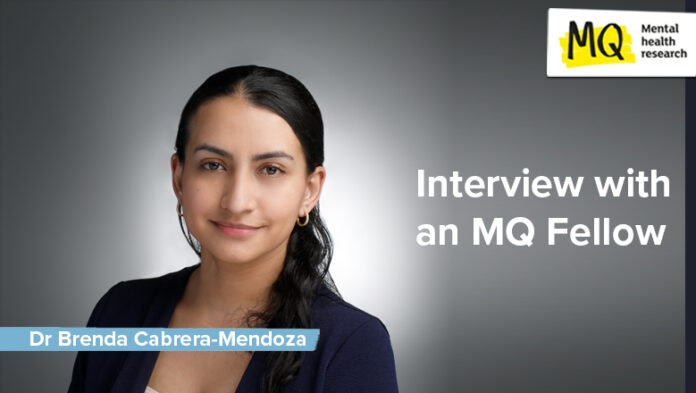
We recently caught up with one of MQ’s newest Fellows, Dr Brenda Cabrera-Mendoza from Yale University. Brenda is researching how to improve the prediction accuracy of the risk of suicide in different groups of people, so that we can have more effective screening programmes to find at-risk individuals and better support them.
You can read more about Brenda’s research here.
Please give a brief summary of your academic career to date:
I trained as both a medical doctor and a scientist in Mexico, where I earned an MD-PhD at the National Autonomous University of Mexico. My PhD research focused on studying molecular changes in the brains of individuals who died by suicide. After completing my PhD, I moved to the United States and joined Dr. Polimanti’s Lab at Yale University, where I now work as a postdoctoral researcher studying how our genes may influence mental health conditions, such as anxiety, addictions, and suicide risk.
How long have you been at your current university/institution and what do you like about it?
I have been at Yale University for almost five years. What I love most about Yale is the strong sense of collaboration, where people from many scientific disciplines come together with a shared goal of improving mental health. It is a place that truly values innovation and teamwork, and that has allowed me to pursue new and transdisciplinary ideas in my research.
What is your area of study?
I study the biology of suicide. My work integrates genetics, brain biology, and environmental factors to better understand how risk develops across a person’s lifetime, particularly in groups that are often underrepresented in research, such as individuals from non-European ancestries.
What motivated you to study this area? Do you have a personal connection to the subject?
Growing up, I saw first-hand how mental illness and suicide affect families and communities, especially in places where mental health care resources are limited. People with mental health conditions go through some of the most painful moments and stigma and silence often make things worse. I think that if we can understand better the causes of these conditions, we will be able to reduce stigma and develop preventive and treatment measures that really help people.