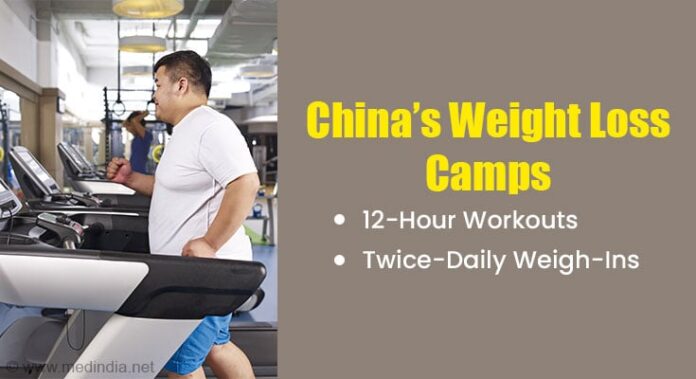
China’s controversial fat prisons reveal how far people will go for fast weight loss in a culture shaped by image.
- These camps enforce intense daily exercise schedules with minimal personal freedom
- Viral influencer videos have made fat prisons popular beyond China
- Experts warn that fast results may not lead to lasting health changes
A new kind of weight loss retreat in China is capturing global attention, and not because of green smoothies or sunrise yoga. Known online as “fat prisons,” these locked-in fitness camps promise rapid weight loss through extreme discipline, regimented exercise, and tightly controlled meals. Videos from inside these facilities have gone viral, sparking equal parts fascination, concern, and debate among health and wellness watchers worldwide (1✔ ✔Trusted Source
Diet for rapid weight loss
Go to source
).
For a growing number of participants, the appeal lies in structure, speed, and the promise of visible results in just weeks. But behind the dramatic transformations is a lifestyle that feels closer to boot camp than wellness retreat.
TOP INSIGHT

Did You Know?
Some Chinese “fat prison” camps make participants exercise up to 12 hours a day, with locked gates and twice-daily weigh-ins. #fatprison #china #weightloss #viralweightloss #weightlosstrends #globalwellness #medindia
What Are China’s Fat Prison Weight Loss Camps?
Often cynically nicknamed fat prisons by the internet, these facilities are not correctional institutions. They are paid weight loss camps where overweight and obese individuals voluntarily enroll for periods ranging from two weeks to a month. The cost ranges from approximately $600 to $1,000 for a month-long stay, covering accommodation, meals, and training.
Participants live in dorm-style rooms with up to five people. Gates are locked, fences are high, and leaving mid-program is not allowed unless there is a valid reason. This enforced isolation is central to the model, removing everyday temptations and distractions.
The concept reflects a broader shift in modern China, where urban lifestyles, social media visibility, and evolving beauty ideals have intensified pressure around body image.
Daily Exercise Routine in Chinese Weight Loss Camps
Life inside these camps follows a tightly scripted schedule. The day begins around 7:30 am with alarms and mandatory weigh-ins. Morning aerobic classes follow, often lasting over an hour. This is just the beginning.
Afternoons bring weight training sessions, while evenings are dominated by high-intensity interval training and spin classes. In some camps, participants exercise for up to 12 hours a day under constant supervision. Each day ends the same way it began, with another weigh-in.
One viral clip shows a mass spinning class that feels more like a nightclub than a gym, complete with loud music and flashing lights. It is intense, exhausting, and intentionally immersive.
Strict Diet Plans Inside Fat Prison Facilities
Meals are minimal, measured, and repetitive. Breakfast may include four hard-boiled eggs, a slice of bread, cucumber, and tomato. Lunch is typically the most filling meal, featuring lean proteins like roasted duck, vegetables, and occasionally fruit.
Carbohydrates are heavily restricted, and portions are controlled down to the last bite. Food is served on stainless steel trays, reinforcing the institutional feel of the experience. Camp staff even inspect luggage to prevent participants from sneaking in snacks.
Why Fat Prisons Are Trending Among Influencers
Much of the global attention comes from social media influencers documenting their experience. One Australian influencer, known online as Eggeats, shared daily videos of her routine, claiming she lost four kilograms in just 14 days.
Her content drew millions of views, with followers praising her discipline while others expressed alarm. In later videos, she appeared visibly distressed, sharing that she felt sick, exhausted, and emotionally drained.
This raw honesty is part of what fuels the trend. For viewers, it offers an unfiltered look at extreme weight loss culture in a highly visual, algorithm-driven world.
Health Concerns Around Rapid Weight Loss Programs
Health experts worldwide caution that rapid weight loss can come with real risks, including fatigue, weakened immunity, hormonal disruption, and burnout. While structured routines can help some people kick-start healthier habits, extreme regimens are rarely sustainable long term.
Critics argue that these camps focus on punishment rather than education. Participants may lose weight quickly, but without learning how to maintain those changes once they return to everyday life.
The locked-in nature of the camps has also raised ethical questions about autonomy, mental health, and the fine line between motivation and coercion.
The Cultural Context Behind Fat Prisons in China
China’s beauty standards have evolved over centuries. Historically, fair skin symbolized privilege, while practices like foot-binding enforced narrow ideals of femininity and desirability. Today, thinness has become a modern marker of success, amplified by social media and urban professional culture.
What makes China’s fat prisons so compelling is not just the discipline, but the promise of certainty. In a world where weight loss is often confusing, slow, and emotionally loaded, these camps offer a clear script: follow the rules, endure the grind, and the scale will move. For many participants, that clarity feels reassuring, even comforting. Yet the system also strips away an important truth: bodies do not exist in isolation from daily life, stress, culture, and mental health.
The buzz around extreme weight loss camps also points to how complicated our relationship with weight has become. The World Health Organization (WHO) notes that “Obesity is classified as a chronic, relapsing disease arising from complex interactions between genetics, neurobiology, eating behaviours, access to healthy diet, market forces, and the broader environment.” It’s a reminder that weight is shaped by far more than daily workouts or portion sizes alone. In that light, tightly controlled programmes may offer a short-term reset, but the real challenge often begins when people step back into the rhythms, pressures, and choices of everyday life (2✔ ✔Trusted Source
Obesity and overweight
Go to source).
The bigger question is not whether these camps “work” in the short term, but what happens when the gates open. Sustainable health is shaped by routines that fit into real lives, not ones enforced behind fences. Without addressing habits, relationship with food, and long-term motivation, rapid weight loss risks becoming a temporary reset rather than a lasting change. The global fascination with fat prisons ultimately reflects a deeper craving for control in an area of life that often feels anything but controllable.
If you are thinking about changing your body, pause and ask what kind of support will still serve you months from now, not just weeks. Choose approaches that respect both your goals and your well-being, because lasting health is built with care, not confinement.
Frequently Asked Questions
Q: What Is a Fat Prison Weight Loss Camp in China?
A: A fat prison weight loss camp in China is a paid residential facility where participants follow strict exercise schedules and controlled diets to lose weight rapidly under supervision.
Q: How Much Weight Can People Lose in Fat Prison Camps?
A: Some participants report losing around four kilograms in two weeks, though results vary depending on duration, starting weight, and individual health.
Q: Are Fat Prison Weight Loss Camps Safe?
A: Fat prison weight loss camps raise health concerns due to intense exercise, calorie restriction, and potential physical and mental strain associated with rapid weight loss.
Q: Why Are Fat Prisons Popular on Social Media?
A: Fat prisons have gone viral because influencers share dramatic before-and-after results and daily routines, offering a raw look at extreme weight loss culture.
Q: Do Fat Prison Programs Lead to Long-Term Weight Loss?
A: Long-term success is uncertain, as many programs focus on short-term discipline rather than sustainable lifestyle habits that continue after leaving the camp.
References:
- Diet for rapid weight loss – (https://medlineplus.gov/ency/patientinstructions/000885.htm)
- Obesity and overweight – (https://www.who.int/news-room/fact-sheets/detail/obesity-and-overweight)
Source-Medindia