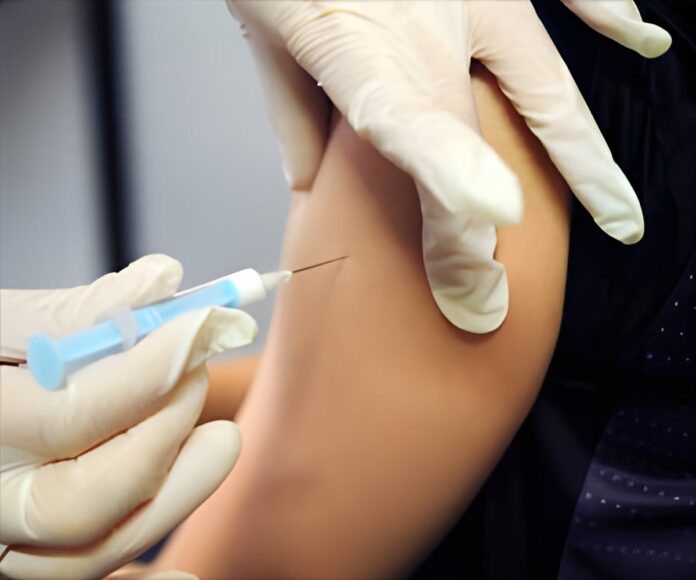
Health leaders stress HPV vaccines and advanced screening as key tools to protect women and reduce cancer deaths.
In a major move to combat one of the country’s most preventable yet deadly cancers, Indian health authorities are prioritizing Human Papillomavirus (HPV) vaccination and DNA-based screening as key strategies to eliminate cervical cancer nationwide. ()
Government officials and health experts say stronger prevention and early detection efforts could dramatically reduce disease burden and save millions of lives.
TOP INSIGHT

Toward a #CervicalCancer-Free India! The Govt is prioritizing #HPVvaccination and high-performance DNA-based screening to eliminate cervical cancer.
With new indigenous #HPVtestkits and a push for self-sampling, the goal of reaching every woman is now closer than ever.
#HealthForAll #CervicalCancerElimination #HPV #NITIAayog
AIIMS Summit Calls for Urgent Expansion of HPV Prevention
At India’s first National Cervical Cancer Elimination Summit, organized by the All India Institute of Medical Sciences (AIIMS) in New Delhi, policymakers, clinicians and public health leaders highlighted the urgent need for expanded HPV vaccine coverage alongside state-of-the-art screening technologies.
The summit brought together more than 500 participants including representatives from national and state health departments, international organizations such as WHO and UNICEF, cancer institutes and civil society groups, all united behind a common goal: ending cervical cancer as a public health challenge.
Officials from the Ministry of Health and Family Welfare reaffirmed the government’s commitment to eliminating cervical cancer by accelerating actions across the prevention-screening-treatment continuum.
Patnaik Urges Stronger Screening to Cut Cervical Cancer Rates
Aradhana Patnaik, Additional Secretary of the National Health Mission, stressed that rapidly expanding access to HPV vaccination and strengthening screening infrastructure, especially through high-performance HPV DNA tests, will be critical to reaching women early and reducing incidence rates. They emphasized that such tests are more accurate in detecting high-risk HPV types compared with older methods.
“Cervical cancer elimination is an achievable goal for India,” Patnaik said, underscoring the need to ensure timely access to vaccination and diagnostics for women across the country.
The summit also highlighted HPV DNA-based screening, including self-sampling options, as a game-changer for early detection. Government leaders said pilot projects demonstrating scalable implementation through primary healthcare platforms would help establish national models to ensure women everywhere benefit from accurate and accessible screening.
DNA-based tests are recognized internationally for their high sensitivity in detecting persistent HPV infections that can lead to cervical cancer, and are increasingly preferred over older visual or cytology-based methods.
Officials emphasized the importance of strong systems, clear operational protocols and consistent partnerships between states and stakeholders to make elimination a reality.
Discussions at the summit also focused on establishing uniform standard operating procedures, enabling hub-and-spoke care networks, and streamlining treatment and follow-up services to ensure high-quality care is available nationwide.
Experts Urge System-Wide Push on HPV Screening
Prof. Dr. V.K. Paul, Member (Health) at NITI Aayog, called India’s efforts “historic,” but emphasized that speed, scale and coordination across the health system are essential. Evidence-based implementation models will be key to adopting HPV DNA testing and strengthening follow-up care for women at risk.
The summit concluded with a national ‘Call to Action’, outlining priority steps to accelerate India’s cervical cancer elimination roadmap. The initiative marks a significant shift from policy discussions to coordinated action, reaffirming India’s commitment to tackling a disease that, with the right mix of prevention and early detection, can be controlled and potentially eliminated.
Cervical Cancer Still a Major Public Health Challenge
Cervical cancer remains a substantial public health concern across low- and middle-income countries like India, where screening coverage has historically lagged and vaccination uptake remains low. Public health experts have long advocated for integrated programmes combining vaccination of adolescent girls with widespread adoption of HPV DNA testing to drive down incidence and mortality.
India’s new focus on HPV vaccination and advanced screening methods represents a bold and evidence-driven strategy to protect women’s health and make significant gains against one of the most common cancers affecting women in the country.
References:
- 10.18 Crore Women Screened for Cervical Cancer – (https://www.mohfw.gov.in/?q=en/pressrelease-279)
Source-Medindia