Anyone who spends time with children and adolescents these days knows that they like hanging out in virtual spaces such as Roblox, and that immersive virtual reality (VR) games are becoming increasingly popular. But what if VR spaces could be used for treatment?
Immersive VR simulates real-world environments with visual, auditory, and often other sensory input that the user receives through a VR headset, officially called a “head-mounted display” (HMD), and other hardware. Results about immersive VR in the treatment of adults are encouraging (Eshuis et al., 2021; Zeka et al., 2024) – and we have blogged about that previously here at The Mental Elf. Given its general playful character and potential for engagement, immersive VR may be a powerful tool in the treatment of children and adolescents as well.
Previous reviews show promising results for young clients (Ridout et al., 2021; Varma et al., 2022; Wiebe et al., 2022). However, these reviews are often narrative, focused on use of VR during medical procedures, and have included both non-immersive VR (e.g., computer games) as well as immersive VR that relies on expensive specialised hardware that is difficult to incorporate in usual clinical practice.
To overcome these limitations, Massanneck and colleagues (2026) conducted a systematic review and meta-analysis in which they only looked at immersive VR treatments delivered through commercially available VR headsets for children and adolescents.
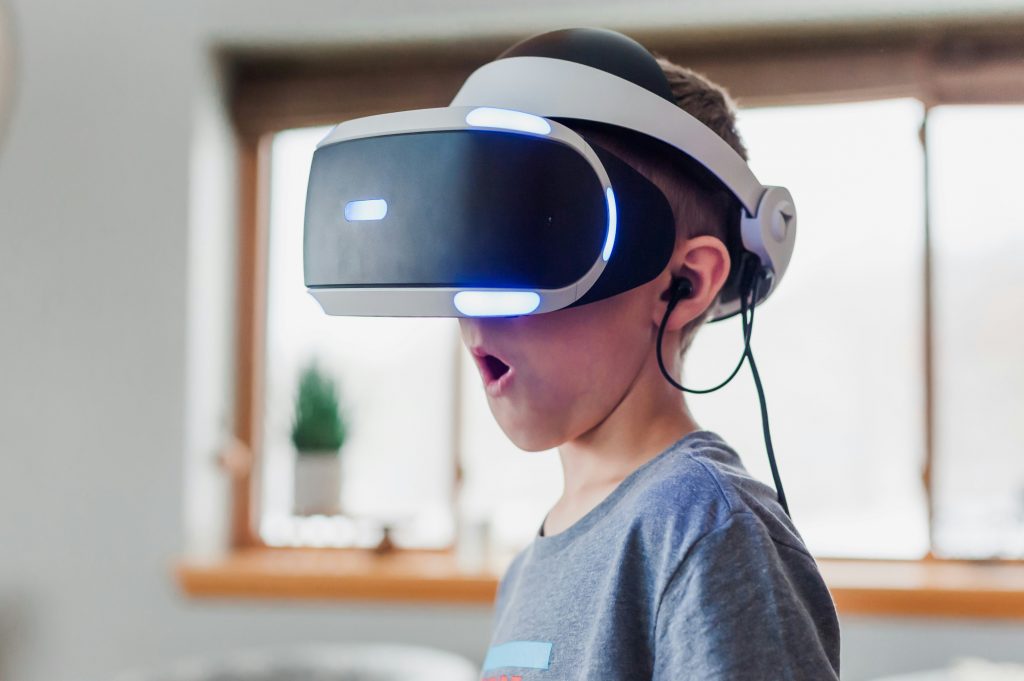
Immersive VR games are becoming a hit with young people. Could the same be the case for immersive VR treatments?
Methods
With a search strategy conforming to PRISMA guidelines, the authors searched across four databases for randomised controlled trials (RCTs) on the effects of immersive VR-assisted psychotherapy versus active (e.g., CBT) or passive (e.g., waitlist) control conditions, for children and adolescents under 18 years. They included studies published from 2016 onwards (until Oct 2024): the year that VR headsets overcame the technical limitations of earlier versions and became widely available for consumer use.
The authors conducted a series of random effects meta-analyses on a total of 67 effect sizes. They also considered moderators such as the usability and interactivity of the treatments, as well as the use of avatars. Risk of bias was assessed with the Cochrane Risk-of-Bias 2 tool (Sterne et al., 2019); three studies (out of the 9 identified) were judged to have low risk of bias, with the rest either having a high risk or not being assessed due to lack of information.
Results
Massanneck and colleagues identified nine eligible studies that included a total of 929 children and adolescents aged 6-18 years (M = 13.3). The studies focused on a range of different conditions, specifically:
- Acrophobia (fear of heights) (n = 1)
- Distractibility (n = 2) and social skills (n = 1) in attention deficit hyperactivity disorder (ADHD)
- Aggressive behaviour (n = 1)
- Anorexia (n = 1)
- Public speaking anxiety (n = 1)
- Prevention of sex- and substance-related risk behaviours (n = 2)
The VR treatments ranged from 1 to 15 sessions (with session length ranging from three minutes to two hours) for up to 12 weeks.
Five studies used virtual classroom environments (some mentioning details like flying paper airplanes as distractors), and five studies had interactive elements (such as playing games in a virtual schoolyard) – 9 studies in total (some overlapping) included interactive elements.
Overall, the meta-analyses showed a small but significant positive effect of the VR treatment (g = -0.26, 95% CI [-0.40 to -0.13]; note that a negative Hedges’ g is in favour of the VR treatment). The effect was moderate when VR was compared to a passive control, such as a waitlist (g = -0.51, 95% CI [-0.76 to -0.27]), and small, but still significant, when VR was compared to other, non-VR treatments, like roleplay interventions (g = -0.13, 95% CI [-0.23 to -0.03]). Sensitivity analyses did not substantially change these findings.
Exploratory analyses showed that treatments involving high interactivity (z = -0.25, p = .01), high usability (z = -0.33, p < .01), and those that made use of highly realistic avatars (z = -0.49, p = .03), had a more positive effect on mental health measures (as with Hedges’ g above, negative values are in favour of the VR treatment).

Overall, VR treatment was more effective than passive control conditions, and at least as effective as other active treatments for children and adolescents across a range of disorders.
Conclusions
This systematic review and meta-analysis demonstrates that VR treatments have potential in the treatment of various conditions in children and adolescents, as they were shown to be more effective than non-treatment, and at least as effective as other treatments. In the authors’ own words,
Our work emphasizes readily accessible and affordable VR hardware suitable for individual practitioners and small clinics.

Massanneck and colleagues focussed on “readily accessible and affordable VR hardware suitable for individual practitioners and small clinics”.
Strengths and limitations
While the findings from this meta-analysis are interesting, the conclusions drawn need to be interpreted in light of some limitations.
First of all, the meta-analysis only comprises nine studies, which is not a high enough number to allow us to draw definite conclusions. Furthermore, although the total sample size included in the meta-analysis (n = 929) is relatively large, about 40% of it comes from one study (Guldager et al., 2022), meaning that this study may have had a disproportionate influence on the pooled findings and could impact overall validity.
Also, due to the lack of follow-up data in most of the original studies, the meta-analysis focuses on the changes from before treatment to right after it (pre- to post- measurements), meaning that we do not know yet whether the positive effects of VR treatment persist after treatment ends, and for how long. This information, however, can help clinical decision-making, as a statistically small treatment effect becomes more practically relevant when it can still be seen, say, half a year after treatment compared to when it disappears faster.
Perhaps the biggest limitation is heterogeneity, i.e. the pooling of a group of studies that looked at a wide range of different health conditions. Systematic reviews should always pool similar studies and the young people in these research studies were experiencing everything from eating disorders to public speaking anxiety, to fear of heights!
That said, this paper also has several strengths. First, the search was conducted in line with the PRISMA guidelines, thus adhering to high quality standards. In my view, another important strength is the focus on specific technology: highly immersive VR treatments delivered using relatively low-cost, commercially available equipment. This not only makes the findings easier to understand, as they are not being obscured by the use of different technologies (e.g., desktop applications), it also makes them directly relevant for therapists who are likely to choose commercial VR set-ups such as the ones used in the studies that this meta-analysis is based on, rather than expensive high-tech VR systems.
Taken together, we can conclude that the paper by Massanneck and colleagues gives a good overview of the state of the art in immersive VR treatments for children and adolescents, whilst highlighting areas where more research is needed.
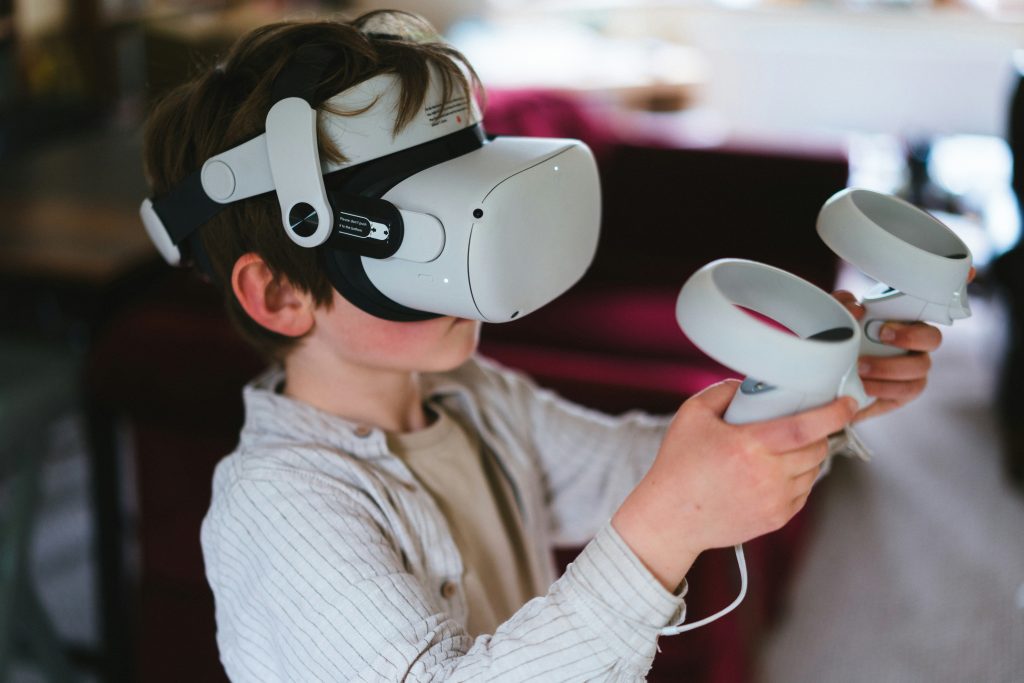
More studies on VR treatments for children and adolescents are needed, particularly in areas where findings are currently missing, such as obsessive compulsive disorder and learning disorders.
Implications for practice
So, should therapists start handing out VR goggles to their young clients?
These findings are promising but, as of yet, limited. Immersive VR treatments seem to be slightly more, or at least as effective as other active treatments for the conditions studied here, which is encouraging. But given the high risk of bias in the studies and the limitation of pooling many varied studies together in one meta-analysis (heterogeneity), we cannot be confident in these findings. So, does this seemingly slight advantage justify a switch to VR treatments?
In my view, there are more factors that need to be taken into account. Immersive VR and its game-like character is probably quite exciting for children and adolescents, which could mean that VR treatments lead to lower dropout rates than traditional treatment formats. This would make VR more advantageous than other treatments, even if effectiveness is of similar magnitude. On the other hand, we know that VR can cause side effects, such as motion sickness and disorientation, which are collectively referred to as “cybersickness” (Lundin et al., 2023). Are these especially annoying – or, given the developmental challenges, even detrimental – for (some) children and adolescents? A recent review found limited evidence that VR is harmful for children under 14, though it was noted that data on safety and adverse side effects of VR for children is rarely reported (Bexson et al., 2024).
This leads to clear implications for researchers and funding agencies: as much as it sounds like a cliché, more research is really needed. Unsurprisingly, research on immersive VR treatments for children and adolescents lags behind that for adults; compare the current size of nine studies to that of meta-analyses on VR treatments for adults, which have included over 50 studies (Zeka et al., 2024). In addition, adverse side-effects, drop-out rates, (longer) follow-up periods, and, as Massanneck and colleagues also point out, a wider range of conditions that are often seen amongst young clients, such as obsessive compulsive disorder, need to be considered too.
Given the increasing affordability of VR hardware for gaming, we are likely to see a rise in VR treatments as well. A strong evidence base is needed to make sure that these treatments are actually helpful.

More information is needed on the potential side effects of immersive VR, such as cybersickness, and how these may affect treatment for children and adolescents.
Statement of interests
Rena Gatzounis has no conflicts of interest to declare. The reference to Roblox is inspired by recent discussions in this Elf’s household, and has no commercial motives.
Edited by
Dr Nina Higson-Sweeney.
Links
Primary paper
Steffen Massanneck, Lennart Seizer, Nadine Schmitt, Anja Pascher, Johanna Löchner (2026). Immersive virtual reality psychotherapy for children and adolescents—A systematic review and meta-analysis. Internet Interventions, 43, 100920. https://doi.org/10.1016/j.invent.2026.100920
Other references
Bexson, C., Oldham, G., & Wray, J. (2024). Safety of virtual reality use in children: a systematic review. European Journal of Pediatrics, 183(5), 2071-2090. https://doi.org/10.1007/s00431-024-05488-5
Eshuis, L. V., van Gelderen, M. J., van Zuiden, M., Nijdam, M. J., Vermetten, E., Olff, M., & Bakker, A. (2021). Efficacy of immersive PTSD treatments: A systematic review of virtual and augmented reality exposure therapy and a meta-analysis of virtual reality exposure therapy. Journal of Psychiatric Research, 143, 516-527. https://doi.org/10.1016/j.jpsychires.2020.11.030
Gatzounis, R. (2025). Immersive virtual reality for the treatment of mental health disorders: anxiety leads the way. The Mental Elf.
Guldager, J. D., Kjær, S. L., Grittner, U., & Stock, C. (2022). Efficacy of the virtual reality intervention VR FestLab on alcohol refusal self-efficacy: A cluster-randomized controlled trial. International Journal of Environmental Research and Public Health, 19(6). https://doi.org/10.3390/ijerph19063293
Lundin, R. M., Yeap, Y., & Menkes, D. B. (2023). Adverse effects of virtual and augmented reality interventions in psychiatry: Systematic review. JMIR Mental Health, 10(10), e43240. https://doi.org/10.2196/43240
Ridout, B., Kelson, J., Campbell, A., & Steinbeck, K. (2021). Effectiveness of virtual reality interventions for adolescent patients in hospital settings: systematic review. Journal of Medical Internet research, 23(6), e24967. https://doi.org/10.2196/24967
Sterne, J. A. C., Savović, J., Page, M. J., Elbers, R. G., Blencowe, N. S., Boutron, I., Cates, C. J., Cheng, H. Y., Corbett, M. S., Eldridge, S. M., Emberson, J. R., Hernán, M. A., Hopewell, S., Hróbjartsson, A., Junqueira, D. R., Jüni, P., Kirkham, J. J., Lasserson, T., Li, T., … Higgins, J. P. T. (2019). RoB 2: A revised tool for assessing risk of bias in randomised trials. The BMJ, 366. https://doi.org/10.1136/bmj.l4898
Varma, A., Naqvi, W. M., Mulla, S., Syed, S., Thakur, S., Arora, S. P., Varma, A. R., & Besekar, S. (2022). A Systematic Review of Randomized Controlled Trials on Virtual Reality Application in Pediatric Patients. Cureus. https://doi.org/10.7759/cureus.30543
Wiebe, A., Kannen, K., Selaskowski, B., Mehren, A., Thöne, A. K., Pramme, L., … & Braun, N. (2022). Virtual reality in the diagnostic and therapy for mental disorders: A systematic review. Clinical Psychology Review, 98, 102213. https://doi.org/10.1016/j.cpr.2022.102213
Zeka, F., Clemmensen, L., Valmaggia, L., Veling, W., Hjorthøj, C., & Glenthøj, L. B. (2024). The effectiveness of immersive Virtual Reality-based treatment for mental disorders: A systematic review with meta-analysis. Acta Psychiatrica Scandinavica. https://doi.org/10.1111/acps.13777