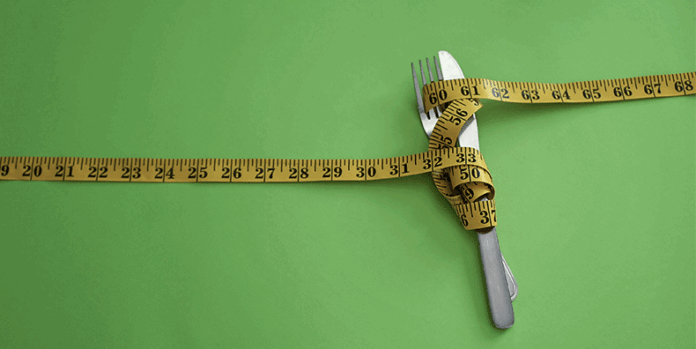
I tried to control my eating habits while my mind spiraled. I learned I couldn’t heal my relationship with food without first stabilizing my mood.
I went through a rough breakup more than a decade ago. I withdrew from my friends and family, crying constantly. I felt like I’d lost the spark that makes me who I am.
Because of my bipolar disorder, I experience cycles of depression, hypomania (a milder form of mania), mania, and remission. This was a depressive episode.
During that time, food tasted metallic and bland all at once. I had no appetite. Why bother eating? I’d think to myself. What’s the point? I just want to die. This went on for months, and I unintentionally lost a significant amount of weight.
How Bipolar Depression Triggered My Anorexia
Once my depression started to lift, my appetite slowly resurfaced. But something weird had happened: I’d become addicted to being skinny. My new body made me feel beautiful, even though I looked very unhealthy. What started as a symptom of a depressive episode became an illness in itself: anorexia.
I then refused to eat more than half a meal a day because I associated my lifted depression with being thin. My life soon became a bunch of little lies to mask the fact that I wasn’t eating. I tried to hide what I knew was getting out of control, but I could not stop.
The Cycle of Bingeing, Purging, and Hypomania
One afternoon, I was watching TV when a commercial for an Italian restaurant came on. As I watched salad and pasta fly through the air in slow motion, I felt a sharp, physical pain — a deep ache in my stomach that ran through me like a chill from a ghost. The cramping was unbearable.
Desperate to ease the discomfort, I made myself a peanut butter and jelly sandwich and ate the whole thing. Then I devoured a pint of ice cream, an entire bag of chips, and another sandwich. I’d been starving myself for so long that I’d forgotten what it felt like to be full. But now, I was completely out of control.
As soon as I swallowed the last bite, panic set in. I couldn’t stop thinking: If I gain weight, I won’t be happy anymore. I’ll go back to being miserable. In my mind, gaining weight felt like slipping back into the heaviness of depression, while staying thin seemed like the only way to hold onto my happiness. Overwhelmed by fear, I purged everything I’d just eaten. This marked the start of a new phase in my eating disorder, where my symptoms shifted from strict restriction to a volatile cycle of bingeing and purging.
Understanding the Link Between Bipolar and Eating Disorders
Soon, I went from not eating at all to eating and purging everything. I tried to hide my behavior, but the signs were there for everyone to see. The eating disorder seemed to intensify my mood instability, and my hypomania, in turn, fed the eating disorder. It was a vicious cycle, and people around me could tell something was very wrong.
Although my friends and family expressed their concern, I refused to listen. One of the cruelest aspects of bipolar disorder is the lack of self-awareness and the defensiveness that can come with it. During my highs, I became convinced I was fine and lashed out at anyone who said they were worried about my weight. I denied needing help — whether for my mood or my eating habits.
My disordered eating continued for several years.
Finding Recovery Through Acceptance and Treatment
Eventually, I crashed. That’s the thing about bipolar disorder — no matter how high you fly, you always come crashing back down.
I experienced another depressive episode, but this time, I got help. I reached out to my therapist and psychiatrist, admitted I had an eating disorder, and started treatment. With a new medication regimen and a lot of effort, I slowly began to heal. And I started eating again — this time, without purging.
It wasn’t until I stabilized my bipolar disorder that I was able to go into remission with my eating disorder. For me, these two illnesses were deeply intertwined. To recover from anorexia and bulimia, I first had to address my bipolar disorder. The grandiosity of hypomania had fueled my delusion that I was skinny, beautiful, happy, and — above all — right.
Recovery only began when I accepted my bipolar diagnosis and committed to the treatment I needed. That acceptance allowed me to finally admit I had an eating disorder and needed help.
Life After Recovery: Self-Care and Maintenance
Today, I prioritize taking care of myself. I eat, and I eat healthily. I treat myself with compassion, kindness, and the gentle care I deserve. I no longer hesitate to ask for help when I need it, and I have the tools to maintain my recovery. I’m open about my mental illness and my eating disorder, and I’m proud to say I’m a survivor of both.
If you or someone you love is struggling with an eating disorder, know that help is available. Stabilizing mental health conditions like bipolar disorder can play a significant role in overcoming challenges with disordered eating. For additional support and resources, visit the National Alliance for Eating Disorders, a leading nonprofit organization dedicated to providing education, advocacy, and access to treatment options. You are not alone, and recovery is possible.
UPDATED: Originally posted November 25, 2019