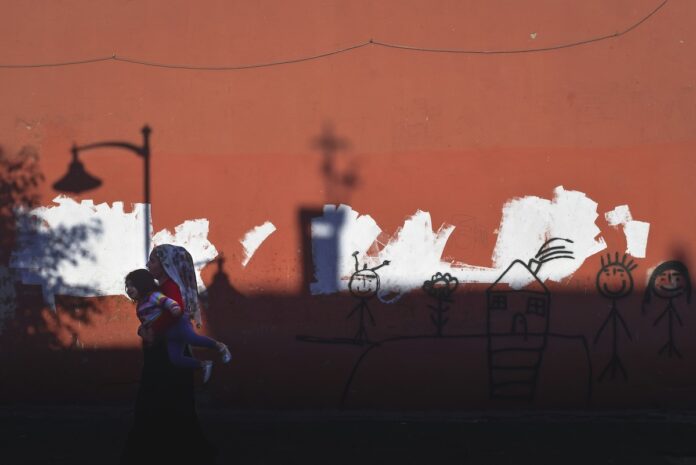
Refugees and asylum seekers are often exposed to traumatic experiences before, during, and after displacement (Montgomery, 2011; Abed Alah & Abdeen, 2026). These experiences can include war, persecution, violence, family separation, discrimination, and difficulties adapting to life in a new country (Montgomery, 2011).
By the end of 2024, 123.2 million people worldwide were forcibly displaced, which equated to 1 in every 67 people on earth (UNHCR, 2024). Research consistently shows that displaced populations experience high rates of PTSD and other mental health difficulties (Blackmore et al., 2020; Peconga & Høgh Thøgersen, 2020). However, trauma may also affect wider aspects of life beyond mental health symptoms alone, including relationships, employment, integration, and community participation (Scoglio et al., 2022; Katsampa et al., 2025).
Previous research has explored social functioning in PTSD more broadly. Still, until now, there has been no systematic review examining how trauma and PTSD affect social functioning, specifically in refugees and asylum seekers following migration (Scoglio et al., 2022).
Methods
The authors conducted a systematic review following PRISMA guidelines.
Five databases, grey literature sources, and reference lists were searched between November 2024 and February 2025 to identify studies published within the last 30 years.
Studies were included if they examined the relationship between trauma, traumatic events, or PTSD and social functioning in adult refugees and asylum seekers following migration.
The review focused specifically on studies where PTSD symptoms were analysed as predictors of social functioning outcomes, helping reduce concerns around reverse causality.
Risk of bias was assessed using the Mixed Methods Appraisal Tool (MMAT), while grey literature was assessed using the AACODS checklist.
Results
A total of 2,793 records were identified across all sources. After duplicates were removed, 1,388 records remained for screening, with 112 full-text articles assessed for eligibility. Ultimately, 38 studies met the inclusion criteria, representing 15,394 participants.
Five key areas of social functioning were identified:
- Post-migration living difficulties
- Everyday functioning
- Acculturation and integration
- Social relationships
- Employment and education
Overall, trauma and PTSD negatively affected multiple areas of social functioning (Perkins et al., 2025).
Social relationships were among the most studied areas, and most of these studies found negative effects. Participants commonly reported mistrust, isolation, shame, loneliness, and social withdrawal.
Trauma was also associated with difficulties in integration, employment, and post-migration adjustment (Tomren & Opaas, 2024). However, findings relating to everyday functioning and acculturation were more mixed across studies.
The type of trauma also appeared to influence outcomes differently. Interpersonal trauma, such as abuse, trafficking, or torture, appeared to have stronger effects on trust and relationships. In contrast, war-related trauma was mainly linked to psychosocial and integration difficulties.
Some participants also demonstrated post-traumatic growth, including stronger relationships, increased compassion, and renewed purpose or motivation. This suggests trauma responses may not always be entirely negative or uniform.

Conclusions
This review suggests that trauma and PTSD can affect multiple areas of social functioning in refugees and asylum seekers following migration (Perkins et al., 2025; Scoglio et al., 2022).
The findings highlight that trauma may influence not only psychological symptoms, but also how displaced individuals relate to others, integrate into communities, and manage everyday life after resettlement (Baumgartner et al., 2024).
Importantly, the findings also suggest that different types of traumas may shape social outcomes differently.
Although many studies reported negative effects, some individuals also experienced post-traumatic growth, reinforcing that trauma responses are complex and not entirely uniform.

Strengths and limitations
A major strength of this review is that it is the first systematic review to specifically examine how trauma affects social functioning in displaced populations following migration.
The review also included a broad evidence base, with 38 studies and 15,394 participants across multiple refugee populations and host countries. The authors also carefully considered reverse causality by focusing on studies where PTSD symptoms predicted social functioning outcomes.
Another strength was the stratification of findings by trauma type, which provided more nuanced insights into how interpersonal and war-related trauma may affect functioning differently.
However, there were several important limitations.
Title and abstract screening were conducted by a single author, increasing the risk of selection bias. Most included studies were also cross-sectional, limiting the ability to draw causal conclusions.
The review only included English-language studies, which may have excluded relevant research from non-English-speaking contexts. In addition, most studies were conducted in Western host countries, limiting generalisability to displaced populations living elsewhere.
Many included studies also relied on convenience or snowball sampling, which may not fully represent refugees experiencing the most severe trauma or post-migration difficulties.
Finally, the review did not distinguish between PTSD and complex PTSD, despite these potentially having different effects on social functioning.

Implications for practice
These findings suggest that trauma in displaced populations should not be understood solely through mental health symptoms such as PTSD.
Post-migration stressors, including discrimination, housing instability, visa insecurity, and language barriers, may further worsen social and psychological difficulties (Tomren & Opaas, 2024). This highlights the importance of understanding trauma within broader social and structural contexts.
The findings also suggest that social support and connectedness may play an important role in recovery (Scoglio et al., 2022). Interventions for refugees and asylum seekers may therefore benefit from focusing not only on trauma symptoms, but also on relationships, integration, and community support.
Overall, the review supports more holistic and trauma-informed approaches for displaced populations following migration.

Statement of interests
As MSc Clinical Mental Health Sciences students at UCL, we want to clarify that while some individuals involved in the discussed research are UCL faculty, we have no direct involvement in the study, its review, or publication. This blog was created independently for our coursework and reflects our interpretation. We have no conflicts of interest beyond our academic relationship with the study.
Contributors
Thanks to the UCL Mental Health MSc students who wrote this blog from the Russell Student Group: Yosef Sheikh, Faisal Abudawood, Vidit Chaubey and Kyliyah Davey.
UCL MSc in Mental Health Studies
This blog has been written by a group of students on the Clinical Mental Health Sciences MSc at University College London. A full list of blogs by UCL MSc students can be found here.
We regularly publish blogs written by individual students or groups of students studying at universities that subscribe to the National Elf Service. Contact us if you’d like to find out more about how this could work for your university.
Edited by
Dr Dafni Katsampa
Links
Primary paper
Perkins,A., Michalek,J., Dikomitis,L., Shergill,S., & Mareschal,I. (2025). The impact of trauma and PTSD on social functioning in refugees and asylum seekers post-migration: systematic review. The British Journal of Psychiatry,1-9.
Other references
Abed Alah, M., & Abdeen, S. (2026). Beyond survival: Understanding and addressing the mental health needs of displaced populations in conflict settings. Current Psychology, 45(8), 859.
American Psychological Association. (n.d.). Trauma. American Psychological Association.
Baumgartner, J. S., Renner, A., Wochele-Thoma, T., Wehle, P., Barbui, C., Purgato, M., et al. (2024). Impairments in psychological functioning in refugees and asylum seekers. Frontiers in Psychology, 14, 1295031.
Blackmore, R., Boyle, J. A., Fazel, M., Ranasinha, S., Gray, K. M., Fitzgerald, G., Misso, M., & Gibson-Helm, M. (2020). The prevalence of mental illness in refugees and asylum seekers: A systematic review and meta-analysis. PLOS Medicine, 17(9), e1003337.
Greenhalgh, T., & Dijkstra, P. (2024). How to read a paper: The basics of evidence-based medicine and healthcare (7th ed.). Wiley-Blackwell.
Katsampa, D., Curry, C., Weldon, E., Ghezai, H., Nyikavaranda, P., Stamatopoulou, V., & Chapman, D. (2025). Family Against the Odds: The Psychological Impact of Family Separation on Refugee Men Living in the United Kingdom. Social Sciences, 14(3), 159.
Montgomery, E. (2011). Trauma, exile and mental health in young refugees. Acta Psychiatrica Scandinavica, 124, 1–46.
Mueser, K. T., & Bellack, A. S. (1998). Social skills and social functioning.
Nickerson, A., Kurt, G., Liddell, B., Keegan, D., Nandyatama, R., Yuanita, A., … & Specker, P. (2025). The longitudinal relationship between psychological symptoms and social functioning in displaced refugees. Psychological Medicine, 55, e40.
Peconga, E. K., & Høgh Thøgersen, M. (2020). Post-traumatic stress disorder, depression, and anxiety in adult Syrian refugees: What do we know? Scandinavian Journal of Public Health, 48(7), 677–687.
Scoglio, A. A., Reilly, E. D., Girouard, C., Quigley, K. S., Carnes, S., & Kelly, M. M. (2022). Social functioning in individuals with post-traumatic stress disorder: A systematic review. Trauma, Violence, & Abuse, 23(2), 356–371.
Spinazzola, J., Vander Kolk, B., & Ford, J. D. (2018). When nowhere is safe: Interpersonal trauma and attachment adversity as antecedents of post-traumatic stress disorder and developmental trauma disorder. Journal of Traumatic Stress, 31(5), 631–642.
Stein, D. J., McLaughlin, K. A., Koenen, K. C., Atwoli, L., Friedman, M. J., Hill, E. D., Maercker, A., Petukhova, M., Shahly, V., van Ommeren, M., Alonso, J., Borges, G., de Girolamo, G., de Jonge, P., Demyttenaere, K., Florescu, S., Karam, E. G., Kawakami, N., Matschinger, H., & Okoliyski, M. (2014). DSM-5 and ICD-11 definitions of post-traumatic stress disorder: Investigating “narrow” and “broad” approaches. Depression and Anxiety, 31(6), 494–505.
Tomren, J. F., & Opaas, M. (2024). Adult refugees’ perspectives on the impact of trauma and post-migration hardships on learning. European Journal of Psychotraumatology, 15(1), 2403249.
United Nations High Commissioner for Refugees. (2024, April 6). Global trends.
Photo credits