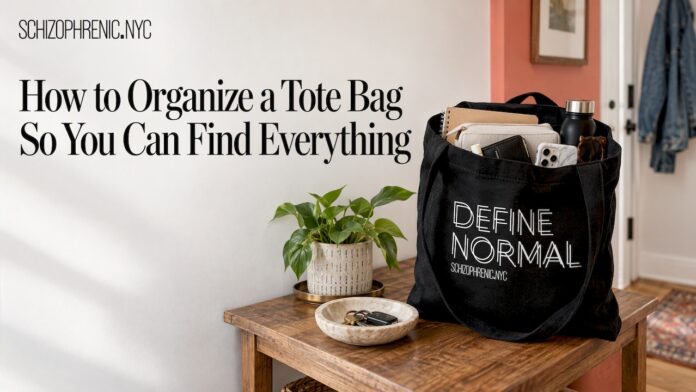
The best way to organize a tote bag is to treat it like a small room with zones: empty it completely, keep only what earns its place, sort what remains by category, put small things in pouches, and give every item a spot you can find without looking. A tote is an open, pocketless space, so it only stays tidy if you give it a system. Once you do, you stop digging for keys and start walking out the door with confidence.
This guide walks through that system step by step, then covers how to give a floppy tote some structure and how to store a pile of totes without crushing them. If you carry a tote that says something about who you are and what you care about, like an awareness tote, it is worth a bag that works as hard as its message does.
TL;DR
- Empty the bag, keep only what you actually use, and sort the rest by category before anything goes back in.
- Use pouches or an insert with pockets so small items stop sinking to the bottom, and stand things upright so you can see them.
- Pack in zones: heavy and rarely needed items low, all-day items in the middle, keys, phone and wallet on top.
- Add a firm base or a liner if your tote slumps or spills, and keep the load within what the bag can carry.
- Store the totes you are not using on hooks or hangers, or stuffed and folded in a bin, so they keep their shape.
Table of Contents
Why a tote bag gets messy so fast
Most totes are one big open compartment. There are no zippers, no dividers and often no pockets, which is exactly why people love them: you can throw in a laptop, a lunch, a notebook and a sweatshirt without thinking. The trouble is that everything you throw in drifts to the bottom, and the small things you need most, like keys, a lip balm or a phone charger, vanish first.
NBC Select’s bag-organizer guide quotes organizing experts describing the goal of an organizer as keeping the interior tidy so you are not constantly searching, avoiding what they call a “black hole of all your contents”. That is the problem to solve. You do not need a new bag. You need a layout.
Step 1: Empty the bag and decide what stays
Start with a clear surface and turn the whole tote out. Good Housekeeping’s guide, built on the KonMari method, starts exactly there: take everything out and keep only the items that spark joy or that you truly need.
Here is a quick way to sort what you find:
- Daily carry: phone, wallet, keys, anything you reach for every day.
- Situational: umbrella, reusable water bottle, a book, a sweatshirt.
- Maybe-keep: receipts, loose pens, old tissues, three half-used lip balms.
- Trash or relocate: wrappers, mail, things that belong at home or in the car.
Organizer Murray, quoted in NBC Select’s roundup, makes a point worth remembering: getting organized is not all about bins and color coding. Items turn into clutter when nobody decides whether to keep them. The empty-out step is the decision. Skip it and the best pouch in the world just organizes your mess.
If you carry daily medication, decide where it lives now. A weekly pillbox keeps each day’s doses in one flat case, and it slots neatly into a pouch. Our guide to choosing a pill organizer that fits your life goes through what to look for. For questions about how to take or store your medication, your prescriber or pharmacist is the right person to ask.
Step 2: Sort by category, then give each category a home
Once you know what is staying, group items by what they do. A simple set that works for most people:
- Tech: charger, cable, earbuds, power bank.
- Personal care: lip balm, hand cream, hair ties, mints.
- Paperwork and writing: notebook, pen, folder, planner.
- Money and ID: wallet, cards, transit pass.
- Health: pillbox, any daily essentials, a small snack.
Each group becomes one pouch, one pocket in an insert, or one corner of the bag. The point is that you can answer “where is my charger?” without looking: it is in the tech pouch, which is always on the left side.
Good Housekeeping adds two details that help. File items vertically instead of stacking them, so you can see everything when you glance inside, and pack the largest items first, then slot smaller ones around them.
Step 3: Use pouches, inserts and pockets
This is where a tote goes from “fine” to “actually works.” You have three main options.
Small zip pouches
The cheapest and most flexible choice. One pouch per category, in a color or pattern you can spot quickly. A clear or light-lined pouch lets you see contents without opening it. Pouches also move easily from one bag to another, which matters if you rotate totes.
A tote insert or bag organizer
An insert is a fabric sleeve with built-in pockets that sits inside the tote. It suits bags with no interior pockets, and it lets you lift your whole setup out and drop it into a different tote. NBC Select’s experts recommend adjustable organizers in durable, lightweight, easy-to-clean fabrics such as cotton, linen or felt, with extras like zippers, key hooks and padded compartments to protect valuables and electronics.

If you switch between a work tote and a weekend tote, one insert saves you from repacking every morning.
Built-in pockets
If you sew, or you are choosing a tote with pockets, interior pockets sized for a phone, pens and makeup keep loose items from getting lost. Sew Daily suggests adding interior pockets so small things cannot disappear into the depths of the bag. The same guide recommends a light-colored lining so you can see what is inside, which is a trick that works with any bag.
Step 4: Pack in zones
Think of the bag in three layers. Reader’s Digest uses a version of this for beach bags, and it carries over to everyday totes: rarely needed items at the bottom, all-day items in the middle, and essentials on top. Their expert’s reasoning is simple: with a designated spot for every item, you spend less time searching.
For a daily tote, that looks like this:
| Zone | What goes there | Why |
|---|---|---|
| Bottom | Spare sweatshirt, a book, a heavier water bottle, a tote-size laptop sleeve | Weight stays low and the bag stays steady |
| Middle | Notebook, lunch, tech pouch, personal care pouch | Used once or twice a day, easy to pull out as a unit |
| Top or outside pocket | Keys, phone, wallet, transit pass | You need these in seconds, often one-handed |
The same Reader’s Digest guide suggests putting valuables and electronics in zippered or waterproof pouches. Liquids deserve their own pocket or a spot where they cannot tip onto paper or a screen.
Keep the weight reasonable
A well-organized tote can still be too heavy. If your shoulder aches by lunchtime, the fix is usually fewer items, not a better pouch. Our breakdown of the tote bag weight limit explains how much a tote can comfortably carry, so you can pack for your day without straining the handles or your body.
Step 5: Give a floppy tote some structure
A tote that slumps is hard to organize, because everything slides together in the middle. A few fixes help.
- Add a firm base. Sew Daily advises that a tote bottom left unsupported will sag once it is used, and recommends covering a piece of heavy cardboard or plastic canvas cut to fit, or using pre-cut acrylic base shapes. A cut-to-size insert under your pouches gives the bag a floor.
- Use a liner or a lined bag. For totes that carry food, drinks, sunscreen or makeup, Sew Daily recommends a water-resistant lining such as rip-stop nylon or laminated cotton, so a spill wipes clean instead of soaking through.
- Use a bag organizer as a frame. A padded insert with sides props the bag open and holds your categories upright.
- Weatherproof the outside. If you carry your tote in rain or on the subway in winter, our steps to waterproof a canvas tote protect the fabric and the print.
The material of the bag matters too. A sturdier fabric holds its shape longer and takes a base insert better. Our notes on tote bag materials cover what to look at when you choose one.
Build a tote that carries your message and your day
Many of us carry a tote because it says something. An awareness tote starts conversations on a train platform, in a waiting room, at a rally or in a classroom. It also has to hold a laptop, a lunch, a notebook, flyers and sometimes a pillbox.
A good advocacy kit might look like this:
- A tote with a message you are proud to show.
- A tech pouch with a charger and cable.
- A pouch with stickers or buttons to hand out.
- A notebook and pen for names, ideas and event details.
- A weekly pillbox, if you take daily medication.
- A water bottle in its own pocket or at the bottom.
If you are choosing between bag styles for a day like that, it helps to think about how each one carries weight. This piece on choosing between tote and shoulder styles compares the two shapes. If you want the message on the bag itself, browse our mental health awareness tote bags or our mental health artwork tote bags.
How to store totes you are not using
If you own several totes, a conference one, a farmer’s market one, a gift from a friend, the pile on the closet floor is its own organizing problem. Consumer Reports recommends hanging the bags you use often on purse hangers or hook racks in an entryway, and keeping the least-used ones in fabric containers or on shelves, stuffed with purse stuffers or homemade shapers made from bubble wrap and packing paper.
Edit first
The same article quotes professional organizer Jamie Hord, who starts with a keep, toss or donate pass and asks whether you will want a bag you have not used in five to ten years. Be honest. Most people use two or three totes on repeat. Donate the rest to a thrift store or a friend.
Hang, hook or shelve
- Hooks: The Spruce suggests mounting hooks in a row on a wall or inside a closet door so bags stay visible and within reach.
- Hangers: Southern Living suggests hanging totes on clothes hangers so you can easily find the one that matches your outfit, and notes bags keep their shape better than when crammed onto a shelf.
- Shelf dividers: The Spruce also recommends shelf dividers to keep bags upright and separated, plus stuffing them with tissue paper between uses so they hold their form.
For canvas totes that do not need to stay rigid, simply folding them flat in a drawer or basket works. Larger bags can be rolled or folded into bundles so they take up less room.
Our perspective
We built Schizophrenic.NYC around the idea that what you carry and wear can start a conversation. A tote is one of the most honest versions of that. It goes everywhere with you, it holds your real life, and it shows the world what you stand for without you saying a word.
That is why we care about the inside of the bag as much as the outside. When your keys, your charger, your notebook and your pillbox each have a place, you walk into a room calmer. You are not hunting for something in front of other people. You are ready to listen, to speak, to hand someone a sticker and tell them why it matters.
Organization is not about being perfect. It is about taking one small thing off your mind so you have room for the bigger things. Start with the empty-out, pick one pouch, and build from there. Our totes, with bold artwork and messages that push back on stigma, are designed to be carried every day, because a message that stays in the closet does not change anyone’s mind.
Michelle
Carry the message with you
If you are ready for a tote that works as hard as your day does, start with our Mental Health Awareness Tote Bags. Our Define Normal black tote is one place to begin. To round out your kit, we also offer 7 day pillboxes, stickers and buttons, all designed around advocacy and awareness.
FAQ
How do I keep small items from sinking to the bottom of my tote?
Put them in a pouch or an insert with pockets. Pouches give small items a size big enough to find, and an insert with sides holds them upright. Good Housekeeping also suggests filing things vertically instead of stacking, so you can see everything at a glance.
How do I give a tote bag structure?
Add a firm base cut to fit the bottom, such as heavy cardboard, plastic canvas or a pre-cut acrylic shape, and cover it so it does not snag. Sew Daily notes that an unsupported bottom will sag with use. A padded organizer with sides also props the bag open and keeps your categories apart.
How do I organize several tote bags at home?
Sort first: keep the ones you use, donate the rest. Hang daily bags on hooks or hangers by the door, and store the others on shelves or in fabric bins. Stuffing them with tissue paper or bubble wrap, as Consumer Reports and The Spruce suggest, helps them hold their shape.
What should I put in my tote every day?
Start with phone, wallet and keys on top, then a small tech pouch, a notebook and a water bottle in its own pocket. If you take daily medication, add a pillbox. Everything else is situational, so pack it only on the days you need it.