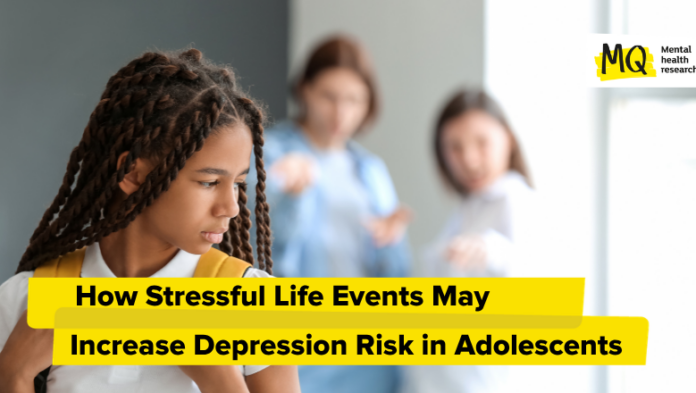
A new study suggests that adolescents who experience more negative life events are more likely to develop depressive symptoms, with girls showing particularly large increases in negative self-evaluation. The findings highlight the importance of recognising how stressful experiences can shape young people’s mental health.
Adolescence is a period when the risk of developing depression increases significantly. While difficult experiences such as bullying, family conflict or bereavement are known to affect mental health, researchers wanted to better understand how these events influence specific symptoms of depression over time.
To investigate this, researchers followed 97 adolescents aged 11 to 17 who were taking part in the Teen Resilience Project. Over a 12-month period, participants completed questionnaires every four months about stressful life events and symptoms of depression. The researchers also collected information about early life adversity, a known risk factor for developing depression.
More stressful experiences were linked to more severe symptoms
Negative life events were common throughout the study, with participants reporting at least one stressful event during 71% of assessments. Between 20% and 30% of participants reported clinically elevated depressive symptoms at each stage of the study, while 13% experienced a depressive episode during the year.
Overall, depressive symptoms increased over the 12 months, particularly symptoms related to low mood and physical complaints such as headaches, fatigue or sleep problems.
The researchers found that adolescents who experienced a greater number of negative life events also tended to report more severe depressive symptoms. This relationship was strongest for negative self-evaluation, including feelings of worthlessness, guilt and self-criticism.