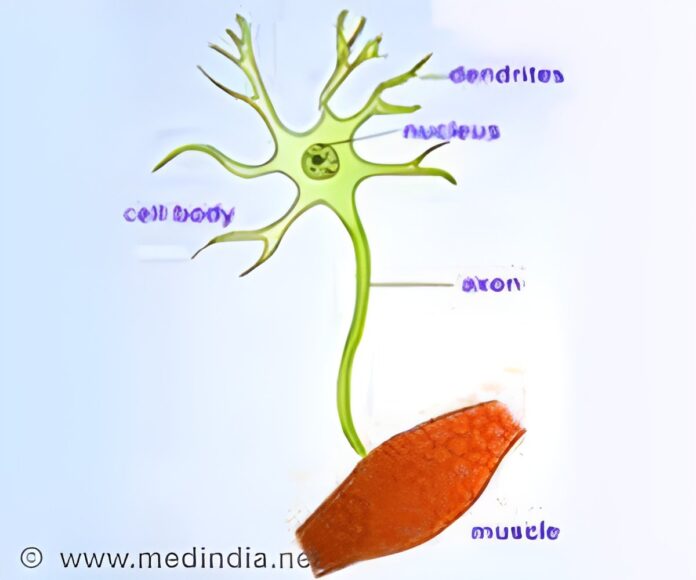
Researchers are developing a framework to study how the brain controls speech rhythms in different styles in ALS patients.
Speech rhythm plays a crucial role in how effectively we communicate, but it is often disrupted in people with neurodegenerative conditions like Amyotrophic Lateral Sclerosis (ALS). Many individuals with ALS find that speaking more slowly than usual can help them regain control over their rhythm, making their speech easier for others to understand. ()
ALS Speech Rhythm and Intervention Strategies
A recent study by researchers in the University of Kansas Department of Speech-Language-Hearing: Sciences & Disorders highlights this approach. Associate Professor Panying Rong is leading research aimed at understanding how small changes in speech rhythm occur in neurodegenerative diseases.
The goal is to use these insights to detect communication difficulties earlier, monitor their progression, and tailor speech therapy to individual needs. Ultimately, this research could improve both the clarity of speech for patients and provide valuable information for diagnosing and predicting the course of these diseases.
Rong and her former graduate student, Erin Liston, published a paper in the Journal of Speech, Language, and Hearing Research titled “An Explanatory Model of Speech Communication Centered on Multiscale Rhythmic Modulation: Implications for Motor Speech Assessment and Intervention for Individuals With Amyotrophic Lateral Sclerosis.”
In this study, they analyzed a public dataset that used X-ray microbeams to record in minute detail how healthy speakers and those with ALS produced words and sentences with their various speech organs — tongue, lips, jaw — – in a habitual speaking style and two “non-habitual” styles.
These non-habitual styles — referred to by Rong and Liston as two “common intervention strategies used by clinicians to manage motor speech disorders” – were implemented by instructing the participants to speak more clearly than normal (“clear speech”) in one case, and more slowly than normal (“slow speech”) in the other.
Rong and Liston were able to match data from the participants’ physical mouth movements to their recorded speaking output, and to compare the rhythmic characteristics across speaking styles.
Rong said previous experiments have shown that “these two strategies, which are implemented based on simple cues, effectively improve the speech intelligibility or clarity in some people and not in others. There are substantial inconsistencies across speakers, and we don’t know why.”
Decoding the Brain’s Rhythm: A New Framework for Personalized ALS Speech Therapy
“So that’s why in my lab we aim to develop a rhythmic modulation framework to characterize how the brain modulates speech rhythms in different speaking styles, and, in turn, influences the effectiveness of these intervention strategies. These modulation mechanisms are sophisticated and are difficult to observe at the clinical level. Therefore, we look at subclinical levels to identify changes in the rhythmic characteristics of physiological activities in response to the clear- and slow-speech cues.
“Ultimately, we want to relate these physiological changes at subclinical levels to the functional alterations resulting from these intervention strategies to help clinicians identify the most effective strategy for each patient.”
Rong said that they have previously tested the rhythmic modulation framework in a habitual-speech experiment conducted in her own lab. The goals of this new study were to “cross-validate” past findings using a distinct dataset on the one hand, and to further test the framework in non-habitual speaking styles on the other.
This study achieved these goals by examining and comparing rhythm control of speech production at various levels — from individual sounds, to syllables, to words — across habitual, slow and clear speaking styles for both healthy speakers and those with ALS.
“We are trying to understand exactly how the disease (ALS) causes disruptions to speech rhythms, and then to determine whether common intervention strategies, like slow speech and clear speech, can improve those rhythmic characteristics,” Rong said.
Because ALS is a progressively debilitating condition with substantial variability in symptom presentations and progression rates, Rong said, “that’s why there’s so much advocacy for personalized medicine — a concept centered on delivering the right intervention to the right person at the right time in order to optimize outcomes.”
“Translating this concept into clinical practice requires the identification, characterization and monitoring of individual-level speech deficits, including rhythmic disturbances, to enable tailored interventions. Our study represents a novel effort to facilitate the translation of personalized medicine into the care for progressive communication disorders in neurodegenerative diseases.”
References:
- An Explanatory Model of Speech Communication Centered on Multiscale Rhythmic Modulation: Implications for Motor Speech Assessment and Intervention for Individuals With Amyotrophic Lateral Sclerosis – (https://pubs.asha.org/doi/10.1044/2025_JSLHR-24-00286)
Source-Eurekalert