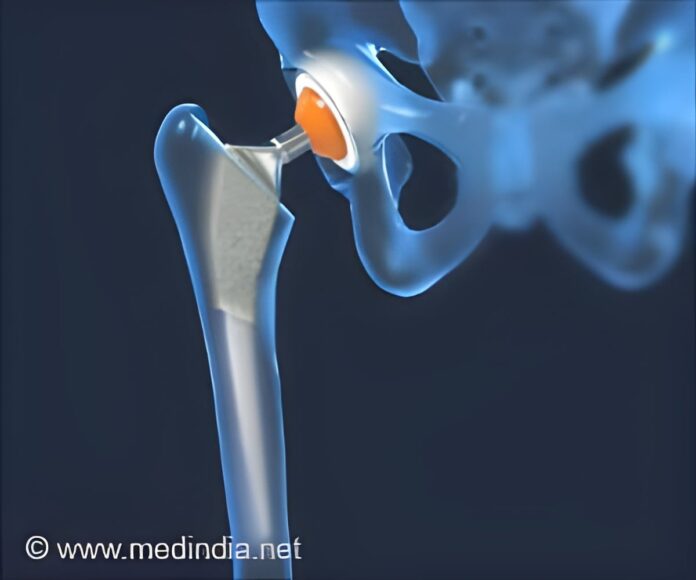
Targeting the pre-surgery walking speed with the goal of 1m/s can help improve post-surgical outcomes in hip replacement.
A testimony for better clinical guidance in hip replacement surgery was revealed by recent study, confirming that pre-surgery walking speed can potentially forecast proper recovery and function after total hip arthroplasty (THA) for osteoarthritis.
The revelations made by researchers at Kyushu University, published in The Journal of Bone and Joint Surgery.(1✔ ✔Trusted Source
Preoperative Gait Speed as a Predictor of Patient-Reported Outcomes After Total Hip Arthroplasty
Go to source
)
Researchers found that gait speed which is greater than 1 m/s in pre-operative period may considerably report better post-surgical outcomes, highlighting the walking speed as a key for optimizing surgery timing and rehabilitation care for patients undergoing THA for hip osteoarthritis.
TOP INSIGHT

Did You Know
#Gait_speed is the strongest predictor of recovery after #hip_replacement_surgery. The simple and practical tool works beyond age and #BMI, allows clinicians to easily guide pre-rehabilitation programs to hit 1m/s rapidity. #orthopedics #physicaltherapy #patientcare #walkingspeed
A Consistent Metric for Post-Surgery Success
“Among all the factors we examined, gait speed stood out as the most consistent and reliable predictor of better recovery,” says first author, Dr. Yuki Nakao, a medical doctor and PhD student in the Department of Orthopaedic Surgery and the Graduate School of Medical Sciences.
“Its simplicity also makes it a practical measure that clinicians can easily incorporate into their routine preoperative assessment.”
Osteoarthritis, which is the most common form of arthritis, is a growing issue that affects more than 500 million people worldwide. It often causes severe pain and joint stiffness and significantly impacts quality of life.
For hip osteoarthritis, total hip arthroplasty, where surgeons replace the damaged joint with an artificial one, is an effective but last-resort treatment. However, determining the right time for surgery remains difficult.
Limitations of Traditional Criteria (Pain & X-rays)
Doctors typically rely on factors such as pain intensity or the severity of osteoarthritis as assessed by hip X-rays, but research has been inconclusive about whether these criteria reliably predict good postoperative outcomes.
To address this gap, Nakao and colleagues, including Associate Professor Satoshi Hamai and Professor Yasuharu Nakashima from the Faculty of Medical Sciences, aimed to identify preoperative factors that could predict mid-term, patient-reported outcomes 5–10 years after surgery.
The researchers analyzed data from 274 patients who underwent total hip arthroplasty for osteoarthritis at Kyushu University Hospital between 2012 and 2018. All patients completed detailed physical assessments the day before surgery, including measurements of pain level, the hip’s range of motion, lower-limb muscle strength, and a 10-meter walking test.
In August 2023, these patients then answered two standardized post-questionnaires: the Oxford Hip Score, which assesses pain and hip function; and the Forgotten Joint Score-12, which measures the patient’s awareness of their hip joint and level of discomfort.
Analyzing Outcomes Against Fifteen Preoperative Factors
To determine which patients had achieved a meaningful recovery, the research team used established Patient Acceptable Symptom State (PASS) thresholds. Patients who scored at least 42 points on the OHS and at least 50 points on the FJS-12 were considered satisfied with their surgical outcome.
The researchers then analyzed their outcomes against 15 different factors, including their age at surgery, sex, BMI, duration of symptoms, length of follow-up period, and severity of osteoarthritis based on preoperative hip X-rays.
They also used the physical assessments measured on the day before surgery, including the 10-meter gait speed test.
“While we saw a few significant factors emerge for each questionnaire in isolation, gait speed was the only significant factor across both questionnaires, highlighting its reliability,” says Nakao.
To gain deeper insight, the team also used machine learning to group patients into three clusters based on their questionnaire responses: those with excellent, moderate, and poor outcomes.
A Promising Tool for Future Clinical Practice
When the researchers looked at which factors best predicted an excellent outcome, walking speed was the only significant predictor, with a gait speed of about 1.0 m/s marking the key threshold separating those with excellent recovery from everyone else.
Although the research has limitations as it can only identify associations rather than causes, gait speed’s strength and reliability as a predictor of surgery success, along with how easy it is to measure, make walking tests a promising tool for future clinical practice.
Gait speed could help physicians determine when to refer patients for surgery, and preoperative rehabilitation programs could be developed to help patients reach a walking speed of at least 1.0 m/s.
“We hope that bringing this knowledge into clinical practice will support better recovery and ultimately improve outcomes for patients undergoing hip replacement surgery,” Naoko concludes.
Reference:
- Preoperative Gait Speed as a Predictor of Patient-Reported Outcomes After Total Hip Arthroplasty – (https://journals.lww.com/jbjsjournal/fulltext/9900/preoperative_gait_speed_as_a_predictor_of.1641.aspx)
Source-Eurekalert