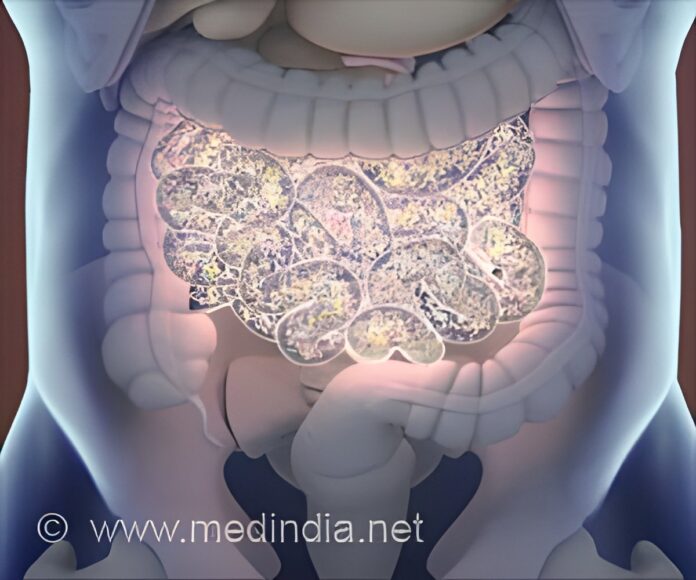
New insights on gut microbial metabolic shield that reduces cancer threat via nitrogen processing.
The gut bacteria, Escherichia coli (E. coli) and to a lesser extent of lactobacillus species play a vital role in reducing the cancer risk.
The data was based on new findings in the FEBS Journal. Specific gut bacteria process on distinct forms of nitrogen such as nitrates and nitrites in the diet.(1✔ ✔Trusted Source
Distribution and activity of nitrate and nitrite reductases in the microbiota of the human intestinal tract
Go to source
)This bacterial metabolic processing could prevent the formation of harmful carcinogen, known as nitrosamines, creating a protective metabolic shield against cancer risks.
Microbial Nitrogen Processing for Cancer Prevention
The average adult human body harbors around 1014 prokaryotic cells, with the majority residing in the gastrointestinal tract (GIT). This population of microorganisms constantly interacts with the gut epithelium and the immune system of the host.
Thus, the gut microbiota plays a pivotal role in maintaining intestinal health, modulating the immune system, and influencing the development of both intestinal and non-intestinal diseases.
Investigators found that Escherichia coli—and to a lesser extent, species of the genera Lactobacillus, Bacteroides and Phocaeicola—can efficiently metabolize different forms of nitrogen, thus preventing carcinogenic nitrosamine formation.
The Critical Crosstalk Facilitated by Gut Microbes
They also demonstrated that this bacterial processing is critical to enable microorganisms to survive and colonize the intestinal tract, likely preventing harmful changes in the composition of the gut microbiota.
The findings highlight the importance of the gut microbiota in preventing the formation of harmful nitrogen metabolites, potentially decreasing the risk of certain cancers.
The study also illustrates how the microbiota facilitates crosstalk between our diet and the gut, thus having important implications for both health and disease.
“The discovery that specific gut bacteria rapidly metabolize nitrite suggests a protective mechanism through which the microbiota contributes to the maintenance of intestinal and systemic health,” said corresponding author Prof. Uwe Deppenmeier, of the University of Bonn, in Germany.
Reference:
- Distribution and activity of nitrate and nitrite reductases in the microbiota of the human intestinal tract – (https://febs.onlinelibrary.wiley.com/doi/10.1111/febs.70299)
Source-Eurekalert