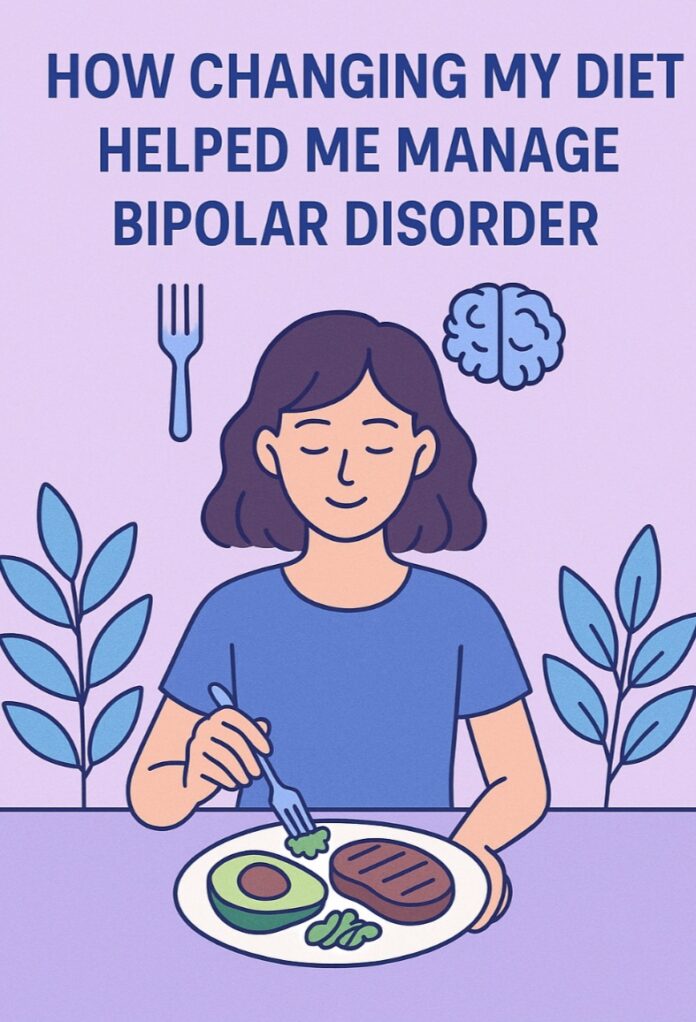
For most of my life, I’ve struggled with bipolar disorder. The manic highs and crushing lows didn’t just affect me—they affected everyone around me. At times, I felt broken, like I was at the mercy of something I couldn’t control.
I’ve tried countless medications over the years. Some helped a little. Others made things worse. But none of them gave me the stability I wanted.
I kept searching for something more—something that would give me back me.
Then I discovered something that gave me hope.
Then I discovered something that gave me hope.
Discovering a New Way to Heal
I found out about Dr. Chris Palmer, a Harvard psychiatrist who wrote a book called Brain Energy. His groundbreaking research explores the idea that mental illnesses like bipolar disorder aren’t just chemical imbalances—they’re deeply connected to metabolic health.
He explains how improving mitochondrial function (our cells’ energy producers) through nutrition—especially a Ketogenic Diet—can actually help stabilize brain function. I couldn’t stop reading. For the first time in a long time, something clicked.
Around the same time, I also found Metabolic Mind, a nonprofit backed by the Baszucki Brain Research Fund. Their mission is to share science-based information on how metabolic psychiatry—through diet, exercise, and lifestyle—can transform lives. They have videos, interviews with experts, and real success stories from people like me.
It felt like someone had finally turned on a light in a very dark room.
What I Started Eating
About six months ago, I committed to a Ketogenic Diet. That means I focused on low-carb, high-fat, moderate-protein foods that support stable blood sugar and reduce inflammation.
Here’s what my meals often included:
- Hamburger, steak, and pasture-raised eggs
- Broccoli, zucchini, and other non-starchy veggies
- Berries and various nuts (in moderation)
- Smoothies made with healthy yogurt once in awhile as a treat
- Decaf tea and decaf coffee
I have stayed away from seed oils, ultra-processed foods, and sugar entirely.
For a while, I got creative. I made chocolate using coconut oil, cocoa powder, and a mix of stevia and monk fruit. I baked with almond flour and whipped up keto desserts using heavy whipping cream. One of my favorite snacks was cheese crisps—just shredded cheese melted with a few seasonings until it turned crunchy.
The Results Were Real
The change was almost unbelievable.
- For the first time in years, I didn’t experience a manic episode for about six months.
- My depression improved significantly—I started getting out of bed with purpose again.
- My thoughts were clearer, my energy more consistent, and the roller coaster I was used to riding started to flatten out.
It wasn’t a miracle. It was science. My brain was finally getting what it needed.
Learning From a Setback
But I’ll be honest—there was a point where I got a little too comfortable. I was eating a lot of the keto desserts and breads nade with cheese and almod flou. Even though they were technically “on plan,” the volume of rich, processed keto-friendly foods caused me to start to become slightly hypomanic.
My Current Diet (And It’s Working!)
Right now, my daily meals usually include:
- Beef, steak, and eggs
- Steamed or roasted broccoli and zucchini
- Handfuls of nuts and berries
- Decaf tea and decaf coffee
It’s not just a “diet” anymore. It’s my lifestyle. It’s my way of healing. I’m still figuring it all out, but I know this: I feel more stable, more in control, and more me than I have in years.
I’m not a doctor or a dietician—but as someone who knows what it’s like to suffer and finally start finding hope.
If you’re struggling with bipolar disorder, I encourage you to look into Dr. Chris Palmer and Metabolic Mind. Read, watch, learn—and most importantly, try. Start small. Track how you feel. Give your brain the nourishment it deserves.
Healing is possible. I’m living proof. I hope you do some research and try this and have as much success as i have