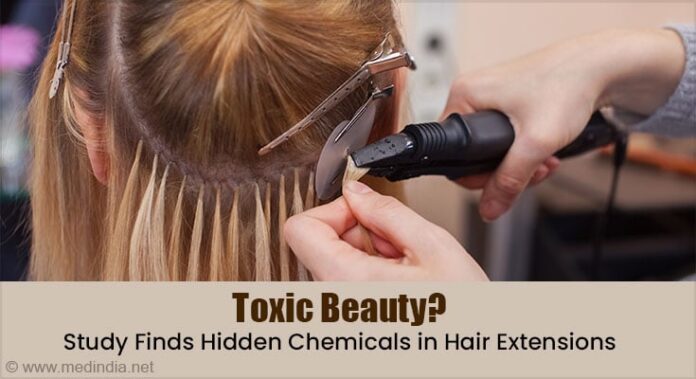
Study reveals hair extensions may contain harmful chemicals linked to cancer and reproductive issues
- Most tested hair extensions contained potentially harmful chemicals
- Some chemicals are linked to cancer, hormone disruption, and reproductive issues
- Experts say repeated exposure may increase long-term health risks
Hair extensions, widely used for styling and protective hairstyles, may contain hidden health risks. A new study analyzing 43 different hair extension products found that most contained synthetic chemicals, some of which are linked to cancer, birth defects, and reproductive issues (1✔ ✔Trusted Source
Identifying Chemicals of Health Concern in Hair Extensions Using Suspect Screening and Nontargeted Analysis
Go to source
).
Researchers detected 169 chemicals, including at least 12 substances listed under California’s Proposition 65, which identifies hazardous chemicals.
The study examined a wide range of hair extensions, including:
- Synthetic hair
- Untreated human hair
- Plant-based (biobased) fibers
Almost all tested products contained at least one potentially harmful chemical.
Some samples also contained organotin compounds, which are known to disrupt hormones.
Lead researcher Elissia T. Franklin explained: “The hazardous chemicals we identified each carry their own risks. Repeated use means these combined exposures can add up over time.”
What are the Types of Chemicals Detected?
| Chemical Type | Potential Health Risk |
|---|---|
| Organotin compounds | Hormone disruption (endocrine effects) |
| Chlorine compounds | Lung irritation, breathing issues |
| Fluorine compounds | Linked to reproductive problems at high levels |
| Organohalogens | Associated with cancer risk |
| Nitroaromatics | Potential carcinogenic effects |
Some synthetic hair samples showed very high chlorine levels, raising concerns about inhalation exposure during use.
Hidden Risks Behind Hair Extensions and Chemical Exposure
Hair extensions are commonly used worldwide, especially in protective hairstyles such as braids. Researchers highlight that repeated and long-term exposure to these chemicals may increase cumulative health risks.
Franklin noted the broader concern: “These products can expose people to multiple chemicals over time, and these combined exposures add up.”
Previous research has also linked certain hair products, such as chemical relaxers, to increased risk of conditions like uterine cancer.
Are Natural or Biobased Extensions Safer?
Biobased hair products made from materials such as silk or plant fibers are often marketed as safer alternatives. However, the study found that even these products may contain unidentified or complex chemical compounds.
Experts caution that: “Biobased doesn’t automatically mean safer.”
Rising Concerns Over Long-Term Exposure and Need for Safer Hair Product Practices
While the study did not confirm that the detected chemical levels directly cause disease, it raises concerns about long-term exposure and lack of regulation. Experts recommend:
- Limiting prolonged use of synthetic hair products
- Choosing products from trusted brands
- Avoiding heat exposure that may release chemicals
- Ensuring good ventilation during styling
Further research is needed to establish clear safety guidelines.
Frequently Asked Questions
Q: Do hair extensions contain harmful chemicals?
A: Some studies have found that hair extensions may contain chemicals linked to health risks.
Q: Are synthetic hair extensions unsafe?
A: Synthetic hair may contain more chemical compounds, but safety depends on exposure levels and duration.
Q: Are natural hair extensions safer?
A: Not always. Even natural or biobased products may contain chemical contaminants.
Q: Can these chemicals cause cancer?
A: Some detected chemicals are linked to cancer risk, but more research is needed to confirm direct effects.
Q: How can users reduce risk?
A: Limiting use, choosing quality products, and ensuring ventilation during styling may help reduce exposure.
Reference:
- Identifying Chemicals of Health Concern in Hair Extensions Using Suspect Screening and Nontargeted Analysis – (https://pubs.acs.org/doi/10.1021/envhealth.5c00549)
Source-Medindia