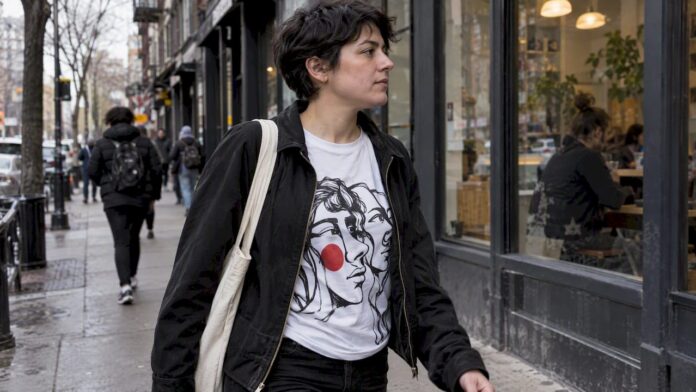
Fashion activism is the practice of using clothing to carry a political or social message, and it is much older than the slogan T-shirt. Suffragettes wore colors as a code. Black Americans used dress to claim dignity under pressure. A London designer put words on cotton and wore them to meet a prime minister. Today, people use wearable art to talk about mental illness. This guide walks through that timeline and explains why a plain garment keeps turning out to be one of the most effective tools a movement has.
TL;DR
- Clothing has served as protest and identity for well over a century: suffragette colors, 1940s zoot suits, 1960s Black Panther berets, 1980s slogan tees.
- The common thread is “visual shorthand”: an everyday item that tells people where you stand before you say a word.
- Fashion activism works best when it comes from lived experience and points toward action, not just a logo or a trend.
- Mental health advocacy is the newest chapter, using shirts, pillboxes and art to turn stigma into conversation.
- We make that kind of wearable advocacy at Schizophrenic.NYC, founded by schizophrenia activist Michelle Hammer.
Table of Contents
What counts as fashion activism?
The term covers two related things. The first is clothing worn as a message: a sash, a uniform, a printed slogan. The second is activism aimed at the fashion industry itself, such as campaigns on labor, materials and waste. Both have a long history, and they often overlap.
The exhibition team at the Fashion Institute of Technology’s Power Mode show frames the core idea well: an everyday, practical item like a T-shirt or a suit becomes a visual shorthand for resistance. For groups whose existence is stigmatized or erased, that is not only a style choice. It is a way of asserting identity.
That shorthand is why the history below keeps returning to the same ordinary garments.
Suffragettes: color as a code
One of the clearest early examples is the women’s suffrage movement. According to a history of social movements and fashion, suffragettes favored tailored suits and skirt-and-blouse looks because they signaled both practicality and respectability. They also adopted identifying colors: purple for loyalty and dignity, white for purity, and yellow for virtue, which in Britain gave way to green for hope.
What made this work was repetition. A single woman in white was a woman in white. Thousands of them in the same palette, marching in a city street and photographed by the press, were a movement the public could not miss. Suffragettes understood that clothing is visible from a distance and reads faster than a banner.
Dressing for dignity: the zoot suit and the civil rights era
In the 1940s, the zoot suit, with its exaggerated proportions and bright colors, became a flashpoint. Fashion and Race Database notes that the style signaled youth culture at best, and idleness, criminality and the supposed degeneracy of jazz at worst, depending on who was looking. The same cloth meant pride to the wearer and menace to the critic.
Historian Angela Tate, quoted on the same page, argues that for Black Americans, shifting fashions through the twentieth century, from zoot suits to the African-inspired prints of the 1960s and 70s, were tied to political survival and dignity. In her telling, these garments let people literally wear their pride and defiance, sometimes with more force than a speech.
During the civil rights movement, the logic ran in two directions:
- Respectability as strategy. Protesters were often photographed in their best clothes, which challenged stereotypes in front of the cameras.
- Heritage as statement. African-inspired prints and natural hair rejected a beauty standard built around white norms.
Both were deliberate. Both were fashion activism.
Berets, uniforms and the Black Panther look
The Black Panther Party shows how a coordinated look can become a media event. One account of the party’s aesthetics describes a look built from a black beret, leather jacket, dark shirt or turtleneck, a pin and dark sunglasses, and argues the Panthers used aesthetics on purpose to draw publicity for their political aims.
The lesson for later activists was practical: a consistent, recognizable look makes a cause easy to photograph and easy to remember.
The slogan T-shirt goes political
The T-shirt began as underwear and work wear. It became a political canvas in the second half of the twentieth century, and Dazed’s brief history of the political tee traces that path through designers such as Vivienne Westwood and Katharine Hamnett.
Hamnett is the defining figure. The London Museum recounts her 1984 meeting with Prime Minister Margaret Thatcher, where she wore a T-shirt reading “58% DON’T WANT PERSHING,” a reference to polling on US nuclear missiles in Britain. Her slogan shirts were designed to be unavoidable. Other messages included “CHOOSE LIFE” and, in 2003, “STOP WAR, BLAIR OUT.” In 1989 she turned to lobbying against pesticide use in cotton production and promoting organic materials, a move that helped shape modern ethical fashion activism.
That second act matters. It shows that the field has always had two faces: messages worn on the body, and pressure applied to the industry that makes the body’s clothes.
When the industry itself becomes the target
By 2019, the problem had grown large enough for the United Nations to act. The UN Environment Programme launched the UN Alliance for Sustainable Fashion to address the environmental and social damage of fast fashion, noting among other things that the sector is a major consumer of water.
This is the version of fashion activism most people associate with the phrase today: sustainability, fair labor, and the end of disposable clothing. It sits alongside the older tradition of wearing your message. If you are researching the topic, keep both in view, because the two feed each other. A shirt that carries a message is more meaningful when the person wearing it also cares how it was made.
Why clothing works as a message
Three things explain the staying power of this tactic.
- It is visible without permission. You do not need a stage or a microphone. You only need to leave the house.
- It starts conversations. A garment gives strangers a low-pressure way to ask a question.
- It lets people speak for themselves. Research on fashion psychology describes how the Self shapes the relationship between a person and their clothes, and why clothing can help someone reclaim their own narrative.
For a deeper read on self-expression and dressing with intention, this personal style guide for women is a useful companion.
The newest chapter: mental health and wearable advocacy
For most of the history above, the movements were about race, gender, war or the environment. Mental illness has been slower to arrive in the wardrobe, partly because stigma teaches people to hide. That is changing.
A master’s thesis from RISD, “The Meaning of A Choice,” looks at how people living with medical conditions can face a painful bind. Assistive gear is often built to be conspicuous and purely functional, so some people abandon it to avoid being singled out, which can harm their health. Advocacy-focused fashion pushes the other way. It folds awareness into products people actually want to wear.
Researchers writing about the Wellbeing Wardrobe make a related point about invisible conditions: clothing is a tool for impression management and identity negotiation, and masking one’s identity to fit in can come with a cost to wellbeing. A visual language that does not require masking offers an alternative.
In practice, this looks like a shirt, a button or a pillbox that says something honest about living with a diagnosis, and moves the conversation from “patient” to “advocate.” You can read more about the idea in our guides on the role of clothing in advocacy and wearable art activism, and see more historical and current cases in our roundup of fashion activism examples.

The risk: performative activism
Not every message tee is activism. A scholarly paper on moving beyond performative activism in the fashion industry argues for authenticity and equity rather than surface gestures. The same applies to mental health. Turning someone’s struggle into a trend, without involving the people who live it, risks commodifying the very thing you claim to support.
A few questions help separate the real from the performative:
- Who designed it, and do they have lived experience of the issue?
- Does the product start a conversation, or just decorate?
- Does the brand do anything beyond selling, such as speaking, education or community work?
- Is the message accurate and respectful of the people it describes?
Those questions apply to any cause, from climate to disability to mental health.
Our perspective
We came to this history from the inside. Schizophrenic.NYC was created by Michelle Hammer, who has schizophrenia, and the idea behind it is simple: the clothes should be good enough to wear and honest enough to talk about. When our designs show up on a train or in a classroom, someone asks about them. That question is the whole point.
We do not think a shirt fixes stigma by itself. What we have seen in the history above is that garments work when they are part of something bigger: a voice, a story, a community. That is why our work pairs apparel with public speaking, news and advocacy content. The product opens the door. The conversation does the changing.
We also think the next chapter belongs to people who were told to stay quiet. Schizophrenia is one of the most misunderstood diagnoses there is. Wearing something bold about it, on your own terms, is a way of saying you are a whole person, not a case file. Confidence can take you further than you expect, and a design you love can help you find it.
— Michelle
Wear the message: our collection
If this history made you want to join it, our shop is built for exactly that. You can start with mental health T-shirts, pick up hoodies and sweatshirts, or choose a 7 day pillbox that turns a daily routine into a small act of openness. Michelle’s original artwork and prints are there too, along with canvas prints for walls instead of wardrobes. Prices are shown on each product page.
If you organize events or classes and want a speaker, you can reach Michelle through our main site.
How to start your own fashion activism
You do not need a label to take part. Here is a simple path.
- Pick one message. The best slogans in this history were short and specific.
- Choose a garment you will actually wear. A message only works if it is seen, so comfort and fit matter.
- Be ready for the question. Decide in advance how much you want to share. You can say a lot or a little.
- Connect it to action. Donate, volunteer, speak, vote, or support organizations led by people with lived experience.
- Check the supply chain. If a brand claims to care about a cause, ask who made the product and how.
For ideas at the event level, our guides on outfits that spark conversations at fundraisers and accessorizing for mental health events offer concrete starting points.
FAQ
When did fashion activism begin?
There is no single start date, because people have always used dress to signal belonging and dissent. In the US and UK, the clearest early organized example is the suffrage movement of the early twentieth century, with its coordinated colors. Slogan tees followed later, with designers like Katharine Hamnett making them famous in the 1980s.
Who is considered the pioneer of political slogan T-shirts?
Katharine Hamnett is widely regarded as a pioneer. In 1984 she wore a protest T-shirt to meet Prime Minister Margaret Thatcher, as the London Museum describes. She later shifted her focus to organic cotton and pesticide use.
Does wearing a message shirt actually change anything?
On its own, a shirt rarely changes policy. What it does well is start conversations and make a cause visible, which can lower the social cost of talking about it. It works best alongside real action, such as speaking, donating or organizing.
How does fashion activism relate to mental health?
Clothing can act as a conversation starter that moves attention from a diagnosis to a person’s own story. For stigmatized conditions like schizophrenia, that visibility matters. If you or someone you know is struggling, a licensed mental health professional or your doctor is the right person to talk to about care, and in a crisis in the US you can call or text 988.
Sources
Recommended
Comments