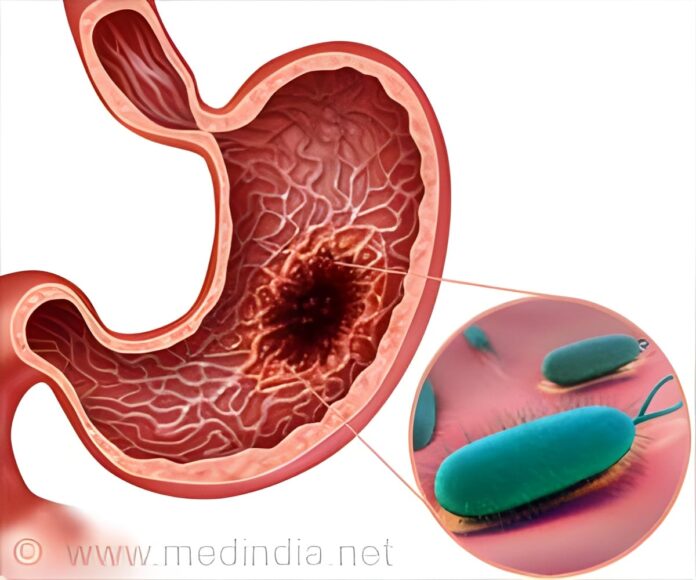
Satri-cel CAR-T therapy may become the first approved CAR-T treatment for solid tumors, opening new hope for advanced gastric cancer patients.
China may soon approve the world’s first CAR-T cell therapy for solid tumors, marking a major turning point in cancer treatment (1✔ ✔Trusted Source
Claudin-18 isoform 2-specific CAR T-cell therapy (satri-cel) versus treatment of physician’s choice for previously treated advanced gastric or gastro-oesophageal junction cancer (CT041-ST-01): a randomised, open-label, phase 2 trial
Go to source
).
According to a recent GlobalData report, CARsgen Therapeutics’ satricabtagene autoleucel, also known as satri-cel or CT041, is under review by China’s National Medical Products Administration (NMPA) for advanced gastric and gastroesophageal cancers.
If approved, the therapy could expand CAR-T treatment beyond blood cancers and open a new chapter in the fight against difficult-to-treat solid tumors.
Experts say the development is not only reshaping the global cancer therapy landscape but is also drawing attention in countries like India, where researchers are already working to make CAR-T treatment more affordable and accessible.
Satri-Cel Signals a New Era for CAR-T Therapy in Oncology
According to GlobalData, solid tumors are emerging as the next frontier for chimeric antigen receptor T-cell (CAR-T) therapy, a treatment that genetically reprograms a patient’s immune cells to recognize and destroy cancer cells.
While CAR-T therapies have already transformed treatment for blood cancers such as leukemia and lymphoma, success in solid tumors has remained limited because these tumors are harder for immune cells to penetrate and attack.
CARsgen Therapeutics’ satri-cel specifically targets Claudin 18.2 (CLDN18.2), a protein commonly found in The therapy is currently under review by the NMPA and is expected to become available in China during the first half of 2026.
If approved, Satri-Cel would become:
- The world’s first CAR-T therapy approved for solid tumors
- China’s ninth CAR-T therapy
- One of the first CAR-T therapies specifically targeting gastric and gastroesophageal cancers
overall
GlobalData analysts say this could significantly shift the future of oncology by expanding CAR-T treatment beyond hematological malignancies.
According to the World Journal of Gastroenterology, China accounts for nearly 44% of global gastric cancer cases, making the disease a major health burden in the country. Standard treatments currently include surgery, chemotherapy, targeted drugs, and immunotherapy, but outcomes for advanced disease remain poor (2✔ ✔Trusted Source
Updates on global epidemiology, risk and prognostic factors of gastric cancer
Go to source).
Satri-cel is an autologous CAR-T therapy, meaning doctors collect T cells from a patient’s blood, genetically engineer them in the laboratory to identify cancer cells, and then infuse them back into the patient to attack the tumor.
Phase II findings cited by GlobalData showed satri-cel achieved:
- An objective response rate (ORR) of 41%
- Progression-free survival of around 4.7 months in advanced gastric and gastroesophageal cancers
The therapy had earlier received priority review status from the NMPA in May 2025 for third-line treatment.
Additional findings from the randomized phase II published in The Lancet showed that satri-cel significantly improved progression-free survival compared with physician-selected standard treatments in heavily pretreated gastric and gastroesophageal junction cancers. Researchers described the study as the world’s first randomized controlled CAR-T trial conducted in solid tumors.
Why Is China Leading the Global Push in CAR-T Innovation?
China has rapidly emerged as one of the world’s largest CAR-T research hubs. According to the GlobalData Pharma Intelligence Center:
- 15 Chinese companies are currently developing CAR-T therapies for gastric cancer
- 22 drug candidates are under clinical development across different trial stages
- China is heavily investing in next-generation CAR-T technologies for solid tumors
Among the major competitors is Suzhou Immunofoco Biotechnology’s IMC-002, which is already in Phase III trials for gastric cancer and is also being explored for earlier-line treatment use.
A review published in Discover Oncology noted that China’s domestically developed CAR-T therapies have already achieved response rates comparable to global standards in blood cancers. Researchers said China is now heavily investing in overcoming barriers that limit CAR-T use in solid tumors, including: (3✔ ✔Trusted Source
CAR-T cell therapy in china: innovations, challenges, and strategic pathways
Go to source)
- Tumor heterogeneity, where cancer cells differ within the same tumor
- Immune suppression inside the tumor microenvironment
- On-target off-tumor toxicity, where healthy tissues may also be attacked
The review explained that Chinese researchers are testing several advanced approaches, including:
- Dual-target CAR-T systems
- Armored CAR-T cells that release immune-stimulating molecules
- Newer engineering methods aimed at improving tumor targeting while reducing side effects
- Automated manufacturing systems to lower costs
- Localized production and innovative insurance models to improve access
CARsgen is also expanding internationally, with ongoing Phase II and III studies in the United States and Canada for gastric and pancreatic cancers.
Abhishake Peyyeti, Pharma Analyst at GlobalData, said CARsgen could become the first CAR-T company to secure approval outside blood cancers. He added that the company’s partnership with Jiahui Cancer Center could help improve patient access after approval.
Researchers say China’s rapid growth in this field reflects a broader global race to develop safer and more effective CAR-T therapies for solid tumors.
What Does This Mean for India and the Future of Affordable CAR-T Therapy?
The progress of Satri-cel is also important from an Indian healthcare perspective because India has already entered the CAR-T field with its own homegrown therapy, NexCAR19.
According to a review published in Blood Cell Therapy, India approved NexCAR19 in October 2023 as the country’s first indigenous CAR-T therapy for blood cancers.
Researchers described it as a major milestone for South Asia because CAR-T treatment has traditionally remained extremely expensive and inaccessible in many low- and middle-income countries (4✔ ✔Trusted Source
A Discount on the Cost of Cancer: India’s Homegrown CAR-T Cell Therapy
Go to source).
CAR-T therapy is costly because it involves:
- Collecting immune cells
- Expanding and processing the engineered cells
- Reintroducing the cells into the patient’s body
from the patient
Genetically modifying the cells in the laboratory
Studies cited in the review estimated that commercial CAR-T therapies in the United States can cost between $380,000 and $526,000.
In contrast, India’s NexCAR19 is expected to cost roughly $50,000, nearly one-tenth the price of some Western therapies.
Researchers noted that India’s lower-cost manufacturing approach could help reduce the financial burden for cancer patients while improving regional access to advanced therapies. The review also highlighted that Asia carries some of the world’s highest burdens of:
- Leukemia
- Lymphoma
- Multiple myeloma
This makes affordable CAR-T development especially important in the region.
India’s NexCAR19 showed promising early results in blood cancers. In one phase I trial involving patients with acute lymphoblastic leukemia (ALL), the therapy achieved an objective response rate of 87.5%. Later phase II findings also reported encouraging response rates with relatively manageable side effects.
Experts say the expected approval of satri-cel in China could further accelerate CAR-T innovation across Asia, including India. Researchers believe future efforts may focus not only on improving effectiveness in solid tumors but also on:
- Reducing toxicity
- Lowering manufacturing costs
- Decentralizing production
- Expanding access beyond major cancer centers
- Developing more precise tumor-targeting systems
However, important challenges remain. A Nature Communications study investigating CLDN18.2-targeted CAR-T therapies found that while these treatments showed strong anti-tumor activity, they could also attack healthy stomach tissue that naturally expresses Claudin 18.2 (5✔ ✔Trusted Source
On-target off-tumor toxicity of claudin18.2-directed CAR-T cells in preclinical models
Go to source
).Researchers observed stomach inflammation, tissue injury, and gastric damage in preclinical models, underscoring the challenge of balancing effectiveness and safety.
Scientists are now exploring new engineering strategies, including Boolean-logic “AND-gate” CAR-T systems, which may help immune cells recognize tumors more selectively while sparing healthy tissue. Researchers believe such advances may eventually improve the safety of CAR-T therapies for solid tumors and help move the technology closer to routine clinical use.
Reference:
- Claudin-18 isoform 2-specific CAR T-cell therapy (satri-cel) versus treatment of physician’s choice for previously treated advanced gastric or gastro-oesophageal junction cancer (CT041-ST-01): a randomised, open-label, phase 2 trial – (https://www.thelancet.com/journals/lancet/article/PIIS0140-6736(25)00860-8/abstract)
- Updates on global epidemiology, risk and prognostic factors of gastric cancer – (https://pmc.ncbi.nlm.nih.gov/articles/PMC10167900/#:~:text=Although%20the%20global%20burden%20of,deaths%20in%20the%20world%2C%20respectively.)
- CAR-T cell therapy in china: innovations, challenges, and strategic pathways – (https://pmc.ncbi.nlm.nih.gov/articles/PMC12373616/)
- A Discount on the Cost of Cancer: India’s Homegrown CAR-T Cell Therapy – (https://pmc.ncbi.nlm.nih.gov/articles/PMC11620990/)
- On-target off-tumor toxicity of claudin18.2-directed CAR-T cells in preclinical models – (https://www.nature.com/articles/s41467-025-61858-z)
Source-Medindia