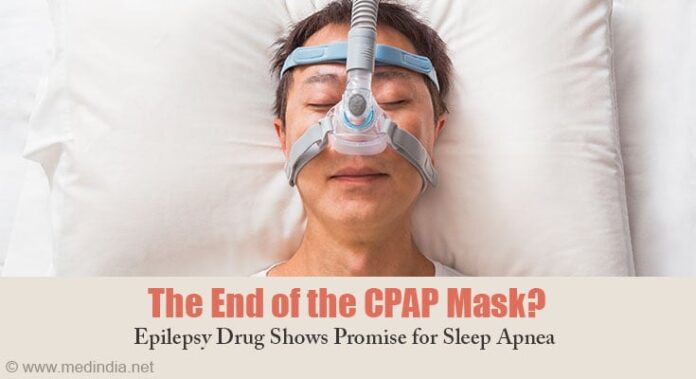
New trial reveals epilepsy drug Sulthiame reduces obstructive sleep apnea breathing pauses by up to 47%, offering hope as a pill-based alternative to CPAP machines.
- Epilepsy drug Sulthiame reduces sleep apnea breathing interruptions by up to 47%
- Medication offers potential pill-based solution for patients unable to tolerate CPAP masks
- Treatment stabilizes breathing control and prevents upper airway collapse during sleep
A medication known as sulthiame may reduce breathing pauses caused by obstructive sleep apnea (OSA), suggesting a possible pill-based alternative to continuous positive airway pressure (CPAP) therapy. It may help individuals with obstructive sleep apnea breathe more easily at night and achieve better overall sleep quality (1✔ ✔Trusted Source
Sultiame once per day in obstructive sleep apnoea (FLOW): a multicentre, randomised, double-blind, placebo-controlled, dose-finding, phase 2 trial
Go to source
).
Evidence for this comes from a European clinical trial, according to investigators, the findings indicate the potential for a medication-based treatment for patients who have difficulty tolerating breathing masks.
The results of the trial were published in The Lancet. The study involved 298 participants diagnosed with moderate to severe sleep apnea.
About one quarter of them were given a placebo, while the remaining participants received varying doses of sulthiame. Conducted across four European countries, the trial used a double blind design, meaning neither the participants nor the investigators knew who received the actual medication.
Sulthiame Reduces Nighttime Breathing Interruptions
Participants treated with higher doses of sulthiame experienced as much as a 47% reduction in breathing interruptions during sleep compared with those who received the placebo. In addition, their overnight oxygen levels improved.
The medication appears to function by stabilizing the body’s breathing control system and enhancing respiratory drive. This mechanism reduces the chances that the upper airway will collapse during sleep, which is the main cause of obstructive sleep apnea. Most side effects reported in the trial were mild and temporary.
Sulthiame Signals Possible Breakthrough in Sleep Apnea Treatment
Jan Hedner, senior professor of pulmonary medicine at the Sahlgrenska Academy, played a leading role in the investigation.
“We have been developing this treatment strategy for a long time, and the findings demonstrate that sleep apnea can indeed be influenced through medication. It feels like a breakthrough, and we now anticipate larger and longer studies to determine whether the benefits last over time and whether the treatment is safe for broader patient populations,” said Jan Hedner.
Sleep Apnea Risks and Current Treatment Challenges
Obstructive sleep apnea occurs when the upper airway repeatedly collapses during sleep. These episodes temporarily stop breathing, reduce oxygen levels in the blood, and repeatedly interrupt normal sleep.
Over time, untreated sleep apnea increases the risk of serious health problems, including high blood pressure, cardiovascular disease, stroke, and type 2 diabetes.
Although the condition is widespread, there is currently no medication that directly treats its underlying cause. The most widely used therapy is continuous positive airway pressure, commonly called CPAP, which uses a mask to keep the airway open during sleep. Despite its effectiveness, many people struggle to use the device consistently.
Patient Struggles with Continuous Positive Airway Pressure Masks
Up to half of patients discontinue CPAP therapy within a year because the mask can feel uncomfortable or disturb sleep. As a result, alternative treatment approaches are urgently needed.
Sulthiame is an existing medication that has previously been approved to treat a form of childhood epilepsy. Scientists are now examining whether this drug could also serve as a treatment option for people with obstructive sleep apnea.
In conclusion, the findings indicate that sulthiame may offer a promising medication-based approach for treating obstructive sleep apnea by reducing breathing interruptions and improving oxygen levels during sleep. While the results are encouraging, larger and longer studies will be necessary to confirm its long-term effectiveness and safety for broader patient groups.
Frequently Asked Questions
Q: What is sulthiame?
A: Sulthiame is a medication previously approved to treat a form of childhood epilepsy and is now being studied as a possible treatment for obstructive sleep apnea.
Q: How does sulthiame help people with sleep apnea?
A: The drug stabilizes the body’s breathing control and increases respiratory drive, which helps prevent the upper airway from collapsing during sleep.
Q: How effective was sulthiame in the clinical trial?
A: Participants taking higher doses experienced up to a 47% reduction in breathing interruptions during sleep.
Q: What treatment is commonly used for sleep apnea today?
A: Continuous positive airway pressure therapy is the most common treatment and uses a mask to keep the airway open during sleep.
Q: Why are researchers looking for alternatives to continuous positive airway pressure therapy?
A: Many patients find the mask uncomfortable and up to half stop using the device within a year.
Reference:
- Sultiame once per day in obstructive sleep apnoea (FLOW): a multicentre, randomised, double-blind, placebo-controlled, dose-finding, phase 2 trial. – (https://www.thelancet.com/journals/lancet/article/PIIS0140-6736(25)01196-1/fulltext)
Source-Medindia