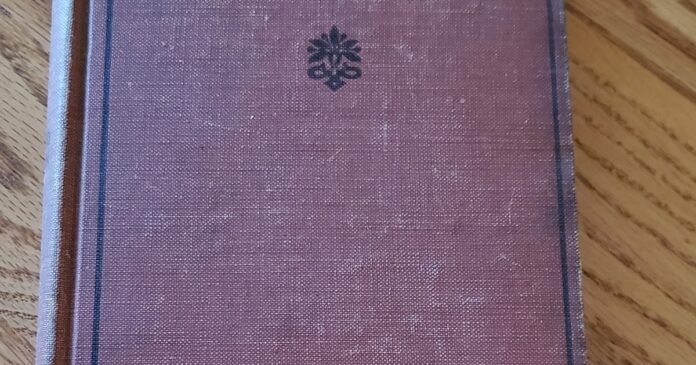
I recently found a 100-year-old American History book that once belonged
to Madie Ream, Home Room 109. This book contains an emphasis on political and
constitutional issues and is written in a readable narrative format.
I’ll admit that either I’ve forgotten a lot of the history I studied in
school, or our books glossed over much of it. I do not remember ever reading
that during George Washington’s second term, he was compared to Nero, called a
“tyrant,” “dictator” and “despot.” The most shocking to me was that some
referred to him as the “step-father” of our country.
This reminds me of when my oldest son was a teen-ager and not
prone to answering questions. He would say, “If you’re writing a book, just
leave that chapter out.” It really makes perfect sense in today’s world.
Each of us has a history and sometimes we leave out chapters
if we are recounting past events. In my defense, I seem to have forgotten big
chunks of my personal history. I hear other people tell stories “that seem like
yesterday” and in my opinion, it’s more like another lifetime, or actually
about someone else.
But then, I can re-read my past blog posts and not recall
writing some of them. When I read “Indelible” (which was transcribed from my
recordings in real time), sometimes I can’t retrieve the actual memory. I also
left some chapters out because they were too painful to tell, reflected badly
on another person, or too private to share with others.
We all have good chapters and bad chapters, joyful chapters
and sad chapters, but most of all we have the forgotten chapters: the days that
hummed along, uneventful, and so boring that they didn’t earn a spot in our
short-term or long-term memory.
When tragedy hits, stress and heartache are present for a
huge chunk of our lives. When we awaken for a new day—the first thought is a
surge of grief. When we lie down to sleep—the last thought is the heartache of
loss.
With time, grief becomes manageable and entire days go by
without tears, but not without thoughts and memories. Sometimes waves of sorrow
wash over us with the force of a tsunami from the epicenter of pain.
Given enough healing and fortitude, the sun will shine again
and warm our souls. Life marches on with a blur of days, events, obligations,
and celebrations. Some people live with chaos, and have to etch out moments of
inner peace. Some of us live a life that has little drama and limited stress.
When my life is over, I hope people will remember the good
I’ve done and forget the chapters when I fell short of the mark. I’m only human
and I’ve made my share of mistakes, but I’ve learned more from mistakes that I
have from getting it right the first time.
Someday, each of us will be history. Some of us will be like
Madie, who wrote two poems and an observation in the front of her history book.
Like me, when she found something that caught her attention, she wrote it down
to remember it later.
A person who never knew her (me) smiled when I read, “Life is
one darn thing after another; love is two things after each other.” Versions of
this quote have been attributed to various people, and Madie found it
somewhere.
I’m sure I would have liked Madie, and I tell
her that when I visit her grave.