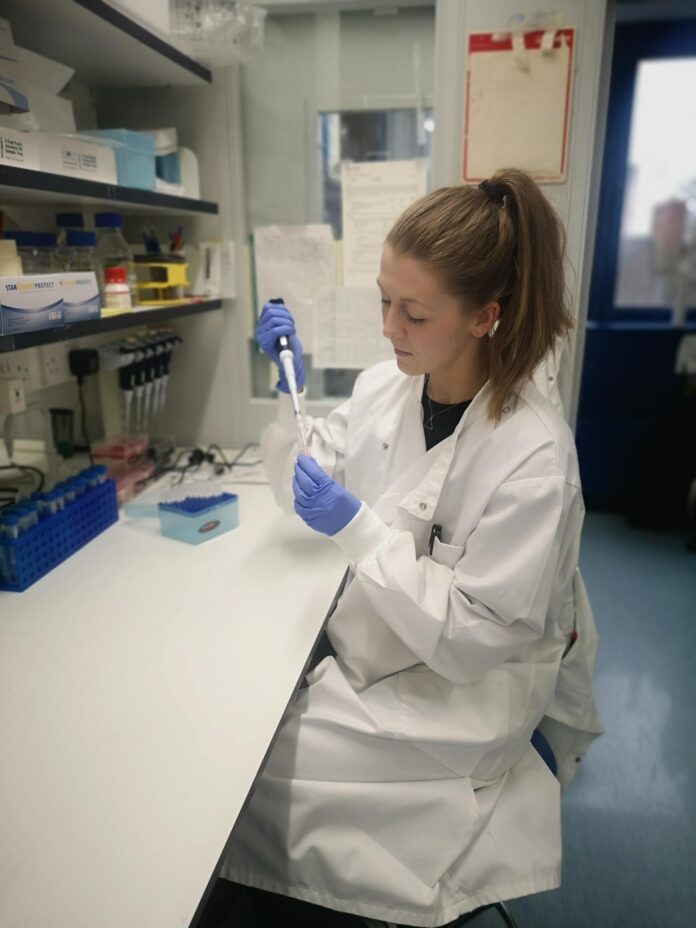
Race Against Dementia, founded by Sir Jackie Stewart OBE, in partnership with Alzheimer’s Research UK – the UK’s leading dementia research charity – have awarded £500,000 to Dr Amy Lloyd at the University of Dundee, to support her research relating to Alzheimer’s disease.
Dr Lloyd will investigate why the behaviour of immune cells in the brain called microglia change over time in the progression of Alzheimer’s disease.
Three-time Formula 1 World Champion, Sir Jackie Stewart OBE, founded the charity after his wife, Helen, was diagnosed with a rare form of dementia know as frontotemporal dementia. The charity works to raise money to speed up efforts towards finding a cure for dementia through collaborations between industry, scientific experts, and other charitable foundations.
In the early stages of Alzheimer’s disease, it is thought that microglia protect the brain by breaking down and clearing away the toxic build of protein called amyloid. Yet, over time microglia can start to misbehave, they stop removing these proteins and start releasing molecules that damage nerve cells. There is still a huge lack of understanding of how this happens.
Over the next five years, Dr Lloyd will use a method called proteomics which is a tool that can identify and measure the level of different proteins that are present in cells. This will reveal what proteins microglia make at different stages, specifically what proteins they make when they are helpful and what they start making when they cause harm.
Having a better understanding around why microglia turn from good to bad could lead to new ways of reverting them back to protecting nerve cells rather than damaging them. It may also reveal important mechanisms that could be targeted by drugs, boosting the protective function of microglia.
Dr Amy Lloyd, Race Against Dementia – Alzheimer’s Research UK Fellow at the University of Dundee, said:
“I’m delighted to have been awarded this funding, which could help find new ways to slow down or prevent the build-up of toxic plaques in Alzheimer’s disease. I hope my work will pave the way for new treatments for this devastating condition, it’s what people affected by dementia want and deserve. I am incredibly proud to be part of finding a cure.”
Sir Jackie Stewart OBE, adds:
“Amy is the latest to a growing team of scientists Race Against Dementia is backing to accelerate dementia research. Dr Lloyd is an inspiring early career researcher working in Scotland, bringing academic expertise together with cutting-edge research. I know she will contribute hugely to the progress being made in the fight against dementia”.
Dr Susan Kohlhaas, Executive Director of Research & Partnerships at Alzheimer’s Research UK, said:
“Collaborating with Race Against Dementia ensures that ambitious research projects from future leaders of dementia research are supported. Dr Lloyd’s research will give us valuable insight into why immune cells behave differently in Alzheimer’s, which will open up new avenues of research exploration and potential new treatments for dementia.
“Dementia will not wait for anyone; it remains the biggest killer in the UK. If nothing changes, one in two of use will be directly affected by it – either by caring for someone with the condition, developing it ourselves, or both. The only way we can change this and find a cure is through research, which can be made even more powerful through collaborations with pioneering organisations like Race Against Dementia.”