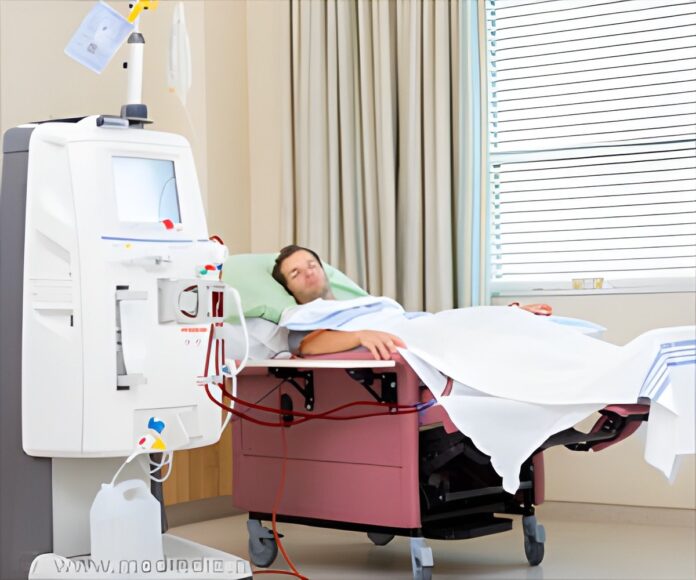
A new clinical trial reveals that a gentler dialysis approach may be just as effective as an intensive one for patients with acute kidney injury.
Dialysis is a common treatment used by doctors to filter blood and save lives when the kidneys suddenly fail, a condition known as acute kidney injury (AKI). However, a fundamental question has perplexed medical professionals for years: should dialysis be initiated quickly and aggressively, or should they wait and treat more conservatively, allowing the kidneys to attempt to heal themselves?
In order to address this, researchers compared these two methods in critically ill patients who needed dialysis as part of the LIBERATE-D clinical trial (1✔ ✔Trusted Source
A Conservative Dialysis Strategy and Kidney Function Recovery in Dialysis-Requiring Acute Kidney Injury The Liberation From Acute Dialysis (LIBERATE-D) Randomized Clinical Trial
Go to source
).
LIBERATE-D Clinical Trial
The study involved over 220 adults who were admitted to intensive care units (ICUs) across several hospitals in the United States. All participants had acute kidney injury serious enough to require dialysis, but they were clinically stable. They were randomly assigned to one of these two groups:
- Conservative Strategy Group: Dialysis was initiated only when it was evidently required, such as when the patient displayed symptoms of fluid overload or metabolic issues, or when waste products or potassium levels increased excessively. The goal was to keep patients safe while allowing the kidneys to heal on their own.
- Conventional Strategy Group: Regardless of lab results or symptom alleviation, patients received standard, three-weekly dialysis (the conventional hospital schedule).
LIBERATE-D Trial Monitoring and Measurements
Both groups were closely observed for:
- Kidney recovery: Could patients stop dialysis entirely prior to being released?
- Survival: Whether they survived their hospital stay and the ninety days that followed.
- Dialysis-free days: The number of days they were able to avoid dialysis.
- Complications: Like infection, electrolyte abnormalities, or low blood pressure.
The main goal was to see which approach helped patients recover kidney function and survive longer.
No Big Difference in Survival
After 90 days, approximately 36% of patients in both groups were alive and not on dialysis, indicating that neither approach clearly outperformed the other in terms of helping patients recover kidney function.
However, patients in the conservative group:
- Overall, fewer dialysis sessions were required.
- Reduced the amount of time spent plugged into dialysis equipment.
- Exhibited comparable rates of recovery and survival to those who received more intensive care.
In short, doing less did no harm!
Gentler Dialysis Brings Relief in the ICU
Doctors have been concerned for years that dialysis results could deteriorate if dialysis is postponed or intensity is decreased.
However, the LIBERATE-D trial indicates that a cautious, conservative approach can be equally effective and could even lessen the psychological and physical strain of dialysis for patients in the intensive care unit who are struggling to recover.
The LIBERATE-D study calls into question the widely held belief that more dialysis leads to better results. Rather, it demonstrates that a patient-centred, well-balanced approach could be just as safe and even simpler for both patients and healthcare providers.
This study serves as a reminder that, as medicine moves towards more individualised treatment, sometimes less is more, especially when the goal is healing rather than intervention.
Reference:
- A Conservative Dialysis Strategy and Kidney Function Recovery in Dialysis-Requiring Acute Kidney Injury
The Liberation From Acute Dialysis (LIBERATE-D) Randomized Clinical Trial – (https://jamanetwork.com/journals/jama/fullarticle/2841171)
Source-JAMA