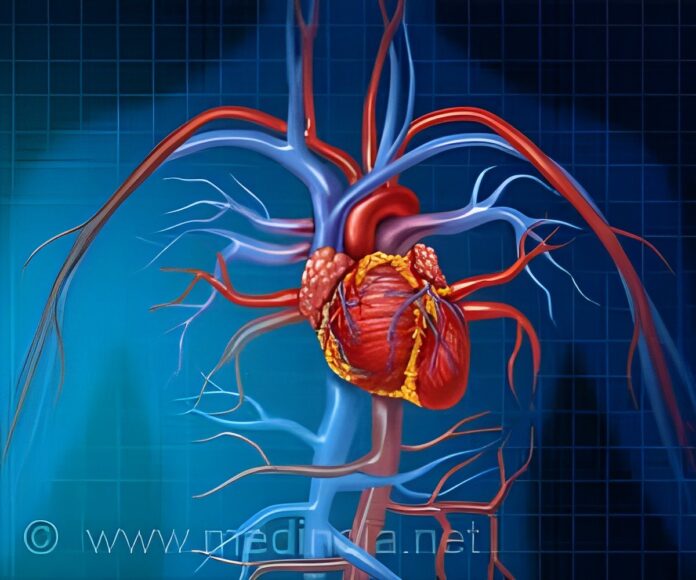
A small microneedle patch can deliver medicine directly to the impaired heart tissue, turning immune cells into powerful healers after heart attack.
Scientists have developed a tiny patch with microneedles to deliver a healing medicine right to the damaged heart tissue after a heart attack. The biodegradable patch technique can turn immune cells into powerful healers, reducing scarring and improves heart function.
The development was made by team of researchers from Texas A&M University, led by a researcher Dr. Ke Huang. Huang and team published their findings in Cell Biomaterials.(1✔ ✔Trusted Source
Immunomodulatory microneedle patch for cardiac repair in rodent and porcine models of myocardial infarction
Go to source
)
The novel approach produces no side effects like other systemic drugs and will not influence other nearby organs. The healing molecule called “Interleukin-4 (IL-4)” is injected directly to the heart muscle through the patch.
“This patch acts like a bridge,” said Huang, assistant professor in the Department of Pharmaceutical Sciences. “The microneedles penetrate the outer layer of the heart and allow the drug to reach the damaged muscle underneath, which is normally very hard to access.”
TOP INSIGHT

Did You Know?
Dig into the #nanotechnology and #gene_therapy for regenerating the #heart after an attack, providing heart a second chance. No more systemic drugs! #heartattack #microneedlepatch #hearthealth #medicaltechnology
Reprogramming Immune Cells with Cardiac Healing Molecule
After a heart attack, the heart muscle loses oxygen and nutrients, causing cells to die. The body responds by forming scar tissue, which helps stabilize the heart but cannot contract like healthy muscle. Over time, the remaining heart muscle has to work harder to compensate, often leading to heart failure.
Huang’s patch aims to interrupt that cycle. By delivering IL-4 directly to the site of injury, the patch encourages immune cells called “macrophages” to switch from a pro-inflammatory state to a healing state. This shift helps reduce scar formation and promotes the final prognosis.
“Macrophages are the key,” Huang explained. “They can either make inflammation worse or help the heart heal. IL-4 helps turn them into helpers.”
Heart Cells Become More Communicative Post-Treatment
Previous attempts to use IL-4 for heart repair involved injecting it into the bloodstream, but that approach caused unwanted side effects in other organs.
Huang’s patch solves that problem by keeping the treatment local.
“Systemic delivery affects the whole body,” he said. “We wanted to target just the heart.”
One of the most surprising findings was a change in the “state” of heart muscle cells after treatment.
Huang said the cells became more communicative and responsive to signals from surrounding tissues, especially endothelial cells, which line blood vessels.
From Open Surgery to Minimally Invasive Delivery
This enhanced communication may be key to long-term healing. “The cardiomyocytes weren’t just surviving, they were interacting with other cells in ways that support recovery,” he said.
The patch also quieted inflammatory signals from endothelial cells, which can otherwise worsen damage after a heart attack. Huang’s team observed increased signaling through a pathway called NPR1, which helps maintain blood vessel health and supports heart function.
While the current version of the patch requires open-chest surgery, Huang hopes to develop a minimally invasive delivery method in the future. He envisions a version that could be inserted through a small tube, making it more practical for clinical use.
“This is just the beginning,” he said. “We’ve proven the concept. Now we want to optimize the design and delivery.”
Reference:
- Immunomodulatory microneedle patch for cardiac repair in rodent and porcine models of myocardial infarction – (https://www.cell.com/cell-biomaterials/fulltext/S3050-5623(25)00143-6?_returnURL=https%3A%2F%2Flinkinghub.elsevier.com%2Fretrieve%2Fpii%2FS3050562325001436%3Fshowall%3Dtrue)
Source-Eurekalert