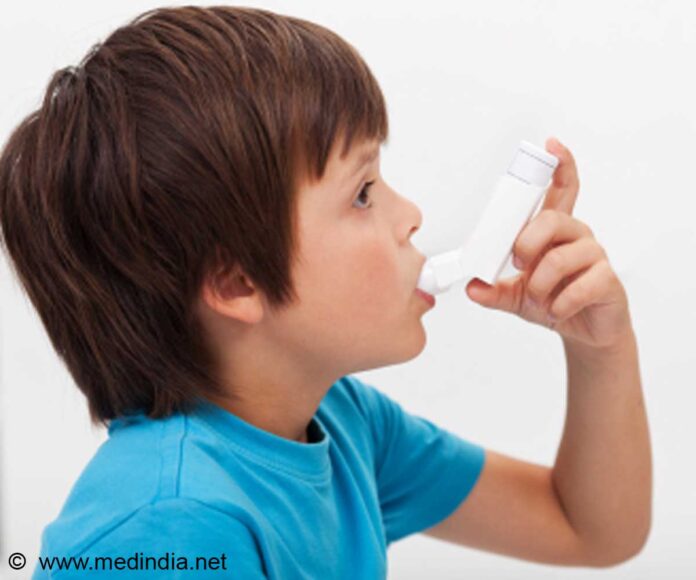
Children’s asthma care may change as the 2-in-1 inhaler proves safer and stronger than standard treatments.
A new clinical trial comparing the real-world performance of asthma inhalers may transform treatment for children with asthma. In the first randomized controlled study of its kind, researchers found that a 2-in-1 inhaler used as a sole reliever for children aged 5 to 15 was more effective than salbutamol—the current standard treatment—with no added safety concerns (1✔ ✔Trusted Source
Combination inhaler therapy cuts asthma attacks in children by almost half
Go to source
).
2-in-1 Inhaler Reduces Asthma Attacks by 45%
The results show that using a single 2-in-1 anti-inflammatory reliever inhaler – which combines the inhaled corticosteroid (ICS) budesonide and the fast-acting bronchodilator formoterol – reduced children’s asthma attacks by an average of 45%, compared to the widely-used salbutamol inhaler.
Asthma attacks in children may be life-threatening and reducing their frequency and severity is a public health priority.
The 2-in-1 budesonide-formoterol inhaler is widely recommended as the preferred reliever treatment for adults, but children are still usually prescribed salbutamol.
Bridging the Evidence Gap Between Adults and Children
Researchers say the findings, published today in The Lancet, provide the evidence needed to bring children’s global asthma guidelines into line with adults’, which could benefit millions of children around the world with mild-to-moderate asthma.
The CARE study (Children’s Anti-inflammatory REliever) was designed and led by the Medical Research Institute of New Zealand (MRINZ), in collaboration with Imperial College London, University of Otago Wellington, Starship Children’s Hospital, and the University of Auckland.
It recruited 360 children across New Zealand who were then randomly assigned to receive either budesonide-formoterol or salbutamol for on-demand symptom relief.
Study Design and Results
The trial lasted a year and the budesonide-formoterol reliever resulted in a lower rate of asthma attacks than salbutamol reliever, with rates of 0.23 versus 0.41 per participant per year.
This means that for every 100 children with mild asthma who are switched from salbutamol to a 2-in-1 budesonide-formoterol inhaler, there would be 18 fewer asthma attacks per year.
Importantly, the study also confirmed the safety of the combined-inhaler approach, with no significant differences in children’s growth, lung function, or asthma control between the two groups.
Expert Insights on Global Impact
Dr. Lee Hatter, lead author of the study and Senior Clinical Research Fellow at the MRINZ, said:“This is a key step in addressing the evidence gap that exists between asthma management in adults and children… This evidence-based treatment could lead to improved asthma outcomes for children worldwide.”
Professor Richard Beasley, Director of MRINZ and senior author of the study, added: “Implementing these findings could be transformative for asthma management on a global scale.”
Global Burden and Next Steps
The burden of asthma in the estimated 113 million children and adolescents with asthma worldwide is substantial.
The latest study builds on previous MRINZ-led research in adults, which shaped international asthma treatment guidelines and contributed to the recommended use of the 2-in-1 ICS–formoterol reliever inhaler as the preferred reliever treatment.
Incorporating the CARE study findings into global asthma treatment strategies could reduce disparities in care and ensure that more children access effective, evidence-based treatments.
Limitations and Real-World Relevance
The authors note that the trial took place during the COVID-19 pandemic, when reduced viral circulation may have led to fewer asthma attacks overall.
They also acknowledge challenges in identifying asthma attacks in children and the potential bias from the lack of blinding of treatments.
However, the study’s pragmatic, real-world design supports the generalisability of its findings to clinical practice.
Global Experts Weigh In
Professor Andrew Bush, Imperial College London, said:“Having an asthma attack can be very scary for children and their parents. We believe this will transform asthma care worldwide.”
Professor Helen Reddel, Chair of the Science Committee of GINA, emphasized:“Asthma attacks profoundly affect children’s development… Their prevention must be a high priority.”
Professor Bob Hancox, Medical Director of the New Zealand Asthma and Respiratory Foundation, noted: “This research shows that the 2-in-1 inhaler is effective and safe for children as young as 5.”
The study was supported by the Health Research Council of New Zealand, Cure Kids (New Zealand), and the Barbara Basham Medical Charitable Trust managed by Perpetual Guardian. Symbicort Rapihalers for the trial were provided by AstraZeneca.
Reference:
- Combination inhaler therapy cuts asthma attacks in children by almost half – (https://pharmaceutical-journal.com/article/news/combination-inhaler-therapy-cuts-asthma-attacks-in-children-by-almost-half)
Source-Imperial College London