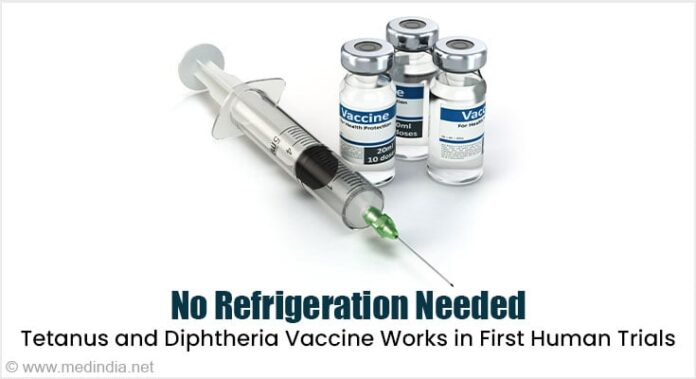
A new room-temperature vaccine for tetanus and diphtheria shows promise in trials, potentially solving the cold chain problem that wastes half of all vaccines globally.
- Half of all vaccines produced globally are wasted before they can be used
- A new vaccine candidate remains stable at room temperature and has completed initial human trials
- Breakthrough could transform immunization access in remote areas and during emergencies
A room-temperature vaccine could help prevent massive vaccine wastage by staying effective without refrigeration, addressing one of the biggest barriers to global immunization (1✔ ✔Trusted Source
Could ‘fridge-free’ vaccines transform global immunisation?
Go to source
).
The World Health Organization estimates that nearly half of all vaccines produced globally never reach those who need them, primarily because they lose effectiveness before use.
Most vaccines require continuous refrigeration from production to administration, a process known as the “cold chain.” When this chain is disrupted, vaccines may become ineffective and must often be discarded.
Maintaining this system is especially challenging in remote regions, during natural disasters, or in areas with unstable electricity supply.
Advancing Stability Without Cold Chains
A vaccine capable of remaining stable at room temperature could significantly change vaccine distribution. Scientists at the United Kingdom Health Security Agency laboratories in Porton Down are contributing to a clinical trial focused on achieving this goal.
A United Kingdom pharmaceutical company, Stablepharma, has developed a tetanus and diphtheria vaccine named SPVX02, designed to retain effectiveness without refrigeration.
The Vaccine Development and Evaluation Centre supported the trial by conducting specialized laboratory testing. The vaccine has recently completed first-in-human clinical trials, marking an important step toward potential licensing.
Assessing Immune Response Through Blood Analysis
The Clinical Evaluation Team analyzed blood samples from participants to measure antibody responses to the vaccine’s key components. This analysis relied on testing protocols developed and validated at the Porton Down laboratory.
The resulting data will contribute to submissions made to the Medicines and Healthcare Products Regulatory Agency as the vaccine advances toward possible approval.
The trial focused on determining whether SPVX02 is safe, well tolerated, and capable of producing immune responses comparable to those generated by currently available refrigerated vaccines.
Impact on Tetanus and Diphtheria Prevention
Tetanus and diphtheria remain preventable diseases, yet they continue to cause illness and death in regions where access to vaccines is limited. Failures in maintaining the cold chain have been identified as a major obstacle to achieving global immunization targets.
A vaccine that remains stable at room temperature could significantly reduce wastage, streamline distribution, and strengthen immunization efforts, particularly in low- and middle-income countries and during emergency situations. This supports global health objectives and ongoing efforts to improve health security.
Collaboration with innovative pharmaceutical companies and the use of advanced laboratory expertise are helping to develop solutions that could protect populations worldwide from vaccine-preventable diseases.
This effort reflects broader activities within the Vaccine Development and Evaluation Centre, where teams assessed 45 vaccine and therapeutic regimens over the past year.
In conclusion, a room-temperature vaccine like SPVX02 has the potential to address major challenges in vaccine storage and distribution, improving access and reducing wastage worldwide.
Frequently Asked Questions
Q: What makes the tetanus and diptheria SPVX02 vaccine different from traditional vaccines?
A: It stays effective at room temperature, unlike most vaccines that require constant refrigeration.
Q: Why is maintaining the cold chain challenging?
A: Uninterrupted refrigeration is difficult in remote areas, disasters, or places with unreliable electricity.
Q: How was SPVX02 tested in clinical trials?
A: It was tested in first human trials, where blood samples were analyzed to assess immune response and safety.
Q: What were the key findings from the SPVX02 trial?
A: It was found to be safe, well tolerated, and produced immune responses similar to refrigerated vaccines.
Q: How could he fridge free vaccine improve global immunization?
A: It could reduce wastage, simplify distribution, and improve access in low-resource and emergency settings.
Reference:
- Could ‘fridge-free’ vaccines transform global immunisation? – (https://ukhsa.blog.gov.uk/2026/03/13/could-fridge-free-vaccines-transform-global-immunisation/)
Source-Medindia