Hi Everyone! I’m Aoife Gordon, I am a final year MSc Occupational Therapy Student (Pre-Registration) at Queen Margaret University. My last practice placement has been with Alzheimer Scotland, giving me the opportunity to work with their two campaign groups; Scottish Dementia Working Group and the National Carers for Dementia Action Network. One of my learning outcomes has been to share my work, reflections and learning on social media. Which has led me to write this blog, as the campaign groups encouraged a reflection on any preconceptions or stigmas, I had before starting this placement.
Before starting my placement and since attending meetings with the Scottish Dementia Working Group (SDWG) and the National Carers for Dementia Action Network (NDCAN), I found that I had preconceptions of dementia. It feels important to write about this, so that other AHP students can perhaps relate, reflect and potentially challenge their own preconceptions of what dementia is or is not?
My undergraduate qualification was in general nursing, where much of my experience was hospital based and involved caring for people who had been diagnosed with dementia for a number of years, often experiencing delirium and significant distress. In this setting, people’s environments and routines usually changed suddenly, and I understood just how important stability and familiarity are for people living with dementia. However, that clinical lens shaped my expectations more than I realised.
I did not realise that I was carrying assumptions, about what dementia can be for others, how people would communicate, and who would hold influence in the room, particularly when attending group sessions with SDWG members. I assumed professionals would guide discussions and that people living with dementia would be supported to engage, rather than driving and leading the conversations themselves. I also held some tunnel visioned preconceptions of caring, imagining it largely as practical support: help with eating, drinking, washing, or getting from A to B. I hadn’t fully grasped the impact that being an unpaid carer can have on identity, finances, employment, and a person’s sense of self.
What I encountered while on my placement with Alzheimer Scotland challenged all of that. I was struck most by the positivity, humour, and strength of people living with a dementia diagnosis. When I was in attendance with SDWG members I noticed laughter, often shared, and a sense of connection that felt deeply human. Members sometimes joked about certain aspects of their experiences together, on their own terms. This wasn’t minimising or denial; it was agency. The language used across both groups was consistently person-centred, respectful, and thoughtful. Conversations were clear, purposeful, and led by lived experience.
I was also unaware before starting my practice placement, how influential both SDWG and NDCAN groups have been. I had assumed staff would shape opinions or lead discussions, but I quickly learned that staff are intentionally there to support, not to give views of their own. The voices that mattered most were those of people living with dementia and their supporters’. Seeing firsthand how lived experience directly shapes policy and service provision was powerful, and not something I could have understood fully without being present.
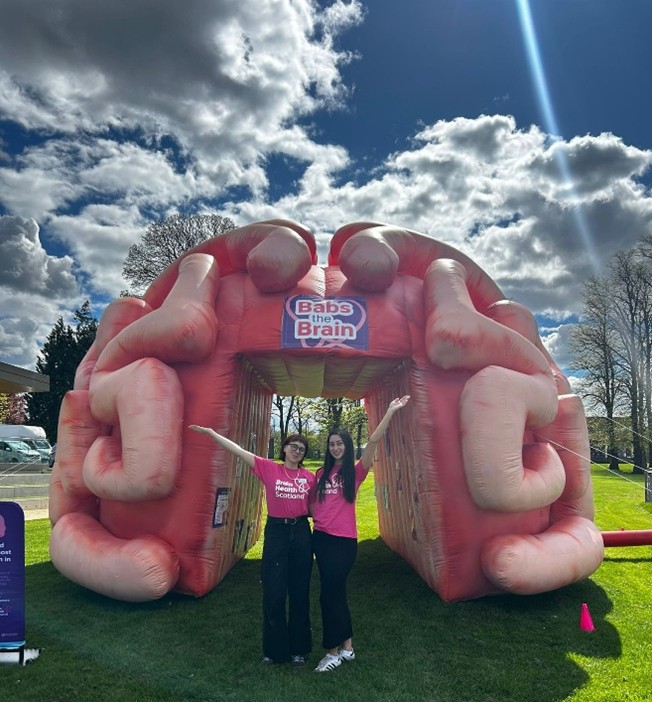
Alongside working with both the campaign groups, I also had the opportunity to attend as a volunteer with Brain Health Scotland at the Alzheimer Scotland Shooting Stars event, helping to run a smoothie bike stand. The smoothie bike allowed for conversations to be help surrounding the impact of physical activity and a balanced diet on risk reduction for dementia. The bike created a very different but equally important space for conversation. The interactive nature of the bike allowed me to engage mostly with children, talking about brain health in an accessible and positive way. It reinforced for me how early education can help challenge stigma before it forms, and how creating inclusive, approachable environments can make difficult topics feel normal rather than frightening.

As these realisations set in, I felt disappointed that I had held these preconceptions, having completed TURAS modules; such as ‘Trauma skilled practice in dementia care’, I can understand the impact awareness can have in your professional delivery of care. What also helped was the openness of the groups in acknowledging that many people arrive carrying stigma or uncertainty. Being encouraged to reflect, and even write about it, created space for my learning and reflections. If I could speak to my past self before my first meeting with SDWG and NDCAN, I would say: Just be present. Ask questions. Take it all in. Don’t be afraid of getting things wrong.
Having listened and learned, I now feel a responsibility to play a role in increasing an understanding of brain health, dementia, promoting inclusion, through even spreading awareness to others regarding dementia friendly aspects they could easily carry out day-to-day and as health and social care professionals. I can help educate others about stigma, challenge assumptions about ability and influence, and support the use of respectful, person-centred language. I think many people avoid dementia-related spaces out of fear, fear of saying the wrong thing or making things ‘worse’. But what I have learned is that people who have the knowledge to share about dementia, especially those I have met throughout my placement, such as SDWG and NDCAN members, all the Alzheimer Scotland staff I have encountered and my Practice Educator Elaine Hunter, are often open, patient, and willing to educate, when approached with honesty and respect
I want to carry these insights forward in my future career as an occupational therapist by challenging stigma, advocating for inclusion, and encouraging others not to let fear stand in the way of connection. Listening changed my understanding. Showing up, changed my perspective. I hope sharing this reflection might make it easier for someone else to do the same.
Thank you for reading this blog. As I come to the end of my final placement, I would like to extend my sincere thanks to everyone who has contributed so meaningfully to my learning and development. To the members of the Scottish Dementia Working Group and the National Dementia Carers Action Network, thank you for your openness, honesty, and willingness to share your experiences. Listening to your perspectives has been both a privilege and a powerful reminder of the importance of person-centred, rights-based practice. To the staff at Active Voice, thank you for creating such a welcoming and supportive environment. Your commitment to amplifying the voices of people with lived experience has been inspiring, and it has challenged me to think more critically about my role as a future occupational therapist. To my practice educator, I am grateful for your support and facilitation throughout this placement. This experience has had a lasting impact on how I will approach my future professional role. I leave this placement with a strengthened commitment to advocacy, collaboration, and ensuring that the voices of those with lived experience remain central to practice.
Contributor: Aoife Gordon, Queen Margaret University, MSc Occupational Therapy (Pre-Registration) Student
You can find the Alzheimer Scotland 24 hour Freephone Dementia Helpline, for information, signposting and emotional support to people with dementia, their families, friends and professionals here
If you would like to learn more about the Scottish Dementia Working Group click here and the National Dementia Carers Action Network click here
Allied Health Professionals have created a suite of information resources for people with dementia, their families and carers that you can find here
Enjoyed this blog? Tell us more. We love feedback.
Please spend 1 minute completing this short anonymous feedback form to allow us to make our blog posts even better in 2026. Thank you
AHP Let’s Talk About Dementia Blog Feedback Form – Fill out form