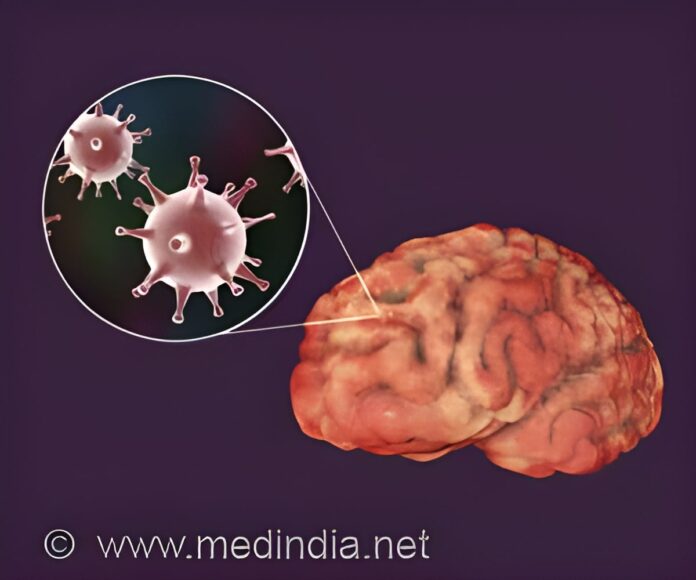
As a multi-institutional investigation into the Chandipura virus outbreak intensifies, the Centre has deployed a specialized national response team to Gujarat and Rajasthan — here’s what’s being done, and what the virus actually is.
The Union Ministry of Health and Family Welfare has deployed a National Joint Outbreak Response Team (NJORT) to Gujarat and Rajasthan, as a multi-institutional scientific investigation into the ongoing Chandipura virus (CHPV) outbreak intensifies.
The team includes experts from the National Centre for Disease Control (NCDC), the Indian Council of Medical Research (ICMR), and the Department of Animal Husbandry and Dairying, working alongside state health departments on outbreak investigation, clinical management, laboratory coordination, and vector surveillance. (1✔ ✔Trusted Source
Centre Deploys National Joint Outbreak Response Team as Multi-Institutional Probe Intensifies into Chandipura Virus Outbreak
Go to source
)What Is Chandipura Virus?
Chandipura virus was first identified in 1965, isolated from febrile patients in Chandipur village, Maharashtra. It’s a bullet-shaped, enveloped virus in the same family as rabies, and it causes acute encephalitis i.e. inflammation of the brain, primarily in children under 15.
The virus is endemic to India, with periodic outbreaks recorded across Gujarat, Maharashtra, Andhra Pradesh, and several other states, typically during the monsoon season.
Onset is sudden: high fever, vomiting, and altered consciousness, which can progress to seizures and coma within just 24 to 30 hours.
There are currently no specific antiviral treatments and no licensed vaccine — care remains entirely supportive, making early diagnosis and hospital access critical. (2✔ ✔Trusted Source
Acute encephalitis syndrome due to Chandipura virus – India
Go to source)
How Does Chandipura Virus Spread?
CHPV is transmitted primarily through the bite of infected sandflies, though scientists are also investigating whether other arthropods — including mosquitoes, ticks, and mites may play a role. According to the World Health Organization, there is no evidence of human-to-human transmission.
Poor housing conditions, particularly unplastered mud walls, and unmanaged waste or open drainage near homes can create ideal breeding and resting sites for sandflies, increasing local transmission risk.
Why Chandipura Outbreak Is Significant
CHPV outbreaks tend to recur in Gujarat roughly every four to five years, but the WHO has noted that recent activity has represented the largest surge in two decades — a scale that underscores why this new deployment matters.
During earlier phases of investigation, health authorities confirmed cases through IgM ELISA and RT-PCR testing, with the affected districts spanning Gujarat and neighbouring Rajasthan.
The current investigation goes further than case counting. Experts from five ICMR and ICAR institutes are working to understand the complete clinical spectrum of the disease, from mild fever to full-blown encephalitis. Community-based serosurveys are underway to estimate how many infections go undetected, while laboratory teams work to improve diagnostic tools and animal models used to study the disease.
What Investigators Are Still Trying to Confirm
Several key questions remain open. Officials have been clear that it’s very early to name a definitive vector for the current outbreak — large numbers of collected samples are still under analysis. Notably, during the 2024 Gujarat outbreak, all tested vector samples came back negative for CHPV, meaning no vector could be conclusively implicated at the time.
Animal surveillance has also expanded, with around 70 blood samples collected from cattle, buffaloes, and goats to check whether domestic animals could be acting as viral reservoirs. Separately, whole-genome sequencing is underway at the Gujarat Biotechnology Research Centre to determine whether the virus circulating now has genetically evolved from strains seen in past outbreaks — though officials stress that detailed comparative studies are still required before any conclusions can be drawn.
What Can Be Done to Reduce Risk
There is no vaccine available for this infection, so prevention becomes more important. It is advised to practise the mentioned things
- Reducing contact with vectors
- Indoor insecticide spraying
- Environmental sanitation to eliminate sandfly breeding sites
- Personal protection measures like long-sleeved clothing, repellents, and bed nets
The WHO also recommends strengthening frontline healthcare workers’ ability to recognise symptoms early and refer suspected cases quickly, since timely supportive care meaningfully improves outcomes.
The investigation is being framed by authorities as a “One Health” approach — treating human, animal, and vector surveillance as one interconnected effort, rather than three separate problems.
References:
- Centre Deploys National Joint Outbreak Response Team as Multi-Institutional Probe Intensifies into Chandipura Virus Outbreak – (https://www.pib.gov.in/PressReleasePage.aspx?PRID=2294690®=6&lang=1)
- Acute encephalitis syndrome due to Chandipura virus – India – (https://www.who.int/emergencies/disease-outbreak-news/item/2024-DON529)
Source-Ministry of Health and Family Welfare, Government of India (PIB), World Health Organization