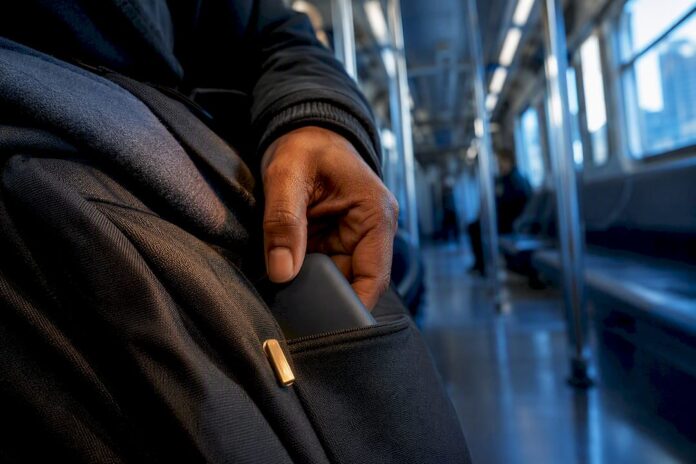
The easiest way to carry medication discreetly is a small neutral pill case or a keychain pod that doesn’t look medical, paired with knowing your rights. Keep original labels for travel, use silent reminders instead of alarms, and remember that TSA rules protect your right to carry prescriptions, while the EEOC protects your medical privacy at work.
TL;DR:
- Carry original prescription bottles when traveling, especially across state lines, and keep a labeled backup dose in your luggage for emergencies.
- Use vibration or visual reminders instead of alarms and anchor medication times to daily routines to ensure discreet, consistent adherence.
- Choose lockable or odor-resistant pouches, like carbon-lined or matte cases, to prevent accidental discovery and maintain pill integrity.
- In workplace settings, timing doses around natural breaks and using silent alerts help maintain privacy without raising suspicion.
- Public spaces generally offer legal protections for medical privacy, allowing you to carry medication discreetly without having to disclose details unless you choose to.
Table of Contents
Your Quick Checklist for Carrying Medication Discreetly
Print this out, stick it in your bag, and stop overthinking it every morning.
- Daily pill case: small, matte, unbranded. No pill bottle silhouette.
- Keychain pod: for one or two emergency doses you never want to forget.
- Neutral pouch: soft-sided, looks like a makeup bag or tech pouch.
- Lockable pouch: for shared apartments, dorms, or open-plan offices.
- Travel-friendly tumbler or mint tin: works for small tablets, not for anything liquid or fragile.
- Spare labeled dose: kept somewhere separate from your daily case in case you lose it.
A few rules make this system actually work. Carry your original prescription bottle when you travel, especially across state lines or on flights, even if your daily case holds the loose doses. Pack one labeled backup dose somewhere in your luggage, not just in your carry item. Use vibration or visual reminders instead of audible alarms.
Pro Tip: Drop a small piece of cotton in a rigid pill case before you close it. It kills the rattle completely, and a matte or solid-color case draws far less attention than anything glossy or clear.
Which Pill Cases and Accessories Actually Work Best?
Not every container that claims to be discreet actually is. Here’s how the common options stack up when you look at capacity, noise, and how they read to a stranger glancing at your desk or bag.
A soft pouch wins on flexibility because it can hold a pill case, a bottle of water, and a granola bar without looking out of place on a train or at a gym. A keychain pod wins on speed and always being on you, but it holds almost nothing. Mint tins and tumblers look the most ordinary, but they offer zero label protection if you’re ever asked what’s inside.
Odor and security matter more than people expect. A lockable pouch with an activated carbon lining keeps curious roommates or coworkers from stumbling onto pills they weren’t meant to see, which matters most in dorms and shared apartments. Skip anything hollowed out of electronics or books for travel. It looks suspicious under airport imaging and almost always invites the exact scrutiny you were trying to avoid.
Pro Tip: Wipe pill cases with a dry cloth weekly rather than washing them. Moisture is the enemy of tablet integrity, and a damp case can start degrading pills within days.
For anyone who wants something built specifically to look ordinary rather than medical, the Define Normal pillbox was designed around exactly this problem.
How Can You Take Medication Discreetly at Work?
Timing beats hiding. Most people who successfully carry meds discreetly at work aren’t sneaking around, they’ve just built a routine that never draws a second look.
- Time doses around natural breaks. Coffee runs, lunch, or the walk to your car are built-in windows nobody questions.
- Find one private spot and stick with it. A car, a stairwell, or a single-occupancy restroom works better than improvising daily.
- Stash a backup dose somewhere separate from your main case. Desk drawer, glove compartment, gym locker.
- Use silent or vibration reminders, never an audible alarm that broadcasts your schedule to the room.
- Have one casual line ready if someone asks. “Just a vitamin” or “allergy thing” ends the conversation without lying about anything that matters.
Storage depends on the medication. Most tablets are fine in a desk drawer at room temperature; anything requiring refrigeration needs a small insulated pouch or the office fridge, labeled minimally.
Here’s what a lot of employees don’t realize: your employer generally cannot ask what a medication is for, and any medical information you do disclose has to stay confidential under EEOC enforcement guidance on disability-related inquiries. If you need a schedule adjustment or a private space, that falls under reasonable accommodation, and the EEOC’s plain-language ADA guide spells out exactly what employers owe you. The Job Accommodations Network also lists real-world examples of accommodations people have successfully requested, including flexible breaks and private storage.
What Are the TSA Rules for Carrying Medication?
You are allowed to bring prescription medication in both carry-on and checked luggage, and this rarely surprises anyone until they hit the liquids question. TSA guidance confirms that medically necessary liquids exceeding the standard limit are permitted in carry-on bags, but they must be declared at the checkpoint. You also have the right to request a visual inspection instead of X-ray screening for medication.
Pack smart and this becomes a non-event:
- Keep your original prescription bottle for full-size supplies when you’re flying, even if you decant daily doses elsewhere.
- Use an unbranded daily case for the doses you’ll actually take during the trip.
- Declare any liquid medication at the checkpoint before it’s flagged for you.
- Keep medication in an easily reachable spot in your bag rather than buried at the bottom.
What not to do: skip the extreme concealment tactics. Hollowed-out items, unmarked containers stuffed with loose pills of different shapes, or anything designed to look like it’s hiding something almost always draws more scrutiny than a simple labeled bottle would have. Security officers are trained to notice things that look engineered to avoid notice, which is the opposite of what discreet travel is supposed to achieve.
How Do You Build a Reliable, Private Medication Routine?
The best reminder system is the one you never have to think about. Anchor your dose to something you already do every single day: brushing your teeth, making coffee, plugging in your phone. That single habit link does more for consistency than any app notification.
For the notification itself, skip audible alarms entirely.
- A vibration-only phone alarm works in meetings, classrooms, or on public transit without anyone hearing a thing.
- A smartwatch with a silent haptic buzz is even less noticeable than reaching for your phone.
- Reminder apps with customizable, silent notifications let you label the alert vaguely rather than with a drug name.
- Mail-order refill services cut down on pharmacy runs where you might feel exposed or rushed.
Keep one clearly labeled backup supply at home for emergencies, and a small spare in your bag or car for the days life doesn’t go as planned. The goal isn’t secrecy for its own sake. It’s making the routine feel so ordinary that skipping a dose because you’re worried about being seen simply stops being a factor. Public-health researchers have connected stigma directly to nonadherence. A boring, repeatable routine is a genuine health tool, not just a privacy trick.
How Do You Keep Medication Safe While Carrying It?
Discretion and safety have to work together, not against each other. Heat and humidity degrade most tablets faster than people expect, and a hot car or a sweaty gym bag can compromise potency within a single afternoon.
- Use an insulated pouch for commutes, especially in summer or if your medication ever sits in a parked car.
- Ask your pharmacist about specific storage needs. Some medications tolerate heat fine; others don’t.
- Carry a one-line emergency card noting your medication and any allergies, kept separate from your daily case.
- Never mix different medications in one compartment without pharmacist approval, even for convenience.
- Choose a lockable pouch for shared housing or open offices where someone else might handle your bag.
Pro Tip: A soft insulated lunch pouch, the kind meant for a sandwich, works just as well as a purpose-built medical cooler and looks completely unremarkable on a desk or in a backpack.
Extreme concealment, like storing pills loose in an unlabeled container mixed with other small items, isn’t just risky in an emergency. It also means nobody could help you correctly if you ever needed it.
Carrying Medication Discreetly at School, on Transit, and at the Gym
Every social setting has its own version of the same problem: people looking, even briefly, at what’s in your hand. Schools tend to have the strictest rules, since many require medication to be registered with a school nurse or office, particularly for controlled substances. Check your school’s policy before assuming you can self-carry, because rules vary widely between districts and between K-12 and college settings.
Public transit is actually one of the easiest environments once you have the right case. A quick dose taken from a slim, matte pill case during a bus or subway ride draws essentially no attention, especially compared to fumbling with an orange prescription bottle. Keep your case in an outer pocket you can reach without digging through a bag in front of strangers.
Gyms present a specific challenge: lockers aren’t always secure, and sweat and heat both affect medication. A small zippered pouch clipped inside a gym bag, rather than left loose in a locker, solves both the security and the temperature problem at once. If you take a pre-workout dose, timing it in a bathroom stall or car beforehand is often simpler than trying to be subtle in a crowded locker room.
The common thread across all three settings is the same: a container that doesn’t scream “medication,” paired with a habit of taking your dose in the two or three minutes of privacy that almost every environment offers if you look for it.
Managing Medication Discreetly During Outdoor Activities and Sports
Hiking, running, and team sports each add a layer of complexity that a desk job doesn’t: sweat, temperature swings, and gear you can’t easily dig through mid-activity.
For hiking or long outdoor stretches, a small hard-sided case tucked into a hydration pack’s front pocket protects pills from both moisture and crushing. Heat is the bigger risk outdoors than at the office, so an insulated pouch matters even more on a trail than on a commute, particularly in direct sun for hours at a time.

For team sports, timing a dose before you leave the house or right after practice usually beats trying to manage it mid-game. If you need a dose during a tournament or long practice, a keychain pod clipped inside a gym bag’s inner pocket is faster to access than digging through a backpack in front of teammates.
Runners and cyclists often do best with a keychain pod clipped to a belt or hydration vest, since it’s small enough to forget you’re even carrying it. Water resistance matters here more than in any other setting. Sweat and rain both threaten pill integrity in a way that indoor environments never do.
Whatever the activity, the same rule applies: pick one consistent spot on your gear where the medication always lives, so you’re never caught improvising a hiding spot in the middle of a run or a game.
Do Privacy Laws Protect You Outside of Work?
Workplace protections get most of the attention, but they aren’t the only place the law backs you up. Public spaces themselves don’t typically require you to disclose or hide medication. There’s no general law requiring you to explain a pill case to a stranger on a train or in a park.
Schools operate a little differently. Under federal disability law, students with documented medical needs are generally entitled to reasonable accommodations for medication management, though the exact process runs through a school’s health office rather than a manager. The core protections mirror what the EEOC outlines for employees: confidentiality of medical information and a right to accommodation, just administered by a different institution.
Public accommodations broadly, including gyms, transit systems, and community spaces, fall under similar disability protections that limit what staff can demand to know about your medical condition. Nobody working the front desk at a gym has a legal basis to require you to explain a pill case.
The practical takeaway: you are rarely obligated to disclose more than you’re comfortable with, in almost any setting. Confidentiality protections exist specifically because stigma has measurable effects on whether people take medication as prescribed. Knowing where those protections apply, and where they don’t, is part of carrying medication with confidence instead of anxiety.
A Founder’s Perspective on Privacy and Dignity
Privacy around medication isn’t about hiding something shameful. It’s about controlling who gets access to information that’s yours to share on your own terms. When you carry medication in something that doesn’t look clinical, taking a dose stops being a moment of exposure and becomes just another small thing you did today, like checking your phone or grabbing a mint.
Neutral, ordinary-looking accessories do real work here. They let people stay consistent with a routine instead of skipping doses out of worry about being seen or questioned. That consistency matters more than most people realize, and it’s worth reading more on why pill organizers don’t have to carry shame with them.
— Michelle
Ready-Made Options for Carrying Medication with Confidence
You don’t have to improvise a discreet system from scratch. Some companies design pillboxes and accessories specifically so that medication can travel with you without looking like medication, built around the same principle covered throughout this guide: ordinary appearance, real function. The Define Normal pillbox maps directly onto the daily pill case category from the checklist above, and it’s paired with neutral pouches and totes that work for the backup and travel scenarios covered earlier.
Every medication is different, so always check with your pharmacist about specific storage needs, especially for anything temperature-sensitive. When you’re ready to build your own discreet-carry kit, browse the mental health awareness collection for accessories designed around dignity first, discretion second, and stigma nowhere at all.
Sources
Recommended
Comments