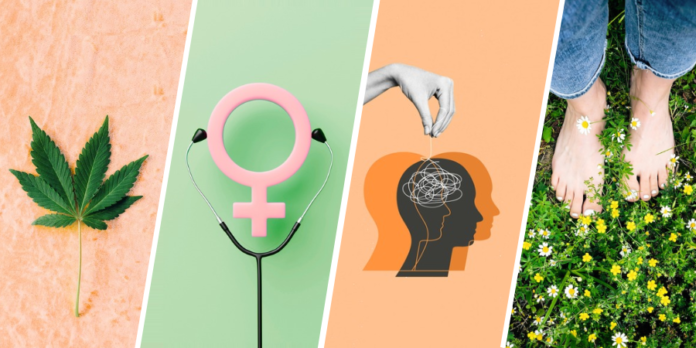
Recent studies look at cannabis use, perimenopause, psychotic symptoms, time in nature, and movement.
Key Takeaways
- Spending less time in nature may be an early sign of an upcoming manic episode, so notice if your time outdoors drops or becomes irregular.
- If you’re entering perimenopause, watch for depression and anxiety and talk with your care team about extra support, since this stage can worsen mood.
- Any cannabis use is linked to a higher risk of developing bipolar disorder, so consider abstinence or cutting back.
Tracking sleep and medications can help you spot an upcoming mood episode. But other everyday factors — from cannabis use to perimenopause — may also shape your mood. This month, we cover five recent studies on cannabis use, perimenopause, psychotic symptoms that may predict a later bipolar diagnosis, time in nature, and exercise. Each ends with takeaways to talk through with your care team.
Cannabis Use Linked to Higher Risk of Developing Bipolar Disorder
Cannabis has long been tied to psychosis, but its link to bipolar disorder has been less clear. An international team led by researchers in England reviewed 19 studies that followed nearly seven million people without bipolar disorder over time to see how cannabis use related to future diagnosis.
Results, published in October 2026 in the Journal of Affective Disorders, show that cannabis users were about 2.5 times as likely to later develop bipolar disorder and twice as likely to develop manic or hypomanic symptoms. The bipolar link held for both teens and adults. But the analysis didn’t account for alcohol, tobacco, or other drugs, and in some studies the link weakened once those were considered. The researchers also noted that early mood symptoms may lead some people to use cannabis, rather than the reverse.
What This Means for You
- Any use was tied to higher risk. Bipolar risk was similar for people with cannabis use disorder and for those who simply used cannabis, in both teens and adults.
- Delay or limit cannabis use. To protect against bipolar disorder, the researchers recommend abstaining or cutting back if you already consume cannabis, especially if you’re young and have a family history of the condition.
- More research is needed. The analysis included only people without bipolar disorder and couldn’t draw conclusions about important details like how the age at which cannabis use starts or how much a person uses affects risk.
Perimenopause Is a Vulnerable Time for Bipolar Disorder
Pregnancy and the months after giving birth are known times when bipolar disorder symptoms can start or worsen, but less is known about the end of the reproductive years. Canadian researchers reviewed 14 studies published since 2018 to see how perimenopause, the years around a final period, affects the condition.
Perimenopause appears to be a higher-risk time for bipolar disorder to begin, according to results published in Bipolar Disorders in September 2026. Early menopause and hysterectomy were also linked to new bipolar diagnoses. For people already diagnosed, depression and anxiety tended to increase during perimenopause, while results on mania were mixed. Evidence on treatment, including hormone therapy, was too limited to guide care.
What This Means for You
- Plan for extra support. If you have bipolar disorder and are entering perimenopause, talk with your care team about extra mental health support.
- Watch for depression and anxiety. These were the most consistent signs of mood worsening during this stage.
- Gynecologic surgery may affect mood. Women who had a hysterectomy had a higher risk of new bipolar diagnoses, especially in the first year. Tell your psychiatrist if you’re planning one.
- Hormone therapy is an open question. It’s unclear whether it helps or harms mood in bipolar disorder.
Psychotic Symptoms Are Strongest Predictor of Bipolar After Depression Diagnosis
A depressive episode often shows up years before the first manic or hypomanic one. That’s one reason many people with bipolar disorder are first told they have major depressive disorder. Researchers in Spain wanted to know whether health records from that first depressive episode help indicate that what looks like major depression is really bipolar disorder. They analyzed the health records of more than 52,000 adults newly diagnosed with depression to find out.
More than 7 percent were later diagnosed with bipolar disorder, per results published in European Psychiatry. Psychotic symptoms during depression, such as hallucinations or delusions, were the strongest warning sign. People who had them were 3 times as likely to be rediagnosed. Psychiatric hospital stays, personality disorders, and substance use disorders were also linked to a later bipolar diagnosis.
What This Means for You
- Losing touch with reality during depression was the clearest sign. If you have depression and see or hear things others don’t, or hold strong beliefs that loved ones say aren’t real, ask a doctor about monitoring for bipolar disorder.
- But most cases didn’t involve hallucinations or delusions. About 4 in 5 people later diagnosed with bipolar disorder had no recorded psychotic symptoms in their medical charts.
Less Time Near Green Spaces May Precede Manic Episodes, Small Study Finds
Stress can set off mood episodes in bipolar disorder. Because time in nature is thought to ease stress, researchers in Germany wondered whether changes in the amount of time people spent near green spaces could signal an impending mood episode. Twenty-nine people with bipolar disorder volunteered their phone location data for a year, which was analyzed alongside biweekly mood ratings from clinicians.
The results, published in September 2026 in npj Mental Health Research, show that in the two weeks before a manic or hypomanic episode, participants spent less time near green spaces overall, and the amount was more inconsistent from day-to-day. Depressive episodes didn’t show a pattern. Because the study was small, larger studies are needed to confirm the results.
What This Means for You
- Time in nature could offer clues about upcoming mood changes. In this study, shifts in time near green spaces tended to show up before manic episodes (but not depressive ones).
- Parks aren’t a preventive measure. The study wasn’t designed to show cause and effect. It could be that early mania symptoms change where people go, rather than the other way around.
- Location data can’t predict mood episodes yet. When the researchers tested whether green-space measures could predict episodes, the measures produced too many false alarms and missed too many episodes.
Exercise Should Be Part of Bipolar Care, Experts Say
People with bipolar disorder tend to sit more and move less than those without the diagnosis, which may contribute to higher rates of heart disease and diabetes. But shifts in energy and activity are also core symptoms of bipolar mania and depression, so the role exercise should play in bipolar care isn’t simple. A task force from the International Society for Bipolar Disorders reviewed the research on exercise and sitting time to clarify the issue.
Exercise should be a routine part of treatment, the group concluded in the journal Bipolar Disorders, published in August 2026. Exercise may ease depression and anxiety, improve sleep, and make it easier to function day to day. Plus, some studies have found that people with bipolar disorder who stay active experience fewer mood episodes and hospital stays. But most studies on exercise were small, and larger trials are needed.
What This Means for You
- Exercise appears safe for mood. Structured, supervised exercise programs don’t bump up the risk of mania, according to the task force. It’s still a good idea to check with your care team before starting, especially if you have a heart or metabolic condition.
- Aim for the general target. Global guidelines call for 150 to 300 minutes of moderate-intensity physical activity, such as brisk walking, or 75 to 150 minutes of vigorous-intensity activity, such as running, each week.
- Notice how much you move. A sudden drop or spike in physical activity patterns may be an early sign of a mood shift.
Editorial Sources and Fact-Checking
bpHope follows strict sourcing guidelines to ensure the accuracy of its content, as outlined in our editorial policy. We use only trustworthy sources, including peer-reviewed studies, board-certified medical experts, people with lived experience, and information from top institutions.
SOURCES +
- Sanjuan-Ortiz C et al. Cannabis Use and Subsequent Onset of Manic Symptoms and Bipolar Disorder: A Systematic Review and Meta-Analysis. Journal of Affective Disorders. October 6, 2026.
- Radosavljevic J et al. Bipolar Disorder and Perimenopause: An Update. Bipolar Disorders. September 30, 2026.
- González-Campos M et al. Predictors of Conversion From Major Depressive Disorder to Bipolar Disorder: A Population-Based PADRIS-PRESTO Cohort Study in Catalonia. European Psychiatry. July 2, 2026.
- Guth M et al. Green Space Exposure Predicts Manic Episodes in Bipolar Disorder: One-Year Longitudinal Analysis Using Smartphone-Derived GPS Data. npj Mental Health Research. September 24, 2026.
- Lafer B et al. Sedentary Behavior and Physical Activity in Individuals With Bipolar Disorder: An Evidence Synthesis and Position Statement From the ISBD Nutrition and Exercise Task Force (NExT). Bipolar Disorders. August 3, 2026.