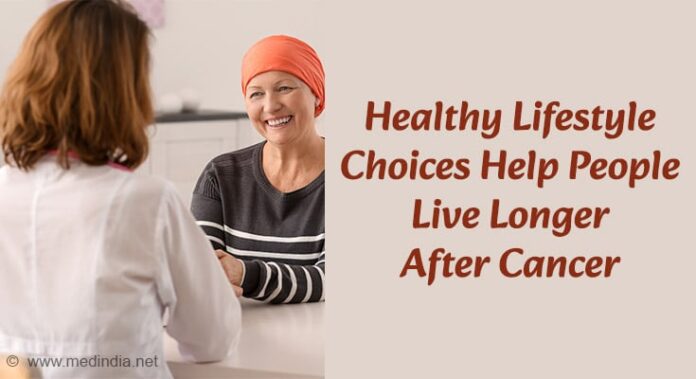
Maintaining heart-healthy habits improves survival and reduces death risk in people living with cancer.
- Healthier daily habits lower overall cancer mortality by more than one third
- Each positive lifestyle improvement steadily reduces cancer-related deaths
- Mediterranean-style eating further strengthens survival benefits
Healthier daily habits after a cancer diagnosis are linked to a markedly lower risk of death, cutting overall mortality by more than one third and steadily improving survival with every positive lifestyle change (1✔ ✔Trusted Source
Life’s Simple 7 score and cardiovascular health in cancer survivors: the Moli-sani study
Go to source
).
Being physically active, eating a balanced diet, avoiding smoking, and keeping body weight and blood pressure within healthy ranges are not only protective for the heart but also play a decisive role after a cancer diagnosis.
This central message emerges from work conducted under the UMBERTO Project by the Joint Platform of Fondazione Umberto Veronesi ETS and the Research Unit of Epidemiology and Prevention of I.R.C.C.S. Neuromed in Pozzilli, carried out in collaboration with LUM Giuseppe Degennaro University.
The findings were published in the European Heart Journal, the official journal of the European Society of Cardiology, and are based on data from the Moli-sani Study, one of the largest population-based investigations worldwide, coordinated by the Epidemiology and Prevention Unit at Neuromed.
TOP INSIGHT

Did You Know?
Improving daily habits like diet and #physicalactivity can reduce death risk by nearly 40% in people living with #cancer. #cancersurvival #healthyheart #healthylifestyle #medindia
Long-Term Follow-Up in Adults with Cancer
A total of 779 Italian adults, both men and women, were monitored for fifteen years. At enrollment, all participants were already living with a cancer diagnosis. Their health profile was evaluated using Life’s Simple Seven, a scoring system developed that assesses seven well-known lifestyle and cardiovascular risk factors: smoking status, level of physical activity, dietary quality, body weight, blood pressure, cholesterol, and blood glucose.
This score made it possible to determine how closely individuals adhered to healthy behaviors and to examine how these habits influenced the risk of death from any cause. The analysis focused on the relationship between everyday lifestyle choices and long-term survival among people with a history of cancer.
Stronger Survival Linked to Healthier Behaviors
Results showed a clear advantage for participants who maintained healthier lifestyles, with a 38 percent lower risk of death compared with those who followed less healthy habits. In addition, every single-point increase in the Life’s Simple Seven score corresponded to a 10 percent reduction in deaths related specifically to cancer.
As explained by Marialaura Bonaccio, first author and co–principal investigator of the Joint Platform Fondazione Umberto Veronesi ETS and I.R.C.C.S. Neuromed, a score originally designed to capture traditional cardiovascular risk factors can also predict better survival in people with a cancer history.
Consistent healthy choices such as nutritious eating, regular exercise, and maintaining appropriate body weight offer tangible support for individuals who have faced or are facing cancer.
Mediterranean Diet as a Key Protective Factor
When the diet component of the Life’s Simple Seven score, originally based on general healthy eating guidelines, was replaced with adherence to the Mediterranean dietary pattern, the association between healthy behaviors and survival became even more pronounced. This stronger link extended to deaths related to cardiovascular conditions as well.
The Mediterranean pattern, common in Southern Europe and rich in fruits, vegetables, whole grains, legumes, fish, and extra-virgin olive oil, once again emerged as a powerful ally not only for cardiovascular protection but also for the overall well-being of people living with cancer.
Shared Biological Pathways Between Diseases
A substantial part of the connection between healthier lifestyles and lower mortality appears to be explained by three biological factors shared by cardiovascular conditions and cancer: low-grade inflammation, resting heart rate, and blood levels of vitamin D. These observations reinforce the idea that both conditions are influenced by overlapping biological processes.
Maria Benedetta Donati, principal investigator of the Joint Platform, highlighted that chronic illnesses often considered distinct may arise from common biological foundations. In scientific literature, this concept is described as the common soil hypothesis, referring to a shared set of molecular mechanisms and risk or protective factors from which different diseases can develop and progress.
Prevention and Lifestyle Remain Crucial After Cancer
Licia Iacoviello, head of the Epidemiology and Prevention Unit at Neuromed and full professor of hygiene at LUM University in Casamassima, emphasized that healthy lifestyles and primary prevention strategies are effective not only in lowering the risk of chronic conditions among healthy individuals but also in improving prognosis and quality of life for those who have already experienced cancer.
This integrated perspective was further underlined by Chiara Tonelli, president of the Scientific Committee of Fondazione Umberto Veronesi ETS, professor emeritus of genetics at the University of Milan, and president of the Italian Federation of Life Sciences.
She noted that the UMBERTO Project places individuals at the center of a comprehensive lifestyle model, highlighting the strong interconnection between diet, physical activity, and other healthy behaviors that influence the shared mechanisms underlying cardiovascular and oncological conditions.
To sum up, consistent healthy behaviors such as balanced eating, regular physical activity, and weight control play a crucial role in improving survival and quality of life after cancer.
Reference:
- Life’s Simple 7 score and cardiovascular health in cancer survivors: the Moli-sani study – (https://academic.oup.com/eurheartj/advance-article/doi/10.1093/eurheartj/ehaf838/8375735)
Source-Medindia