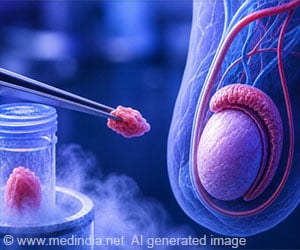
Doctors successfully produced sperm using testicular tissue frozen before cancer treatment in a boy who had not yet reached puberty.
- Frozen immature testicular tissue produced mature sperm cells after reimplantation years later
- The procedure may help boys undergoing cancer treatment preserve future fertility
- Researchers say the experimental technique marks the first successful human proof-of-concept
A world-first fertility restoration procedure has offered new hope to boys who may lose their ability to have biological children after undergoing cancer treatment in childhood.
Researchers from the Vrije Universiteit Brussel and Brussels IVF reported that frozen immature testicular tissue, removed before gonadotoxic treatment, was successfully reimplanted years later and produced mature sperm cells.
The findings are being viewed as a major milestone in fertility preservation for prepubertal boys who are too young for conventional sperm banking.
However, scientists caution that the procedure remains experimental and has not yet resulted in a pregnancy or live birth (1✔ ✔Trusted Source
First successful transplant of human immature testicular tissue after gonadotoxic therapy during childhood: complete spermatogenesis in intra-testicular grafts
Go to source).
How Did a Childhood Cancer Procedure Lead to a Fertility Breakthrough?
Nathan Crawford from the UK was only nine years old when doctors froze a portion of his testicular tissue before he underwent chemotherapy and radiotherapy for a brain tumor. Nathan had a glioma located dangerously close to critical brain tissue, making complete surgical removal impossible.
Before beginning treatment, surgeons at the John Radcliffe Hospital in Oxford performed a minimally invasive procedure to remove and preserve immature testicular tissue. Because Nathan had not yet reached puberty and could not produce sperm, traditional sperm banking was not possible.
More than 16 years later, researchers reimplanted the cryopreserved tissue into his body. The transplanted tissue later produced mature sperm cells, marking what researchers describe as the first reported human case of frozen immature testicular tissue generating sperm after reimplantation.
Dr. Veerle Vloeberghs from Brussels IVF said the procedure could offer future reproductive options to boys facing cancer or severe blood disorders requiring sterilizing treatments.
How Was the Frozen Testicular Tissue Preserved and Reimplanted?
The preserved tissue was stored in liquid nitrogen at approximately -196°C using cryopreservation techniques designed to protect spermatogonial stem cells. Researchers at UZ Brussel began offering clinical testicular tissue banking for boys at risk of infertility in 2002 and have since cryopreserved tissue samples from more than 141 boys.
During the transplantation procedure, thawed tissue fragments were grafted into different areas of the body, including inside the testicle and beneath the scrotal skin. After approximately one year, researchers surgically removed and analyzed the grafts.
The study found that two grafts implanted directly inside the testicle showed evidence of active spermatogenesis and had produced mature sperm cells. However, grafts placed under the scrotal skin appeared more fibrotic and showed lower sperm production.
The sperm cells retrieved from the grafts were frozen for possible future assisted reproductive procedures.
Why Does Cancer Treatment Put Future Fertility at Risk?
The study reported that nearly one-third of boys exposed to highly gonadotoxic treatments during childhood later experience impaired testicular function or azoospermia, a condition in which no sperm are present in semen.
Research published in the World Journal of Men’s Health further noted that 15–30% of male cancer survivors may lose fertility potential after chemotherapy or radiation therapy. The risk depends on the type of chemotherapy drugs used, radiation dose, and age at treatment. (2✔ ✔Trusted Source
Long-Term Fertility Function Sequelae in Young Male Cancer Survivors
Go to source)
Unlike adult men, prepubertal boys cannot preserve fertility through sperm freezing because sperm production begins only after puberty. Instead, their testes contain spermatogonial stem cells that may later develop into sperm-producing tissue.
A review published in Frontiers in Endocrinology explained that scientists have therefore explored whether preserving immature testicular tissue before treatment could restore fertility later in adulthood (3✔ ✔Trusted Source
Fertility Preservation and Restoration Options for Pre-Pubertal Male Cancer Patients: Current Approaches
Go to source).
Researchers also note that alkylating chemotherapy drugs such as cyclophosphamide and busulfan, along with radiation therapy, are particularly harmful to sperm-producing stem cells.
Why Could This Breakthrough Matter for India Too?
The breakthrough could have important implications for India, where childhood cancer remains a growing public health concern and long-term survivorship issues are becoming increasingly important.
Key India-related findings and trends include:
- According to India’s National Cancer Registry Program (NCRP), childhood cancers account for nearly 4% of all cancers reported in the country (4✔ ✔Trusted Source
A situational analysis of childhood cancer services in India, Policy briefGo to source
).
- Research estimated that nearly 76,000 children and adolescents in India develop cancer annually, while newer estimates suggest that 45,000–60,000 childhood cancer cases are diagnosed every year.
- Survival rates are improving due to advances in pediatric oncology, bone marrow transplantation, targeted therapies, and supportive care.
- As more children survive leukemia, lymphoma, brain tumors, and blood disorders, doctors are increasingly focusing on quality-of-life issues such as future fertility.
However, fertility preservation options for boys in India remain limited, especially for children who have not yet reached puberty.
While sperm banking is available in several Indian fertility centers for adolescent boys and adult men, experimental techniques such as immature testicular tissue cryopreservation are still not widely accessible in routine clinical practice.
The American Cancer Society notes that chemotherapy, radiation, and certain cancer surgeries can permanently damage sperm-producing tissues, making fertility counseling before treatment critically important for young patients (5✔ ✔Trusted Source
How Cancer And Cancer Treatment Can Affect Fertility in Men
Go to source).
Why Are Scientists Calling This a Historic Medical Milestone?
Researchers say the study provides the first human proof-of-concept showing that immature testicular tissue can survive long-term freezing, successfully revascularize after transplantation, and restart sperm production inside the body.
Earlier animal studies had already demonstrated promising results. A review published in Reproductive Biology and Endocrinology described how researchers previously achieved successful spermatogenesis and even live births in mice, pigs, rabbits, and rhesus macaques using transplanted cryopreserved immature testicular tissue (6✔ ✔Trusted Source
Advancements in fertility preservation strategies for pediatric male cancer patients: a review of cryopreservation and transplantation of immature testicular tissue
Go to source).
Despite the excitement, scientists caution that the procedure is still highly experimental. The current study has not yet demonstrated natural conception, pregnancy, or live birth in humans using sperm derived from transplanted immature testicular tissue. Researchers also noted that because the transplanted tissue is not directly connected to the sperm ducts, assisted reproductive techniques such as intracytoplasmic sperm injection (ICSI) may still be required in the future.
Frequently Asked Questions
Q: What is immature testicular tissue freezing?
A: It is an experimental fertility preservation technique in which testicular tissue containing sperm-producing stem cells is removed and frozen before cancer treatment.
Q: Why can’t young boys use sperm banking?
A: Prepubertal boys have not yet started producing sperm, making traditional sperm freezing impossible before puberty.
Q: How can chemotherapy affect future fertility?
A: Chemotherapy and radiation can damage sperm-producing stem cells in the testes, sometimes leading to permanent infertility.
Q: Did the frozen tissue successfully produce sperm?
A: Yes. After the tissue was reimplanted years later, researchers found mature sperm cells in grafts placed inside the testicle.
Q: Can this treatment help cancer survivors become fathers naturally?
A: Not yet. Researchers say assisted reproductive techniques such as IVF or ICSI may still be needed because the transplanted tissue is not connected to sperm ducts.
References:
- First successful transplant of human immature testicular tissue after gonadotoxic therapy during childhood: complete spermatogenesis in intra-testicular grafts – (https://www.medrxiv.org/content/10.64898/2026.03.04.26347483v1.full-text)
- Long-Term Fertility Function Sequelae in Young Male Cancer Survivors – (https://pmc.ncbi.nlm.nih.gov/articles/PMC10042651/)
- Fertility Preservation and Restoration Options for Pre-Pubertal Male Cancer Patients: Current – (https://pmc.ncbi.nlm.nih.gov/articles/PMC9244702/)
- A situational analysis of childhood cancer services in India, Policy brief – (https://www.ncdirindia.org/All_Reports/2023/Policy_Brief_CC.pdf)
- How Cancer And Cancer Treatment Can Affect Fertility in Men – (https://www.cancer.org/cancer/managing-cancer/side-effects/fertility/how-cancer-treatments-affect-fertility-men.html)
- Advancements in fertility preservation strategies for pediatric male cancer patients: a review of cryopreservation and transplantation of immature testicular tissue – (https://pmc.ncbi.nlm.nih.gov/articles/PMC11025181/)
Source-Medindia