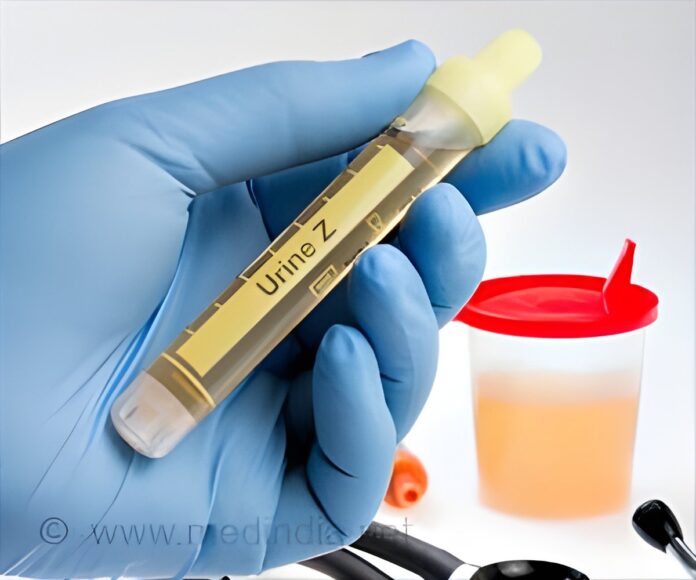
Urine DNA fragments may provide vital clues about your health.
Cell-free DNA (cfDNA) is the minute fragments of DNA that are constantly shed into blood and urine by our body. In comparison to normal DNA confined in cells, cfDNA is free-floating and has handy information regarding our health. Urine cfDNA is currently under investigation as a potent, non-invasive health biomarker due to the ease of collection, safety, and painlessness of urine collection (1✔ ✔Trusted Source
Analysis of urine cell-free DNA copy number and fragment size from healthy individuals
Go to source
).
DNA Fragments in Urine?
A total of sixty-five participants (aged 21–40 years; 57 % male and 43 % female) undergoing routine health examinations were randomly selected from outpatients undergoing routine health examinations at Wenzhou People’s Hospital between October and December 2023, with a mean body mass index (BMI) of 22.48 kg/m2. While analysing the urine samples, researchers found that urine cfDNA exists in three main sizes:
- Short fragments
- Medium fragments
- Long fragments
(tiny pieces)
Interestingly, the source of the DNA also matters:
- Mitochondrial DNA (cf-mtDNA) – mostly appears in short fragments.
- Nuclear DNA (cf-nDNA) – more common in medium fragments.
Researchers can better understand the origin of DNA and how it might reflect different biological processes owing to this differentiation.
Why Mitochondrial DNA Matters More
The study showed that cf-mtDNA is more clinically relevant than cf-nDNA. In healthy people:
- Small pieces of cf-mtDNA were associated with the increased number of lymphocytes (immune cells that protect against infection).
- They were also negatively correlated with neutrophils (the other form of immune cell).
It implies that the mitochondrial DNA fragmented in urine may be applied to track immune balance and overall health.
Sample Collection And Storage
How urine samples are collected and stored makes a big difference. The best method included:
Without proper handling, cfDNA can degrade or get contaminated, reducing accuracy.
Can Urine cfDNA Be Valuable For The Future?
Urine cfDNA testing has big potential because it’s:
- Non-invasive (no needles).
- Simple and cost-effective.
- Sensitive enough to detect health changes early.
It may be applied to detect cancer, track kidney illness, track transplant, and even routine health examinations.
DNA fragments that can be described as health fingerprints are found in urine in abundance. Although both nuclear and mitochondrial DNA are found, short fragments of mitochondrial DNA appear to be the most promising biomarker. With better collection and processing methods, urine cfDNA could soon become a routine tool for early disease detection and health monitoring right from a simple urine sample!
References:
- Analysis of urine cell-free DNA copy number and fragment size from healthy individuals – (https://www.sciencedirect.com/science/article/abs/pii/S0009898125005066)
Source-Department of Clinical Laboratory, Wenzhou People’s Hospital